

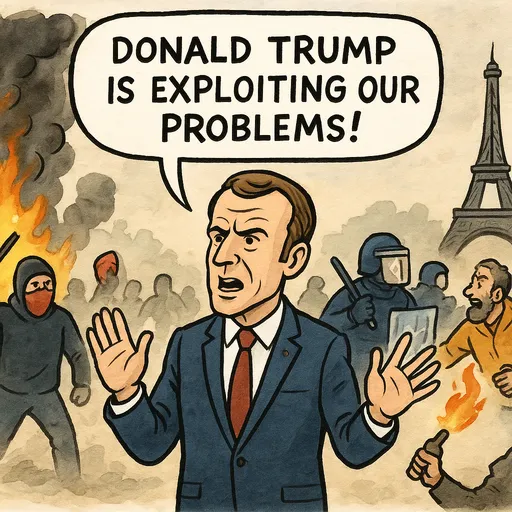
France is currently experiencing widespread civil unrest marked by protests, riots, and violence driven by economic grievances, social tensions, and political dissatisfaction. President Emmanuel Macron has strongly criticized foreign leaders, particularly Donald Trump, for exploiting the unrest for political gain and has defended France's policies on immigration and security. Concurrently, Macron is engaged in active diplomacy in the Gulf region to strengthen security and energy partnerships amid regional tensions. The government has responded with curfews, increased police deployments, and legal actions to restore order, while debates continue over the root causes and future political implications of the unrest.
This cluster covers the extensive protests, riots, and civil unrest across France, highlighting the government's security measures such as curfews, police and military deployments, and judicial actions against rioters. It includes analyses of the social and economic causes behind the demonstrations, the role of youth and marginalized groups, and the political challenges faced by President Macron and his administration in managing dissent and restoring order. The cluster also reflects on the impact of unrest on public safety, tourism, and the broader political landscape ahead of upcoming elections.
This cluster focuses on the diplomatic tensions arising from the unrest in France, particularly the exchanges between President Macron and foreign leaders such as Donald Trump and Netanyahu, who have been accused of politicizing the protests. It also covers Macron's diplomatic visits to Gulf countries including Saudi Arabia and Qatar, aimed at strengthening security cooperation and securing energy supplies amid regional instability. The cluster highlights France's efforts to manage its international image and maintain strategic partnerships while addressing domestic challenges.
This cluster analyzes the economic pressures such as rising living costs, inflation, and social inequalities that fuel the protests and unrest in France. It includes expert opinions on governance failures, youth discontent, and the broader European context of similar demonstrations. The articles discuss the challenges in finding straightforward solutions to these deep-rooted problems and the implications for France's social cohesion and economic stability.
This cluster addresses the security challenges posed by the unrest, including the deployment of police and military forces, curfews, and considerations of suspending social networks to prevent looting. It also covers legal proceedings against rioters and looters, debates about banning extremist groups, and concerns about urban violence involving minors. The cluster reflects the government's multifaceted approach to restoring public order and the ongoing debates about civil liberties versus security.
This cluster reports on severe weather events including floods in southern France causing fatalities and evacuations, as well as incidents such as a French fighter jet crash during training. These articles highlight additional challenges faced by France beyond the political and social unrest, emphasizing emergency responses and safety concerns.
This cluster explores the political ramifications of the unrest, including polling data showing Marine Le Pen's lead ahead of the 2027 presidential elections, criticisms from former political figures towards Macron, and the impact of foreign endorsements and criticisms on France's political discourse. It also includes reflections on France's tradition of protests and the evolving political tensions within the government and society.
This cluster highlights France's strategic military and diplomatic activities, including the Pegasus 26 mission in the Mozambique Channel to counter Russian ambitions, and France's engagement in Gulf diplomacy to address regional security and energy concerns. It underscores France's efforts to maintain influence and partnerships in key regions amid global geopolitical shifts.