

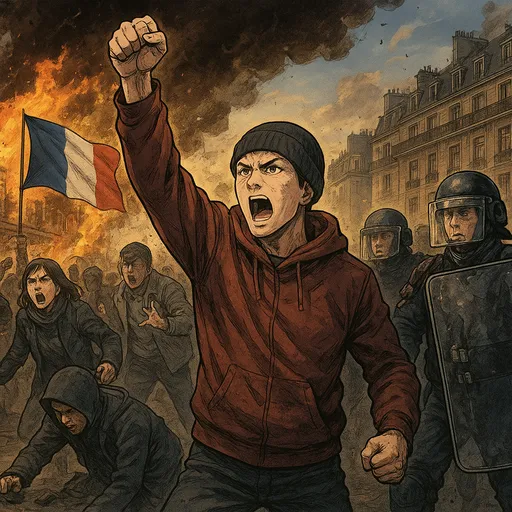
France is experiencing significant social unrest marked by widespread protests, violent clashes, and looting across multiple cities, primarily driven by grievances over the cost of living and government policies. Authorities have responded with curfews, increased police presence, and considerations of emergency measures, while President Macron calls for calm and accountability. The unrest has intensified political tensions ahead of upcoming elections, with far-right and far-left factions seeking to capitalize on the situation, and international reactions including commentary from US President Trump linking the unrest to immigration issues.
This cluster covers the widespread protests across France triggered by economic grievances such as the rising cost of living, leading to violent clashes, looting, and significant public disorder. Articles discuss the scale of demonstrations, the involvement of various social groups including youth and the Yellow Vests movement, and the impact on public spaces like the Louvre. The unrest has resulted in thousands of arrests and injuries, highlighting deep social tensions and challenges to public order.
This cluster focuses on the French government's reaction to the unrest, including the imposition of curfews in Paris and other cities, increased police deployments, and discussions about declaring a state of emergency. It highlights statements from officials such as Prime Minister Lecornu and President Macron, the refusal of the interior minister's resignation, and the balancing act between restoring order and respecting civil liberties. The cluster also covers the political implications of these measures and the challenges faced by law enforcement.
This cluster analyzes the political fallout from the unrest, including President Macron's leadership under pressure, the potential electoral gains for far-right and far-left parties, and the broader crisis of governance in France. It includes commentary on the political dynamics, public trust, and institutional responses, as well as the impact on upcoming elections. The cluster also covers internal government tensions, such as the interior minister's attempted resignation and debates over policy direction amid the crisis.
This cluster addresses the economic backdrop fueling the protests, including structural weaknesses in France's economy, stalled labor reforms, and rising living costs. It features analyses from economists and commentators who link the unrest to failures in social and economic governance. The cluster also discusses public debt concerns and the broader implications for France's fiscal health and European economic stability.
This cluster captures international perspectives on the French unrest, including statements by US President Donald Trump linking the protests to immigration and using them in US political rhetoric. It also covers diplomatic engagements by President Macron in the Gulf amid domestic turmoil, reactions from European countries, and France's role in broader regional security discussions. The cluster highlights how France's internal crisis resonates globally and influences international relations.