

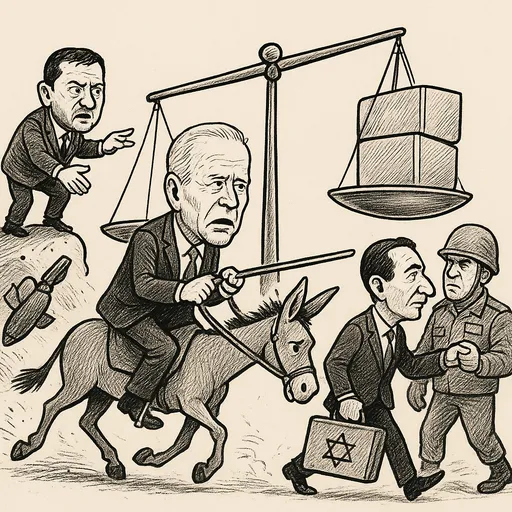
Reporting shows widening strains in US diplomacy as disputes over Ukraine aid, air-defence deliveries and negotiation strategy dominate headlines, with Kyiv publicly criticizing delays and Washington debating its level of commitment. At the same time, US domestic politics and high-level, sometimes secret, visits to Israel highlight intense U.S. engagement and political influence ahead of Israeli elections. The Biden administration is pursuing pragmatic steps to ease trade friction with the EU while maintaining deterrence in the Indo-Pacific through large joint drills with Japan, even as uncertainty persists over potential US–North Korea talks. Human rights and consular moves—including condemnation of abuses, trafficking rankings, and a global pause in visa interviews—underscore broader reputational and operational strains in US foreign policy. Regional diplomacy from Africa to Central Asia and the Pacific shows Washington juggling development, mediation and security partnerships amid a fractious international environment.
Multiple outlets report growing friction between Kyiv and Washington over delayed weapons, Patriot approvals, satellite and missile-defence restrictions, and public calls for new negotiators. Ukrainian leaders and some US lawmakers portray these delays as undermining Kyiv’s defence and pushing difficult questions about US commitments and negotiating posture.
Coverage emphasizes high-level US engagement with Israeli leadership—including unannounced visits, endorsements by former US leaders, and mixed signals from sitting US officials—framed against Israel’s election cycle. Reports reflect both enduring security cooperation and controversies over perceived US political interference.
Reports highlight a two‑track US approach: strengthening deterrence with allies through major Japan–US exercises while expressing uncertainty about prospective high‑level talks with North Korea. Coverage stresses both alliance reassurance and diplomatic ambiguity ahead of multilateral summits.
Coverage from the region examines US capacity and strategy regarding Iran, Iraq and Lebanon—ranging from Tehran’s public assessments of US options to Washington’s efforts to manage militias and resume limited ties such as restoring direct flights to Lebanon. The reporting frames these moves as part of broader efforts to stabilize the region while managing competing influences.
Reporting on Tonga shows Washington’s mix of technical, development support and human‑trafficking scrutiny, while Beijing contests some allegations—illustrating great‑power competition and diplomatic sensitivity in Pacific island states. US-funded studies and expert visits are framed as tools of influence and assistance amid contested narratives.
Articles document continued US activism on human‑rights issues (notably Cuba), global trafficking assessments, and a disruptive suspension of visa interview scheduling—highlighting reputational, legal and practical consequences of US policy choices. These items underscore non‑military levers of US diplomacy and their international reverberations.
Coverage stresses US calls for restraint in Horn of Africa tensions, diplomatic rows with South Africa over bilateral remarks, and warnings about potential losses in US‑Africa trade opportunities. The reporting views US policy as balancing conflict‑prevention, trade priorities and complex domestic politics across African partners.
Reports show US diplomatic reach across the hemisphere—from envoy resignations and Peace Corps commemoration to mediation in Nicaragua, shifting ties with Latin American allies, and security incidents in Mexico—reflecting a mix of development, human‑rights and security priorities. The regional coverage highlights Washington’s efforts to sustain influence amid local political dynamics.
Coverage focuses on US parliamentary and senator‑led engagement with Central Asian states at Samarkand, reflecting efforts to deepen ties on security and energy issues. The reporting frames these meetings as part of a broader US push to expand partnerships in a strategically important region.
Reports note US steps to ease trade frictions with the EU ahead of wider geopolitical summits, portraying Washington as seeking transatlantic economic stability alongside broader security dialogues. The coverage emphasizes tariff talks and regulatory coordination as tools to shore up allied resilience.