

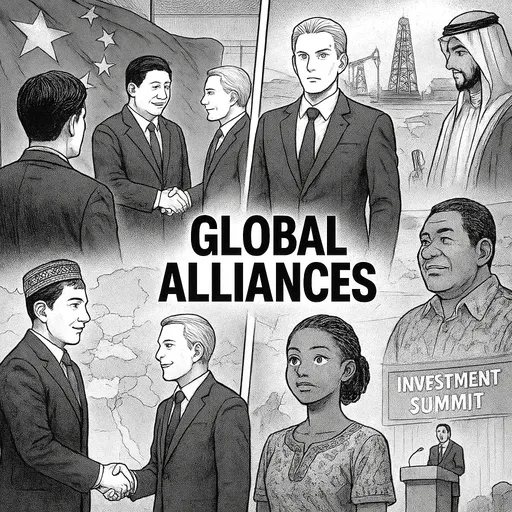
Recent reporting shows a flurry of bilateral engagements across regions, from China’s push into infrastructure and technology partnerships to Western-led trade, connectivity and development initiatives. Security and defence cooperation is rising alongside diplomatic and energy diplomacy in the Gulf, with multiple states signing training, procurement and production agreements. Central Asian states are clearly diversifying partners—engaging with China, Iran, the US and Europe—while African and Pacific countries pursue both ceremonial reaffirmations and practical investment summits. At the same time, some high-profile projects and missions have been postponed or abandoned, exposing gaps between announcements and delivery.
Sources highlight active Chinese engagement and influence through infrastructure, technology and Belt-and-Road-style cooperation, with multiple states signing documents, opening corridors and welcoming Chinese delegations. The perspective emphasizes China as a key development and investment partner shaping digital, industrial and defence-adjacent projects across Asia and Africa.
Central Asian governments are portrayed as actively diversifying their external partnerships—engaging the US, Iran, Turkey, South Korea and European states while advancing mineral, diplomatic and cultural ties. The coverage stresses pragmatic outreach to multiple partners to secure investment, technology and regional cooperation.
Western and allied actors frame their diplomacy around trade deals, infrastructure connectivity and development commitments, promoting FTAs, digital links and targeted funding for partner states. The viewpoint underscores economic statecraft—from port assessments and FTAs to student visa exemptions and regional funding pledges—to deepen ties and market access.
Multiple countries emphasise strengthening security ties through deployments, training, arms deals and material support, reflecting a worldview that bilateral defence cooperation is central to regional stability and deterrence. Reports cover both formal agreements and practical assistance—ranging from maritime drones and armaments to joint border operations and military visits.
Gulf states and visiting partners present diplomacy focused on energy security, investment and evolving political alignments, including moves toward normalization and defense-industrial cooperation. The perspective combines commercial energy deals with strategic outreach and high-level state visits aimed at cementing long-term partnerships.
Libyan authorities and institutions are shown pursuing diverse bilateral economic and operational pacts—partnering with neighbouring states, Turkish banks and foreign firms—to support reconstruction, aviation and finance services. The coverage frames Libya as actively engaging multiple external partners to rebuild infrastructure and restore services.
Several reports present a more skeptical view, documenting projects delayed, abandoned or repeatedly postponed, and noting a shortfall between summit promises and on-the-ground delivery. This perspective highlights the limits of headline announcements and the political or security risks that impede implementation.
Many states use ceremonial events and summits to reaffirm ties and promote regional agendas—from energy summits in Southern Africa to national-day diplomacy and technical cooperation in aviation. The viewpoint emphasizes symbolism and convening power as tools for bolstering bilateral and regional relationships.
Other coverage highlights friction—diplomatic recalls, territorial maneuvers and reputational spats—showing that bilateral relations can be contentious and prone to crises even amid broader cooperation. The perspective accentuates how disputes and public claims complicate diplomatic engagement.
Reports focusing on legal and regulatory shifts underscore how changes in partner-country law or customs agreements affect bilateral trade, defense production and export controls. Small states in particular must navigate external regulatory adjustments with direct implications for their industries and agreements.
Some bilateral activity centers on cultural and humanitarian ties—visits by foundation representatives and cultural exchanges intended to deepen people-to-people links and soft-power cooperation. These engagements are presented as a deliberate complement to economic and political relations.