
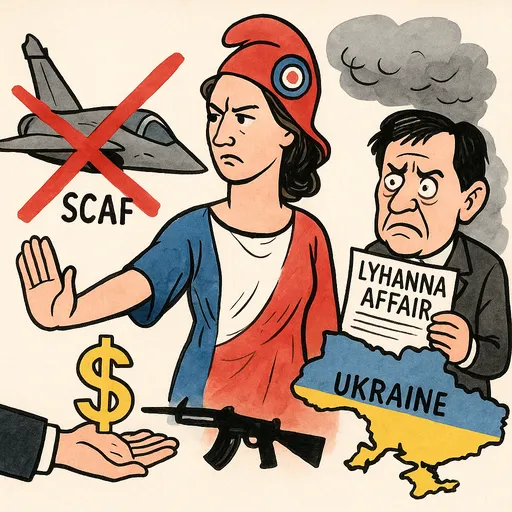
France is experiencing significant shifts in its defense strategy, notably with the termination of the Franco-German joint fighter jet projects such as SCAF and FCAS, reflecting industrial disputes and strategic reconsiderations. Concurrently, France is grappling with domestic justice issues highlighted by the Lyhanna affair and a major child abuse investigation, sparking public outrage and calls for reform. On the international front, France continues active diplomatic engagement, particularly in support of Ukraine and regional security, while also fostering financial and military cooperation with partners like Libya and Madagascar.
Multiple articles report on the definitive end of the Franco-German joint fighter jet programs, including the SCAF and FCAS projects, due to disagreements between industry partners, strategic doubts, and budgetary constraints. This marks a major setback for European defense collaboration, raising concerns about future military procurement, NATO coordination, and the broader ambitions for European strategic autonomy. The decision reflects shifting priorities and challenges in sustaining multinational defense initiatives.
France is confronting serious domestic issues related to justice and public trust, exemplified by the Lyhanna affair involving the murder of an 11-year-old girl and investigative failures. The case has triggered widespread protests demanding accountability and systemic reform. Additionally, a nationwide probe into tens of thousands of child abuse allegations has been launched following public outrage, signaling a critical moment for judicial transparency and child protection policies.
The political landscape in France is marked by significant events including Jean-Luc Mélenchon's launch of his 2027 presidential campaign representing the radical left, and former President Nicolas Sarkozy's denial of wrongdoing amid a campaign funding trial. These developments highlight ongoing political contestation and legal scrutiny within France, reflecting broader dynamics of political accountability and electoral competition.
France maintains active international engagement through diplomatic coordination with Ukraine and Western allies, particularly in the context of the ongoing conflict involving Russia. High-level talks between President Macron and Ukrainian President Zelensky emphasize continued support and strategic alignment ahead of major summits like the G7. France also strengthens bilateral military cooperation with countries such as Madagascar and hosts financial forums to enhance ties with Libya, underscoring its role in regional security and economic diplomacy.
France is exploring strategic autonomy in defense technology by testing non-US artificial intelligence systems for military planning, reflecting concerns about interoperability, security, and ethical considerations. This initiative aligns with broader European efforts to reduce dependency on external powers and enhance independent defense capabilities amid evolving geopolitical challenges.
The French National Assembly has symbolically repealed the Code Noir and related colonial-era slave laws, addressing a long-standing historical injustice. This legislative action precedes sensitive discussions on reparations and reflects France's ongoing efforts to confront its colonial past and promote social justice.
France's involvement in international security missions faces regional pushback, as seen in Iran's rejection of a proposed Franco-British security operation in the Strait of Hormuz without local consent. This highlights the complexities of France's role in global security and the diplomatic challenges in sensitive geopolitical areas.
High-profile legal cases involving French public figures, such as the arrest of singer Patrick Bruel on multiple harassment and sexual violence allegations, attract significant public and media attention. These cases contribute to ongoing societal debates about accountability and justice for victims.