
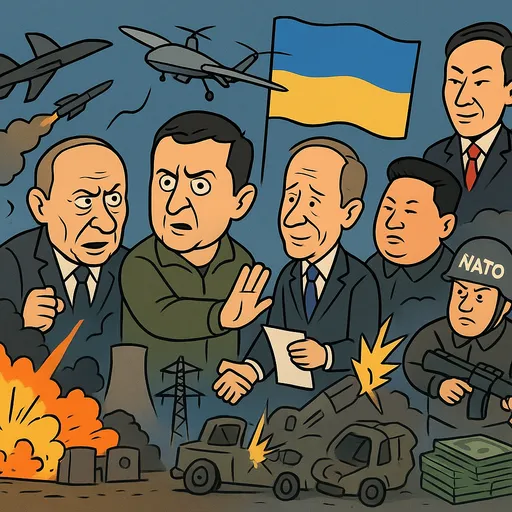
The coverage shows an intensifying war marked by high-casualty Russian strikes, continuing attacks on critical infrastructure and growing humanitarian strains inside Ukraine. Kyiv is aggressively pursuing diplomatic channels and Western aid—through formal meetings, back‑channel envoys and calls to unlock frozen assets—to bolster air defences and sustain its operations. The battlefield is being reshaped by large-scale drone campaigns, automated air-defence deployments and targeted strikes on energy sites, producing tactical shifts and logistical stress for Russia. NATO and neighbouring states report spillovers and intercept hostile drones, while global actors weigh sanctions, aid and broader geopolitical consequences — including China’s watchfulness and North Korea’s wartime windfalls. Moscow combines hardened rhetoric rejecting negotiated settlements with domestic signs of strain and increased repression, complicating prospects for a near-term resolution.
Kyiv is actively seeking political and material backing from Western partners and using both high-level diplomacy and informal envoys to secure resources. Leaders and delegations press for direct aid, asset unfreezing and coordination ahead of major diplomatic formats such as the G7.
Western governments and institutions are sustaining sanctions and approving aid packages to pressure Moscow while warning the conflict risks further escalation. Other global reactions vary from cautious statements (e.g. China) to reports on how the war reshapes third‑party economies (e.g. North Korea’s gains), underscoring broad geopolitical fallout.
Multiple reports document deadly Russian strikes on civilian areas and infrastructure, including attacks near Kharkiv, Zaporizhzhia and Chernobyl, prompting UN and Security Council concern. Coverage highlights mounting casualties, damage to housing and transport, and related public‑health impacts such as rising premature births.
Ukraine is deploying large drone fleets, autonomous systems and new air‑defence capabilities while conducting strikes that target Russian energy and logistics nodes. Analysts and reports argue these innovations are changing operational rules, producing local gains and increasing pressure on Russian positions such as Crimea and southern fronts.
NATO members and neighbours report cross‑border risks and have engaged militarily to protect allied airspace, shooting down drones and flagging covert movements linked to Russian services. These episodes feed concerns about spillover and the need for heightened surveillance and alliance coordination.
Within Russia, drone strikes, airport disruptions, explosions and fuel shortages are reported alongside rising public unease, while the state pursues legal measures against critics. These domestic strains are portrayed as part of the wider cognitive and material costs Moscow faces as the war persists.
Moscow’s official line remains dismissive of Ukrainian proposals for mediated talks and ambiguous about any endgame, reinforced by senior officials’ denunciations and hardline pronouncements. Opposition voices and analysts offer contrasting takes, but Kremlin statements signal a continued uncompromising posture.