
World leaders and envoys concentrated on reducing regional hostilities, negotiating ceasefires, and deepening strategic partnerships. China’s high-profile summits with North Korea signalled Beijing’s push to reassert influence and expand cooperation across political, security and economic domains. In the Middle East, several actors — including the United States, Egypt, Qatar and regional mediators — worked to secure fragile pauses between Iran and Israel and to advance Gaza truce talks in Cairo. Parallel tracks ranged from UN-backed governance initiatives in Libya and broader peacekeeping debates to intense diplomacy around the Ukraine war, where back-channel envoys and European coordination sought to revive negotiations. Across regions small-state and trilateral forums continued routine security and development dialogue, underscoring diverse multilateral engagement aimed at stability.
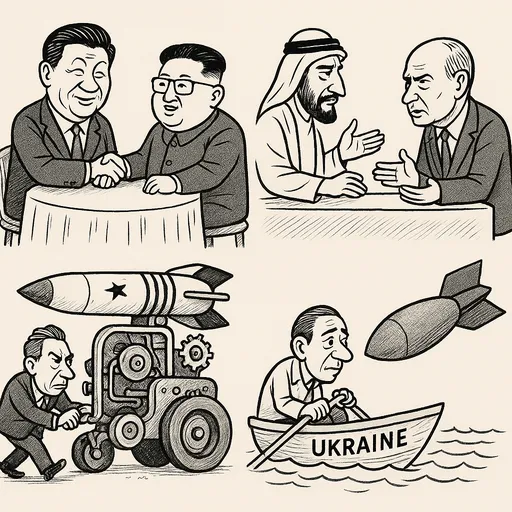
Chinese sources and many international observers frame Xi Jinping’s rare Pyongyang visit as a deliberate effort to deepen Beijing–Pyongyang ties, reassert influence in Northeast Asia, and bind North Korea closer to China’s strategic orbit. Coverage emphasizes pledges of ‘unwavering support’, expanded cooperation across legal, military and economic spheres, and Beijing’s aim to shape regional security amid other great‑power interactions.
Regional governments, U.S. officials and mediators present de‑escalation as the immediate priority: statements stress pauses in strikes, urgent calls to stop shooting, and active Cairo negotiations to consolidate a fragile Gaza truce. Gulf states and regional actors also condemned cross‑border attacks, urged respect for sovereignty, and pressed for humanitarian access while warning that any escalation risks isolation or broader conflict.
UNSMIL and Libyan participants advocate structural reforms to unify authority and prevent conflicts of interest, recommending a governance framework and restrictions on officials standing for office to reduce fragmentation. The perspective stresses that international support and implementation of these recommendations are essential to break Libya’s political impasse and advance inclusive statebuilding.
Ukrainian officials and Western envoys emphasise active diplomacy — including direct calls, delegations, and informal intermediaries — to revive talks and push for negotiated outcomes while maintaining international support. Reports highlight Zelensky’s outreach to envoys and leaders, the use of intermediaries like Abramovich, and coordinated European engagement to sustain avenues for peace.
Russian sources present a skeptical view of Western peace rhetoric, arguing that discussions of negotiation coincide with continued arms supplies to Kyiv and criticizing Western actions in multilateral forums. That perspective frames Western policies as contradictory and deflects responsibility for stalled diplomacy.
UN officials and other multilateral actors emphasise strengthening peacekeeping, improving mission coordination, and using international forums to elevate member states’ concerns. Coverage highlights calls to reform decision‑making (including contested participation), briefings at BRICS meetings, and debates over the composition and integrity of operations and elections at the UN.
Smaller states and regional groupings underscore practical cooperation on security, development and cultural exchange as the backbone of regional stability. Trilateral formats, CARICOM engagements, bilateral visits and cultural diplomacy are presented as tools to coordinate responses to shared threats, strengthen ties, and boost mutual trust among neighbours.
European leaders and institutions are portrayed as trying to manage multiple crises: coordinating positions on Ukraine, urging negotiations with Russia, and confronting bilateral tensions with neighbours and Turkey. Coverage includes appeals for calm by figures like Tusk, incidents affecting EU ministerial travel, and debate over participation in talks by national leaders.
Latin American items highlight strong domestic leadership images and hardline stances that shape regional diplomacy, from popularity rankings to authoritarian refusals to negotiate. These accounts suggest that domestic political calculations continue to influence international engagement and prospects for dialogue.