
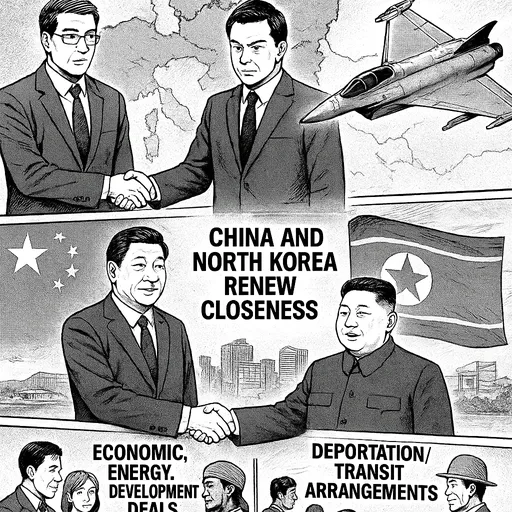
Recent bilateral activity highlights a mix of ruptures and deepening ties: France and Germany have formally halted their joint next-generation fighter project, marking a major setback for European defense cooperation while other states pursue alternative strategic alignments. China and North Korea signalled renewed closeness at high-level summits, even as Beijing expands bilateral economic and environmental partnerships across regions. Numerous countries advanced pragmatic economic, energy and development deals — from Libya’s commercial outreach and Russia–Cuba pharmaceutical and renewables cooperation to investment accords in the Pacific, Africa and Central Asia. Migration and consular arrangements also featured prominently, with several states agreeing on deportation/transit arrangements and repatriation operations alongside visa and consular normalizations. Across continents, bilateral agreements range from trade and infrastructure financing to security training and technology transfers, reflecting diverse national priorities and shifting geopolitical alignments.
Sources from France, Germany and European outlets frame the termination of their joint sixth‑generation fighter project as a decisive rupture driven by industrial disputes, governance and cost concerns. The perspective emphasizes the strategic and procurement implications for European defense cooperation and future alternatives for each partner.
Reports from African and international outlets present the Central African Republic as cooperating with U.S. migration policy by agreeing to host third‑country deportees. The framing treats the move as a pragmatic migration-management arrangement with diplomatic and humanitarian implications.
EU and Ukrainian sources warn that Kyiv risks losing substantial funding due to unmet anti‑corruption benchmarks, highlighting conditionality in EU assistance. The angle underscores governance reforms as central to maintaining bilateral financial support.
Libyan authorities and visiting partners present the meetings and port activity as part of a push to revive trade, attract investment and build technical capacity. The narrative stresses public‑private engagement, technology transfer and using Libyan ports as gateways for regional commerce.
Pakistani reporting frames the visit as high‑level mediation aimed at broader regional de‑escalation and diplomatic outreach to Iran. The perspective highlights Islamabad’s role as a conduit in regional tensions.
Coverage of bilateral energy talks frames both Damascus and U.S. interlocutors as exploring cautious investment and cooperation steps without immediate agreements. The angle suggests pragmatic engagement centered on reconstruction and energy security.
Romanian diplomatic reporting highlights cultural and educational cooperation with Egypt under Francophonie frameworks to deepen bilateral ties. The emphasis is on soft‑power and institutional collaboration.
Aviation reporting presents the seasonal reopening of the Nuuk–New York route as a renewed people‑to‑people and economic link between Greenland and the United States. The focus is on connectivity during the summer tourism season.
Reports emphasize the archipelago’s expanding portfolio of bilateral and multilateral partners — from Australia to Saudi Arabia and the EU — aiming to finance projects and build local infrastructure. The perspective highlights capacity building, leadership development and new investment flows.
EU institutional sources stress procedural alignment and additional checks as reasons for postponing the agreement with the two microstates. The coverage frames the delay as technical and part of EU rule‑alignment processes.
State and regional outlets portray the meetings as a mutual pledge to deepen political, economic and security cooperation, with Beijing underscoring strong support for Pyongyang. The perspective signals a deliberate re‑anchoring of strategic ties between the two neighbors.
Domestic and international coverage shows Albania’s leadership pushing ahead with a high‑profile resort project despite mass protests and environmental concerns. The angle captures tensions between economic development ambitions and local opposition.
Defense reporting frames the partnership as capacity‑building and interoperability efforts aimed at strengthening Madagascar’s military maintenance and operational readiness. The emphasis is on continued bilateral security ties.
Coverage presents Liberia as both a regional processing hub for U.S. visas and an expanding trading partner with major markets like China and India. The perspective highlights diplomatic recognition of Liberia’s logistical and commercial role in regional mobility and trade.
Local reporting critiques applicability of the Dutch renewable subsidy model and questions the Dutch response to Venezuelan migration, while also highlighting security capacity building through Dutch training. The mix shows both cooperation and friction within Kingdom relations.
Indonesian accounts emphasize preparatory diplomacy ahead of a state visit by India’s prime minister to deepen bilateral cooperation across sectors. The framing underscores the strategic value both governments place on elevated ties.
Vietnamese authorities are depicted as moving quickly to secure airline and commercial deals with the U.S. to mitigate trade scrutiny and protect carriers. The perspective is pragmatic economic risk‑management.
Chilean reporting frames the resumption of consular services as a practical normalization step to facilitate travel and citizen services between the two countries. The emphasis is on restoring routine diplomatic functions.
Coverage portrays the pact as a post‑Brexit realignment to cut tariffs and deepen bilateral trade, with expected sectoral benefits highlighted by both capitals. The angle focuses on economic opportunity and market access.
Reports from Malawi and Nigeria frame government‑led repatriations as protective consular responses to instability and threats to nationals abroad. The perspective stresses logistics, phased returns and citizen welfare.
Domestic reporting frames proposals like using wildlife deterrents at border areas as controversial, highlighting ethical, environmental and humanitarian concerns. The perspective emphasizes debate over unconventional security measures.
Mauritian reporting sees recent British legislation as a political maneuver that risks undermining sovereignty claims over the Chagos archipelago. The framing calls for adherence to international law and negotiated settlement.
Event reporting frames the Wasic 2026 outcome as a mutual willingness to explore trade and investment openings, reflecting deepening bilateral commerce. The perspective is upbeat on future cooperation.
Regional coverage treats the ceasefire and creation of a pilot zone as a tentative diplomatic step to reduce border tensions despite lack of formal ties. The angle underlines cautious optimism and close monitoring of implementation.
Turkish sources present the canal as a strategic, high‑value infrastructure project to ease maritime congestion and boost logistics, while noting environmental and financing considerations. The perspective balances national economic ambition with potential costs.
Russian and Cuban reporting emphasize new pharmaceutical R&D and renewable energy cooperation as evidence of deepening bilateral partnerships across health and energy sectors. The narrative highlights technology transfer and joint development goals.
Domestic reporting in affected countries highlights how surging Australian imports are displacing local producers, with economic and policy implications for agricultural sectors. The viewpoint stresses competitiveness and protective concerns.
Azerbaijani sources frame the corridor as a strategic transit link tied to Europe’s energy and transport interests, seeking EU buy‑in for regional connectivity. The perspective emphasizes economic opportunity and geopolitical significance.
Financial dispatches note growing remittance flows to Türkiye as an indicator of deepening economic ties and diaspora economic activity. The perspective highlights cross‑border financial linkages.
Uzbek reporting highlights rising Russian gas deliveries and planned U.S.–Uzbek business forums alongside BPO cooperation with Russian firms, underscoring diversified partnerships in energy and services. The angle points to active economic diplomacy and job creation.
Coverage depicts Nordic partners as supportive investors and technology partners for Ethiopia’s electric vehicle plans ahead of COP32, emphasizing climate and industrial cooperation. The perspective focuses on green transition assistance.
Somaliland’s diplomatic messages stress efforts to secure recognition, port deals and investment as core priorities to boost economic prospects. The viewpoint frames outreach as pragmatic statecraft to attract partners.
Coverage frames the three accords signed during the state visit as broadening regional integration in infrastructure, energy and trade between Libreville and Luanda. The perspective emphasizes bilateral commitment to strengthened Central African ties.
Togolese business sources emphasize participation in the Algiers International Fair as an opportunity to expand exports and regional business links. The angle is commercial promotion and market outreach.
EU health and trade reporting frames the suspension as a precautionary measure following confirmed screwworm cases, prioritizing animal health and trade safeguards. The perspective highlights cross‑border biosecurity concerns.
Brazilian government sources present the 'Sovereign Brazil' credit plan as targeted relief to help industries harmed by U.S. tariffs, stressing economic protection and competitiveness. The perspective frames the policy as defensive industrial support.
Market reports highlight Chinese electric vehicle brands making strong inroads in Australia, stressing price competitiveness and infrastructure growth as drivers. The angle points to shifting trade and industry dynamics in the auto sector.
Uruguayan authorities portray the waiver as a step to boost tourism and bilateral exchanges with China, focusing on people‑to‑people ties and economic benefits. The framing underscores diplomatic facilitation of travel.
Bilateral coverage frames visits by Chinese officials as part of a broader push to expand economic and diplomatic cooperation with Bulgaria. The angle highlights high‑level dialogue aimed at strengthening relations.
Defence reporting emphasizes the start of talks on potential Japanese destroyer exports as an indicator of deepening security cooperation and regional capability building. The perspective stresses strategic industrial collaboration.
Diplomatic accounts highlight Singapore’s emphasis on a shared strategic vision with Vietnam and the upgrade to a Comprehensive Strategic Partnership, reflecting growing alignment within ASEAN. The focus is on rules‑based order and deeper cooperation.
Tajikistan and Pakistan portray worries about numerous terrorist groups in Afghanistan as driving closer security coordination, while noting resistance from the Taliban. The perspective underscores cross‑border threat management and calls for enhanced cooperation.
Reports present the partnership as expanding geological exploration and technology transfer to develop Tanzania’s mining sector, emphasizing mutual economic benefit. The angle highlights resource diplomacy and industrial collaboration.
Coverage frames Chinese expertise and experience as contributing to ecological restoration efforts around the Aral Sea, emphasizing technical cooperation and regional environmental diplomacy. The orientation is toward shared responsibility and knowledge transfer.
Armenian government messaging presents EU tariff concessions as a major export opportunity, linking trade liberalization to broader reform and market access goals. The perspective underscores expected economic gains from European integration.
Regulatory reporting frames the delisting as evidence of improved safety compliance and a step to restore normal air connectivity with Europe. The emphasis is on regulatory progress and practical travel benefits.
The meeting between political figures is portrayed as reaffirming mutual commitment to cooperation on security, trade and development between Senegal and Mauritania. The angle stresses regional partnership continuity.
Regional reporting links the de facto government’s resignation to outcomes of an agreement with Moscow, framing it as a consequential shift in the occupied region’s governance and Moscow’s influence. The viewpoint highlights geopolitical implications for local administration.
EU and Georgian sources frame the upcoming visa dialogue as a critical juncture amid warnings of potential suspension, underscoring the conditional nature of visa arrangements. The perspective emphasizes compliance and diplomatic engagement.
Reporting treats Hungary’s halt on issuing worker visas as an action with immediate labor‑mobility consequences for Georgia, Armenia and the Philippines, focusing on recruitment and migration impacts. The angle highlights national visa policy ripple effects.
Gulf reporting describes constructive talks aimed at enhancing cooperation across political and economic domains, signalling continuity in regional diplomatic consultation. The emphasis is on sustained dialogue rather than immediate deals.
Security reporting highlights joint operations and information sharing between Somali actors and Italy to intensify the fight against terrorism, focusing on capacity building and operational collaboration. The perspective underscores international security partnerships.
Multilateral sources frame the $90 million approval as targeted support to strengthen roads and electricity, positioning it as foundational for CAR’s connectivity and development. The angle emphasizes developmental impact and donor‑recipient cooperation.
Bulgarian diplomatic messaging expresses hope for a swift solution to an association agreement blockage, framing it as urgent and in national interest to progress EU‑linked arrangements. The perspective prioritizes rapid diplomatic fixes.
Analysts and Dutch watchdogs voice alarm over U.S. tobacco‑linked investment entering the legal cannabis trial, warning of conflicts of interest and regulatory risks. The coverage frames the deal as controversial in public‑health and governance terms.
Delegations from the Caribbean parts of the Kingdom and the Netherlands present IPKO talks and proposals to strengthen accountability and the CBCS’s independence as constructive institutional reforms. The angle emphasizes collaborative governance improvements.
Summit reporting frames regional leaders’ statements as renewed commitments to accelerate development and work with partners like the Caribbean Development Bank to deliver tangible results. The perspective signals collective regional resolve.
Laotian coverage emphasizes strategic, trade and human‑resource cooperation with Vietnam, Cambodia and Australia aimed at connectivity and capacity building, with concrete trade and training goals. The viewpoint underscores regional integration priorities.
Official accounts present the deputy‑ministerial meeting as a reaffirmation of bilateral cooperation within the CTBT framework and broader regional diplomacy. The perspective stresses continued engagement on non‑proliferation and bilateral ties.