
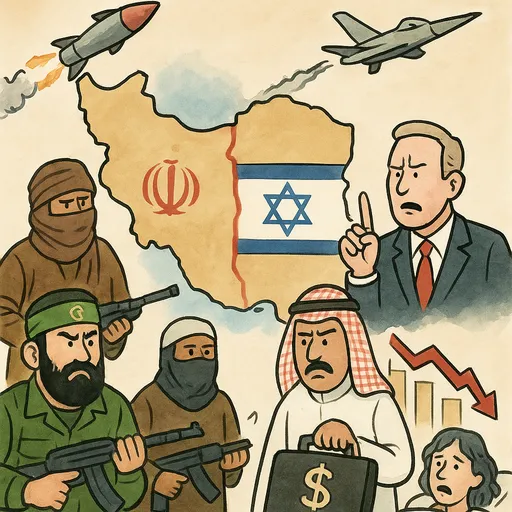
A renewed cycle of missile and air strikes between Iran and Israel has produced repeated short pauses and mutual warnings, with both capitals threatening harsher retaliation if allies or territory such as Lebanon are attacked. Regional proxies — notably Hezbollah and Yemen’s Houthis — and Gulf states have become directly implicated, prompting maritime interdictions, threats to shipping routes and targeted strikes around the Gulf. The United States and European actors have responded with a mix of military actions, warnings and diplomatic pressure to contain the fighting, while markets reacted to the instability as oil and equities moved on heightened risk. The humanitarian cost is mounting, with civilian casualties, hospital operations under strain and damage to cultural and energy infrastructure underscoring how fragile any ceasefire remains.
Reports and statements from Tehran and related Iranian bodies emphasize Iran's offensive exchanges with Israel, the readiness to escalate if Lebanon or other fronts are hit, and repeated announcements of halts or suspensions framed as conditional deterrence. The narrative stresses deterrence, strategic messaging to Israel and the U.S., and a posture of calibrated retaliation rather than full-scale war.
Israeli government and military sources present a narrative of decisive response, readiness to retaliate to future attacks and continued operations against Hezbollah and other threats along northern fronts. Political leaders frame military steps as necessary for national security while emphasizing strength and capability to act again if provoked.
Gulf capitals and GCC officials emphasize condemnation of attacks on Gulf neighbours and call for adherence to sovereignty and international law while urging restraint. Their messaging stresses regional security and seeks solidarity among Gulf states in the face of what they depict as destabilising Iranian actions.
U.S. and Western reporting highlights a mix of military responses, warnings and diplomatic pressure aimed at limiting escalation, with officials signalling concern about immediate threats to partners and critical infrastructure. Coverage underscores Washington’s strategic caution while documenting US strikes, advisories and high-level interventions to restrain further conflagration.
Reporting from regional theatres and allied groups highlights Hezbollah, the Houthis and other proxies joining or signalling engagement, framing the conflict as a multi-front contest that can widen the crisis. These sources emphasise solidarity with Palestine or with Iran and present attacks on Israeli or maritime targets as part of a broader campaign of pressure.
Humanitarian and local sources document civilian casualties, strained hospitals, large death tolls and destruction of infrastructure, framing the escalation primarily as a human tragedy with urgent protection and relief needs. International agencies and medical responders emphasise the catastrophic conditions in Gaza and the risks to aid operations and cultural heritage.
Business and market reports highlight immediate economic consequences of the fighting — rising oil prices and falling stock markets — and frame the clashes as a source of energy-market volatility and global economic risk. Financial coverage treats the conflict as a market-moving geopolitical shock with implications for trade and investment.
Many dispatches from international agencies and newswires focus on the intermittent halts in fighting, the fragile character of pauses and repeated warnings that a single breach could renew full hostilities. These items take a transactional, event-driven tone, documenting who fired, who paused and the immediate diplomatic signals aimed at preventing re‑escalation.
Opinion pieces, expert commentary and analytical dispatches examine causes, strategic objectives and likely scenarios, assessing whether the exchanges mark a shift in regional balance or a risky but contained phase. These accounts weigh the roles of Lebanon, proxies, U.S. policy and Iran’s broader strategy while warning of potential wider conflagration.
Reports highlight closures of consulates, travel advisories and diplomatic behaviour that reflect precautionary responses to mounting insecurity, emphasising state efforts to protect citizens and maintain channels of communication. These items convey the secondary consequences of the fighting on diplomacy and mobility.