
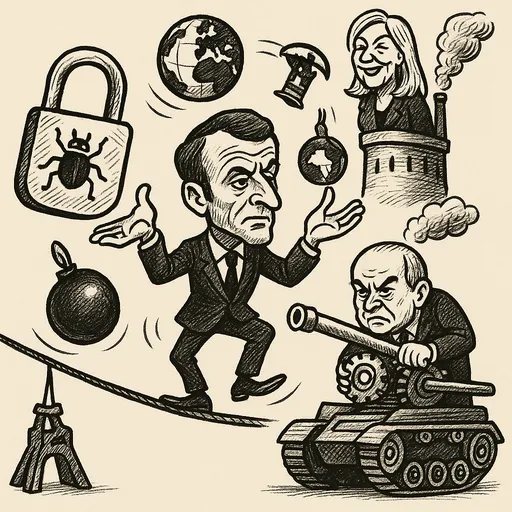
Recent news about France highlights significant cybersecurity incidents targeting the National Agency for Secure Titles, raising concerns about data breaches and digital infrastructure vulnerabilities. Politically, relationships and controversies involving presidential candidates and far-right figures have sparked debates on ethics and corporate ties. Diplomatically, France is actively engaged in Middle East peace efforts, bilateral relations with Mauritania and Andorra, and addressing the economic impact of regional conflicts, while also advancing its defense capabilities with major military projects.
France has experienced critical cybersecurity challenges, notably attacks and data breaches affecting the National Agency for Secure Titles (ANTS), which manages identity documents. These incidents have prompted investigations and highlighted the urgent need to strengthen digital protections for public services and citizens' personal data. The cases underscore the broader risks European governments face in safeguarding sensitive information against cyber threats.
The political landscape in France is marked by personal relationships of presidential candidates that raise concerns about conflicts of interest and public perception. Additionally, corporate interactions with far-right political figures, such as Engie's CEO dining with Marine Le Pen, have drawn scrutiny regarding the influence of political ideologies on business leaders. These developments reflect the complex interplay between politics, ethics, and public trust in France's upcoming elections.
France is actively involved in international diplomacy, particularly in the Middle East, where President Macron has pledged support for Lebanon-Israel talks and urged Israel to abandon territorial ambitions in Lebanon. France also mourns losses in peacekeeping missions and participates in security discussions with allies like the UK on maritime protection. These efforts demonstrate France's commitment to regional stability amid ongoing geopolitical tensions and conflicts.
The ongoing conflict involving Iran and other regional actors has significant economic repercussions for France, including an estimated cost of up to 6 billion euros. Energy security concerns are heightened as global markets face volatility, with French leadership emphasizing the need for strategic responses. These challenges illustrate the interconnectedness of geopolitical crises and their direct effects on France's economy and energy policies.
France continues to strengthen its bilateral ties through high-level visits and diplomatic exchanges, notably with Mauritania and Andorra. These interactions focus on enhancing cooperation across various sectors and reinforcing symbolic and practical partnerships. Such diplomatic activities reflect France's broader strategy to maintain influence and foster collaboration within its international sphere.
France is investing heavily in advanced military technology, including a new weapon system with a 2,500-kilometer range and showcasing innovations at defense expos like Eurosatory 2022. These developments signal France's intent to bolster its defense capabilities and maintain strategic advantages in European and global security contexts. The focus on automation and armored systems highlights evolving trends in modern warfare.
France is addressing various legal and social accountability matters, from high-profile summons of tech entrepreneur Elon Musk over online content issues to historic apologies for slavery links by prominent families. Additionally, corporate accountability is scrutinized in cases like FedEx facing charges related to shipments through France. These instances reflect ongoing efforts to confront ethical challenges and promote transparency in French society.
France has announced an increase in tuition fees for international students, a policy shift that may impact the accessibility and attractiveness of French higher education for foreign learners. This change is part of broader discussions on education funding and international student demographics, with stakeholders expressing varied reactions to the potential consequences.