

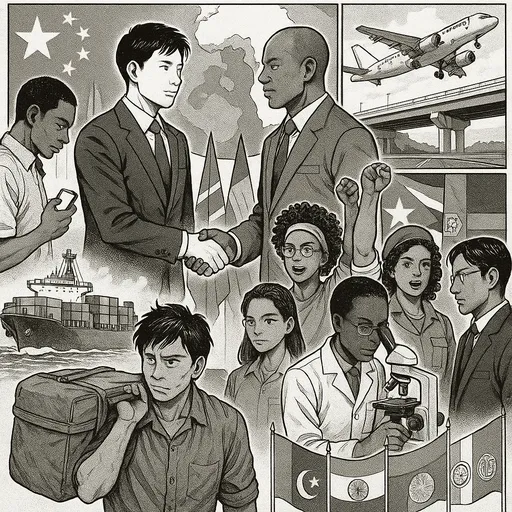
Recent reporting shows an intensification of South–South engagement across multiple fronts: China is deepening economic, cultural and tariff-driven ties with African, Pacific and Central Asian partners, while other Global South actors expand bilateral trade, investment and technical cooperation. Africa-led regional integration and capacity-building projects — from highways and aviation pacts to university MoUs and science initiatives — signal pragmatic cooperation to boost connectivity and local development. Cuba and its partners continue to emphasise political solidarity, party-to-party relations and health/biotech cooperation as core elements of their external engagement. At the same time, labour and migration issues among South Asian sending countries and rising security and diplomatic alignments across regions underline ongoing challenges and geopolitical competition within South–South interactions.
From Beijing’s tariff moves and high-level visits to targeted cultural and investment initiatives, this perspective frames China as a proactive partner using economic, diplomatic and people-to-people tools to deepen ties across Africa, the Pacific and Central Asia. Chinese engagement is portrayed as a mix of state-driven infrastructure, trade policy and soft-power programs aimed at long-term partnership and market integration.
Cuba emphasises political solidarity, party-to-party diplomacy and diversified strategic partnerships — including medical and biotech cooperation — as central to its South–South posture. The coverage highlights Cuba’s engagement in regional forums (CELAC), visits to China, outreach to faith groups, and collaborative pharmaceutical projects with foreign partners.
Many African governments and institutions are focused on practical, project-driven cooperation to boost integration, connectivity and human capital through highways, aviation deals, academic MoUs, innovation contests and science partnerships. The viewpoint stresses multi-stakeholder efforts to translate regional projects into tangible economic and social benefits.
Regional leaders in Latin America, the Caribbean and the Pacific are pursuing higher-level strategic ties, trade and development financing with neighbours and non-traditional partners, reflecting a push to diversify partnerships and strengthen regional cooperation. Coverage highlights bilateral visits, diplomatic outreach and new development agreements as vehicles for deeper South–South ties.
Ethiopia frames its ties with Bangladesh as an opportunity to expand trade, investment and joint development in textiles, pharmaceuticals, agro-processing and renewables, signalling deliberate South–South economic diversification. The officials stress elevating the bilateral relationship through enhanced economic cooperation and people-to-people links.
Nepal and Bangladesh-centred reporting foregrounds the vulnerability of migrant workers to policy shifts in Gulf and Middle East labour markets, with governments managing permit regimes and potential mass departures. This perspective highlights how labour mobility and remittances remain core South–South economic lifelines that are sensitive to regional tensions and employer policies.
Several pieces underscore geopolitical competition, security cooperation and diplomatic pressure shaping South–South relations — from cross-strait influence affecting Taiwan’s outreach to border security tensions in the Americas and summit preparations in Central Asia. The perspective reflects states’ efforts to manage security, mobility and influence within regional and inter-regional frameworks.
Business delegations, trade-show participation and tourism promotion are presented as pragmatic tools for building commercial ties and people-to-people exchange among Global South partners. The coverage highlights delegations to major food shows and tourism assessments as part of broader economic diplomacy.