
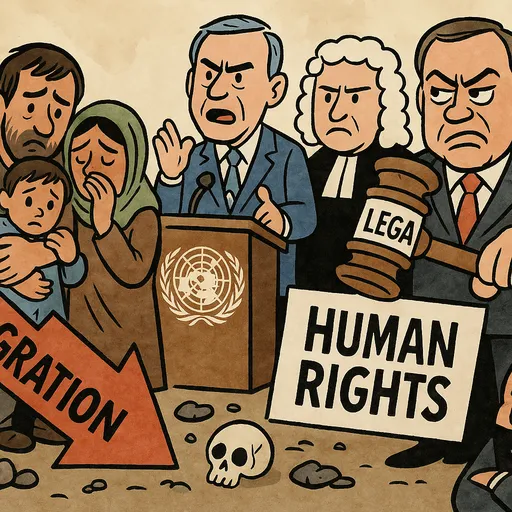
Recent reporting underscores a diplomatic landscape dominated by large-scale migration and displacement, mounting demands for legal accountability, and heightened interstate tensions over rights issues. UN and rights organisations warn of thousands of deaths on migration routes and press for safer corridors and humanitarian access, while states pursue divergent policy responses from mass regularisation to expedited returns. European courts and international bodies are enforcing human-rights norms, prompting legal and political pushback in some capitals. Simultaneously, allegations of abuses by security forces, attacks on aid and health workers, and crackdowns on activists compound calls for transparent investigations and stronger protection for defenders.
European institutions and allied governments are framing human-rights compliance as a legal obligation, using courts and diplomatic dialogue to enforce standards. This perspective stresses accountability through supranational rulings and conditional engagement to prompt domestic reform and signal willingness to uphold EU and international norms.
International agencies emphasise the humanitarian toll of displacement and maritime crossings, calling for coordinated search-and-rescue, protection measures and increased aid. Their stance foregrounds crisis response, prevention of further loss of life, and preparation for large-scale returns and reintegration where feasible.
States and regional forums are advancing pragmatic and policy-driven approaches to migration management, from mass regularisation schemes to incentives for faster repatriation and regional dialogue. This viewpoint prioritises administrative solutions and intergovernmental cooperation to reduce irregular flows and streamline processing.
Local rights bodies and journalists highlight suspected abuses by security forces and aggressive policing, demanding independent investigations and accountability. This perspective focuses on state-linked violence, threats to health and protection workers, and suppression of dissent as central human-rights concerns.
NGOs, the UN and affected states increasingly use public accusations, resolutions and legal actions to challenge major powers and actors they hold responsible for rights violations. The stance combines moral condemnation, legal avenues and diplomatic rebukes to press for accountability and to shape international norms.
Reporting from the region centres on the human impact of securitised governance, threats to human-rights defenders and the politicisation of justice. The perspective stresses risks to civil liberties, the targeting of activists, and the political symbolism of recognitions and prisoner releases in regional contests.
This group highlights debates over academic freedom, historical memory, religious expression and the regulation of online platforms as core human-rights battlegrounds. Governments and tech providers clash over content controls, while societies grapple with how to acknowledge past injustices and protect pluralism.
Investigations into document fraud, exploitative labour practices and official dismissals of migrants' suffering underline the intersection of corruption and protection gaps. This perspective calls attention to how weak governance and impunity increase migrants' vulnerability and undermine fair labour standards.
Individual clemency decisions and the release of detainees are framed as both humanitarian acts and diplomatic signals, reflecting negotiations over political prisoners and judicial redress. The viewpoint highlights the human impact of legal reversals and the continued diplomatic work to secure releases.
Islamic bodies emphasize solidarity on security and constructive human-rights cooperation within the Muslim world, condemning threats while pursuing institutional collaboration on rights issues. Their approach blends counterterrorism support with efforts to strengthen member-state engagement on human-rights programs.