
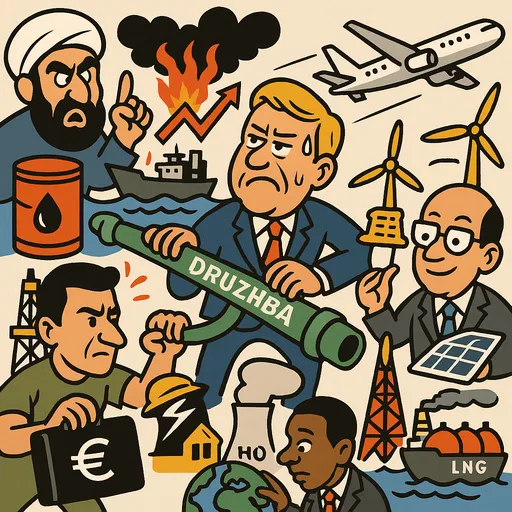
Geopolitical tensions around Iran and repeated disruptions at the Strait of Hormuz have driven oil and gas price spikes, disrupted shipping and left seafarers and airlines scrambling as jet-fuel costs force cancellations and conservation measures. Concurrently, Europe and Ukraine have focused on repairing and restarting key oil transit corridors (notably the Druzhba/Barátság pipelines), linking energy flows to loans, sanctions debates, and wider Russia–Europe diplomacy. Governments and blocs are accelerating resiliency measures — from emergency stockpiles and floating fuel concepts to faster deployment of renewables and nuclear projects — to blunt future shocks. Meanwhile, great-power competition and investment in the Global South (shipbuilding, LNG, transmission lines, downstream retail deals, seabed access) are reshaping who controls critical infrastructure and supply chains. The result is a layered energy-security landscape where immediate crisis management and longer-term strategic diversification are unfolding in parallel.
European and Ukrainian sources emphasise restoring pipeline links (Druzhba/Barátság) as urgent for energy security, regional supplies, and unlocking international finance, while framing repairs as leverage in sanctions and aid politics. Russian perspectives stress market resilience—claiming price gains offset wartime damage—and signal potential countermeasures such as altering other transit arrangements to retain influence over European supplies.
Regional and global reporters highlight the immediate shock of Iran-related disruptions at the Strait of Hormuz: surging oil and gas prices, constrained vessel transits, stranded crews, and cascading impacts on downstream users including airlines and consumer markets. European, Asian, African and Middle Eastern sources frame the episode as a test of maritime security, supply-chain resilience, and short-term crisis management.
Governments and policy voices across Europe and Asia argue for structural responses — expanding renewables, building nuclear capacity, creating regional oil stockpiles, and piloting flexible storage solutions — to reduce vulnerability to commodity shocks. Smaller states and regional actors also emphasize conservation and targeted financial support to protect critical supply chains and vulnerable economies.
Reports from the Global South underscore how China, Russia, Gulf investors, Turkey and others are deepening footprints through transmission lines, LNG and renewable projects, shipbuilding orders, downstream acquisitions, seabed/mineral initiatives and contested corridors. These perspectives highlight that investment-driven infrastructure and resource deals are now central levers in great-power competition and regional development strategies.