
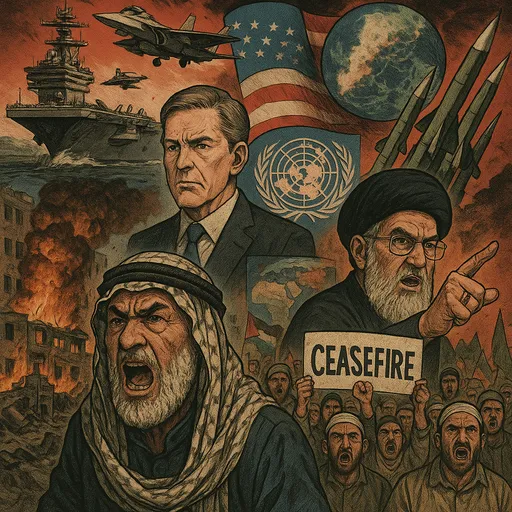
The situation across the Middle East remains highly volatile as a fragile ceasefire shows signs of erosion: violence in Gaza and cross‑border clashes with Lebanon persist alongside reports of Israeli strikes, settler attacks and civilian casualties. The United States and Western actors are portrayed as escalating pressure — deploying carriers, weighing renewed strikes and increasing diplomatic pressure — while Iran and its supporters publicly signal readiness, mobilize missiles and push hardline measures. The UN, European capitals and other international bodies warn of a worsening humanitarian crisis and urge de‑escalation even as negotiations and diplomatic efforts proceed unevenly. The conflict is producing wide spillovers beyond the battlefield — environmental damage visible from space, information‑war fronts, and economic impacts on shipping and insurance — while regional states issue competing calls for solidarity, reparations and resistance.
Reports from multiple outlets frame the crisis around U.S. policy and military posture: Washington is depicted as extending pressure, increasing deployments and considering renewed strikes while critics note large defense expenditures and strategic implications. This viewpoint emphasizes deterrence, preservation of influence and the operational costs of prolonged confrontation.
Iranian officials and allied sources emphasize preparedness and deterrence, claiming battlefield successes, mobilizing missiles and signaling that ceasefire terms or blockades must be rethought before talks resume. This perspective stresses sovereignty, retaliation capability and reluctance to accept negotiated limits under current conditions.
Gulf states and regional organizations foreground solidarity against terrorism and demand accountability, calling on Iran to pay reparations where attacks affected Gulf states and condemning plots that threaten UAE stability. This viewpoint prioritizes regional security cooperation, legal redress and protection of Gulf state sovereignty.
The UN, European governments and other international actors highlight the deteriorating humanitarian situation and rising ceasefire violations, urging de‑escalation and renewed diplomacy while some European capitals engage directly in mediation. This stance stresses civilian protection, monitoring of violations and the fragility of any pause in hostilities.
Local and regional coverage centers on border clashes, settler violence, Israeli operations in southern Syria and Lebanon, civilian casualties in Gaza, and political fallout at home — including memorials, public outrage and disciplinary actions over provocative incidents. The dominant viewpoint is one of acute insecurity among civilians, mutual accusations of ceasefire breaches, and rising local distrust of guarantees of safety.
Analyses and technical reports draw attention to non‑kinetic fronts: meme and AI propaganda campaigns shaping public opinion, satellite imagery revealing oil spills and environmental damage, and rising shipping and transit costs tied to regional instability. This perspective frames the conflict’s broader, long‑term impacts on information ecosystems, ecology and global trade.
Standalone regional security incidents — for example a Turkish military helicopter crash — are reported as part of a broader pattern of instability that complicates military operations and prompts investigations. Such accounts underscore unpredictable risks and the operational pressures on regional militaries.
Coverage highlights shifting regional alignments and spillover effects: neighbouring states express concern about attacks affecting third countries, and analyses note Syria repositioning itself as a potential partner to Gulf states amid wider instability. This viewpoint emphasizes diplomatic recalibration and the risk of wider regional entanglements.