

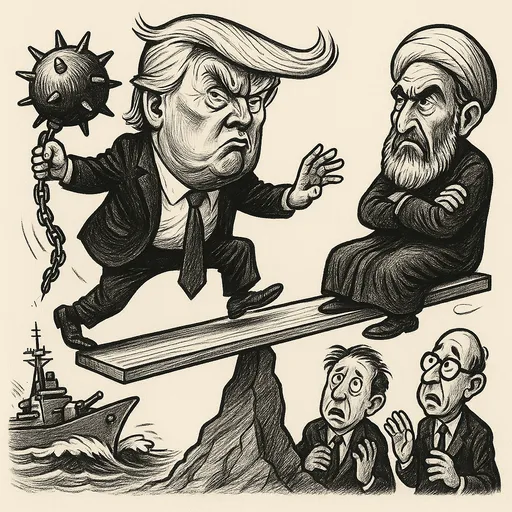
President Donald Trump has repeatedly announced extensions or pauses in the US–Iran ceasefire while publicly stressing US leverage — including maintaining a naval blockade — and conditioning further truces on Tehran submitting an acceptable proposal. Tehran and Iranian officials have largely responded with distrust, accusing Washington of using extensions as ploys, demanding the blockade be lifted, and in many accounts refusing to negotiate under current pressures. Pakistan and other mediators have been pressed to convene talks, but scheduling has been uneven and participation unclear, leaving frequent postponements and contradictory signals. International analysts, the UN and arms-control voices warn the situation remains fragile: sanctions and verification concerns persist, and the risk of renewed military escalation or economic fallout endures if diplomacy stalls.
US-based and pro‑Washington sources present the ceasefire extensions as tactical pauses designed to extract a concrete Iranian proposal while preserving pressure through a naval blockade and sanctions. Trump's rhetoric mixes offers of negotiation with threats of military action, framing the US as holding a strong bargaining position while demanding unified Iranian terms before any final deal.
 Donald Trump says U.S. in ‘very, very strong’ position for Iran talks
Trump extends ceasefire until Iranian proposal is submitted, talks are over
Donald Trump says U.S. in ‘very, very strong’ position for Iran talks
Trump extends ceasefire until Iranian proposal is submitted, talks are over
 Trump extends ceasefire until Iran presents his peace proposal! U.S. President: American forces to be ready to act
 Trump on Iran's uranium stockpile
 Donald Trump announces extension of ceasefire with Iran
Trump: Iran ceasefire will not be extended; air strikes will resume.
Donald Trump announces extension of ceasefire with Iran
Trump: Iran ceasefire will not be extended; air strikes will resume.
 Trump Extends Ceasefire with Iran 'For the Time Being'
 Trump: New negotiations with Iran in Pakistan on Monday
 Live, Middle East – Donald Trump extends the ceasefire with Iran until further notice.
Surprising U-turn: Donald Trump extends the ceasefire in Iran indefinitely
Live, Middle East – Donald Trump extends the ceasefire with Iran until further notice.
Surprising U-turn: Donald Trump extends the ceasefire in Iran indefinitely
 Trump announces extension of ceasefire with Iran
 Trump extends unilateral ceasefire with Iran, no new attacks reported
 Donald Trump's statement on extending the ceasefire
 Trump: Extends ceasefire, keeps naval blockade of Iran
 Trump announced extension of ceasefire with Iran
 Donald Trump extends ceasefire, says giving Iran time to negotiate
 Trump says naval blockade against Iran is necessary to reach a deal
 Trump says he will reach an excellent deal with Iran, and will probably not extend the ceasefire
 Trump reverses course and announces indefinite ceasefire to negotiate with Iran
Trump says the naval blockade against Iran is necessary to reach an agreement
Trump extends the ceasefire until Iran presents a proposal for an agreement
Trump reverses course and announces indefinite ceasefire to negotiate with Iran
Trump says the naval blockade against Iran is necessary to reach an agreement
Trump extends the ceasefire until Iran presents a proposal for an agreement
 Trump extends ceasefire until Tehran presents a proposal
 Trump says he will extend ceasefire with Iran and continue blockade
 Reuters: Trump May Attend U.S.-Iran Talks if Deal is Reached
Trump says recovering Iran uranium 'will be a long and difficult process'
Reuters: Trump May Attend U.S.-Iran Talks if Deal is Reached
Trump says recovering Iran uranium 'will be a long and difficult process'
 Donald Trump extends ceasefire with Iran following Pakistan's request, but keeps naval blockade
 Trump says ceasefire extension with Iran; not rushing into a bad deal, unified proposal will be discussed until a conclusion is reached
 USA-Iran negotiations: Trump announces sending a delegation to Pakistan on Monday
 Trump backs down and announces an indefinite ceasefire to negotiate with Iran
 US will indefinitely extend ceasefire, unclear if Iran agrees
 Trump extends the ceasefire with Iran for an indefinite period
 Trump says he does not want to extend the armistice with Iran: 'The army is eager to act'
Iran war: Donald Trump extends the truce despite stalemate in talks
Trump says he does not want to extend the armistice with Iran: 'The army is eager to act'
Iran war: Donald Trump extends the truce despite stalemate in talks
 Trump extends ceasefire, says giving Iran time to negotiate
Trump says Iran deal very close as Hormuz reopens
Trump extends ceasefire, says giving Iran time to negotiate
Trump says Iran deal very close as Hormuz reopens
 Trump: Iran-US negotiations will end with an excellent deal
 Trump says lifting naval blockade could jeopardize Iran deal
 Hormuz reopened; Trump says there are no blocking points with Iran
Trump says the United States and Iran are very close to a deal
Hormuz reopened; Trump says there are no blocking points with Iran
Trump says the United States and Iran are very close to a deal
 Trump extends ceasefire, says giving Iran time to negotiate
 Donald Trump extends the ceasefire until Iran presents a proposed agreement
 Trump: Extension of Ceasefire
 Trump extends ceasefire with Iran, blockade of Iranian ports to continue.
 Attack on Iran: Trump agrees to extend the ceasefire.
 U.S. does not want to extend truce with Iran, Trump says
 Trump says negotiations with Iran will be concluded to everyone's satisfaction
 Trump accuses Iran of violating ceasefire and casts doubt on negotiations
 Suspension of US-Iran talks – top American officials gather at the White House
 Donald Trump says he will extend ceasefire with Iran until further notice
Trump to send delegation to Pakistan to negotiate with Iran
Donald Trump says he will extend ceasefire with Iran until further notice
Trump to send delegation to Pakistan to negotiate with Iran
 US-Iran conflict: Trump extends ceasefire to allow Iran more time to come up with \"unified proposal\"
 Trump extends ceasefire with Iran indefinitely and keeps blockade on its ports
 Hours before deadline, Trump extends truce with Iran until negotiations conclusion
Trump extends ceasefire with Iran indefinitely, just hours before the deadline; naval blockade remains in effect.
Hours before deadline, Trump extends truce with Iran until negotiations conclusion
Trump extends ceasefire with Iran indefinitely, just hours before the deadline; naval blockade remains in effect.
 Trump says he is not interested in extending a ceasefire with Iran
Trump announced that he would extend the ceasefire with Iran
Trump says he is not interested in extending a ceasefire with Iran
Trump announced that he would extend the ceasefire with Iran
 Trump says that the naval blockade against Iran is necessary to reach an agreement
Trump announces a new ceasefire with Iran despite saying he would not extend it
Trump says that the naval blockade against Iran is necessary to reach an agreement
Trump announces a new ceasefire with Iran despite saying he would not extend it
 Trump Extends Truce Until Iran Submits Proposal, U.S. to Maintain Naval Blockade
 Trump extends ceasefire with Iran to pursue negotiations while maintaining the naval blockade
 Trump Extends the Ceasefire with Iran
 Trump Announces Unexpected Extension of US-Iran Ceasefire
 US indefinitely extends ceasefire with Iran
Live: Trump extends truce to give Iran time to negotiate, maintains blockade
US indefinitely extends ceasefire with Iran
Live: Trump extends truce to give Iran time to negotiate, maintains blockade
 Trump to extend the ceasefire until Iran presents a proposal and negotiations conclude
Trump says he does not want to extend the ceasefire with Iran
Trump to extend the ceasefire until Iran presents a proposal and negotiations conclude
Trump says he does not want to extend the ceasefire with Iran
 Trump: US could reach a 'great deal' with Iran; I do not plan to extend the ceasefire
 Exclusive Middle East: With negotiations suspended, Trump agrees to extend cease-fire
Trump agrees to extend cease-fire with Iran, but does not lift naval blockade
Exclusive Middle East: With negotiations suspended, Trump agrees to extend cease-fire
Trump agrees to extend cease-fire with Iran, but does not lift naval blockade
 Trump Extends Truce with Iran: April 21 Events
 Trump: USA extends ceasefire with Iran
 Trump keeps Iran blockade despite extending ceasefire
 Trump extends the ceasefire until Iran presents a proposal and negotiations go on until the end
 Trump expects an 'excellent' peace agreement, though it is unclear if Iranians will attend negotiations
 UPDATED: Trump extends US-Iran ceasefire
 Trump extends US ceasefire with Iran
Trump extends US ceasefire with Iran
Trump extends US ceasefire with Iran
 LIVE: Trump says he will extend the ceasefire with Iran until further notice
Iran War: Trump Extends Ceasefire; Sanctions Continue and Our Forces Are Ready to Move
LIVE: Trump says he will extend the ceasefire with Iran until further notice
Iran War: Trump Extends Ceasefire; Sanctions Continue and Our Forces Are Ready to Move
Iranian outlets and officials emphasize mistrust of US intentions, rejecting negotiations under the current blockade and labeling ceasefire extensions as time‑buying or tactical ploys. Tehran’s stated conditions frequently include lifting the maritime blockade and avoiding coercive demands; hardliners and some officials frame talks skeptically while domestic divisions complicate any unified Iranian response.
A Pure Waste of Time: Trump Extends Ceasefire, but Iran Refuses Negotiations
 Iran: U.S. Must Choose Between Ceasefire or Continuing War via Israel
Iran–U.S. Talks Clouded by Distrust as Tensions Rise
Pezeshkian: Iran Seeks Its Rights, Rejects U.S. Pressure Over Nuclear Issue
Iran: U.S. Must Choose Between Ceasefire or Continuing War via Israel
Iran–U.S. Talks Clouded by Distrust as Tensions Rise
Pezeshkian: Iran Seeks Its Rights, Rejects U.S. Pressure Over Nuclear Issue
 Iran says Trump's ceasefire extension a 'ploy to buy time' as Vance cancels Pakistan trip
Iran War: Trump extends ceasefire after Tehran refuses to negotiate
US-Iran talks stall as Tehran refuses to participate
Iran says Trump's ceasefire extension a 'ploy to buy time' as Vance cancels Pakistan trip
Iran War: Trump extends ceasefire after Tehran refuses to negotiate
US-Iran talks stall as Tehran refuses to participate
 Tasnim Agency: Washington hampers ceasefire negotiations with excessive demands
Iranian: Lifting the US maritime blockade is a condition for resuming negotiations
Tasnim Agency: Washington hampers ceasefire negotiations with excessive demands
Iranian: Lifting the US maritime blockade is a condition for resuming negotiations
 War in Iran, today's news: Trump extends the truce; Tehran's hawks say it's a trap, but Ghalibaf applauds
 Iran declines to negotiate under threats
Iran accuses the US of violating the ceasefire with a naval blockade
Trump extends ceasefire until Iran submits peace proposal; Tehran says US blockade of its ports is 'act of war'
Iran declines to negotiate under threats
Iran accuses the US of violating the ceasefire with a naval blockade
Trump extends ceasefire until Iran submits peace proposal; Tehran says US blockade of its ports is 'act of war'
 Iran says US not serious about pursuing diplomacy
 Turnaround in the Middle East: Trump extends ceasefire with Iran; Tehran says no negotiations
Trump says ceasefire with Iran extended with no deadline; Iran calls it meaningless and a time-wasting tactic
Iran says it has no plan for a new round of negotiations with the United States
Turnaround in the Middle East: Trump extends ceasefire with Iran; Tehran says no negotiations
Trump says ceasefire with Iran extended with no deadline; Iran calls it meaningless and a time-wasting tactic
Iran says it has no plan for a new round of negotiations with the United States
 Interview: Iran will never surrender the nuclear material. What happens after the armistice expires with the USA
 Ceasefire between the US and Iran in doubt – Tehran says extension is a ploy
Iran considers extension of ceasefire US attempt to buy time for strike
Iran refuses to recognize U.S. ceasefire extension
Iran refuses to negotiate with U.S.
Ceasefire between the US and Iran in doubt – Tehran says extension is a ploy
Iran considers extension of ceasefire US attempt to buy time for strike
Iran refuses to recognize U.S. ceasefire extension
Iran refuses to negotiate with U.S.
 Iran accuses Trump: Extending the ceasefire is a tactic to buy time for a sudden strike
Iran did not send a delegation to talks with the US in Pakistan
Iran accuses Trump: Extending the ceasefire is a tactic to buy time for a sudden strike
Iran did not send a delegation to talks with the US in Pakistan
 Iran envoy says negotiations depend on US ending blockade as talks remain on hold
 Iran withdraws from negotiations with the EU and cancels dialogue in Pakistan
Trump's cease-fire extension seeks to buy time for a surprise attack: Iranian adviser
Trump says US extends ceasefire – Iran says it doesn't matter
Iran withdraws from negotiations with the EU and cancels dialogue in Pakistan
Trump's cease-fire extension seeks to buy time for a surprise attack: Iranian adviser
Trump says US extends ceasefire – Iran says it doesn't matter
 Iran cites progress in talks
Reports from regional and mediator sources present Pakistan as the preferred host and facilitator for US–Iran talks, but they also highlight repeated postponements, unclear Iranian participation, and the fragility of logistics around envoy visits. Mediators stress willingness to convene 'face‑to‑face' talks, yet scheduling hiccups and conditional demands from both sides have left negotiation rounds uncertain.
Peace Talks: US Vice President Vance Will Not Fly to Pakistan for Now
New York Times: Fans canceled a trip to Pakistan due to Iran not responding to US negotiation terms
 CNN: U.S. Vice President's trip to talks with Iran postponed
 Pakistan mediator says US and Iran show willingness to hold talks
 Islamabad on hold as US and Iran at a historic tipping point
Pakistani Source: Second Round of US–Iran Talks to Be Held as Scheduled
Trump orders negotiators to Pakistan, but Iran on the fence over talks
Islamabad on hold as US and Iran at a historic tipping point
Pakistani Source: Second Round of US–Iran Talks to Be Held as Scheduled
Trump orders negotiators to Pakistan, but Iran on the fence over talks
 Iran agrees to a second round of talks with the United States
Iran agrees to a second round of negotiations with the United States
Trump announces a two-week ceasefire and Iran presents a 10-point plan for ending the war
White House says U.S. vice president's Pakistan visit postponed amid Iran talks
Pakistan presses ahead with preparations for Iran-US talks even with Tehran's participation unclear
Iran agrees to a second round of talks with the United States
Iran agrees to a second round of negotiations with the United States
Trump announces a two-week ceasefire and Iran presents a 10-point plan for ending the war
White House says U.S. vice president's Pakistan visit postponed amid Iran talks
Pakistan presses ahead with preparations for Iran-US talks even with Tehran's participation unclear
 US-Iran, mystery surrounding negotiations in Pakistan
Pakistan preps Iran–US talks amid Tehran uncertainty
US-Iran, mystery surrounding negotiations in Pakistan
Pakistan preps Iran–US talks amid Tehran uncertainty
 Ceasefire unlikely; Vance's trip to Islamabad postponed as Trump announces extension
Trump Extends Iran Ceasefire as Vance Pakistan Trip Is Called Off
Islamabad Negotiations | Pakistani Source: U.S., Iran Teams Begin 'Face to Face' Talks
US awaits Iranian peace proposal; Pakistan ready for new talks
US Vice President Cancels Trip to Pakistan Following Trump's Extension of US-Iran Ceasefire
Trump extends ceasefire with Iran ahead of deadline as talks Pakistan are stalled
Pakistan as mediator thanks Trump for extending ceasefire with Iran
The White House: Vance has not traveled to Iran talks in Pakistan
Ceasefire unlikely; Vance's trip to Islamabad postponed as Trump announces extension
Trump Extends Iran Ceasefire as Vance Pakistan Trip Is Called Off
Islamabad Negotiations | Pakistani Source: U.S., Iran Teams Begin 'Face to Face' Talks
US awaits Iranian peace proposal; Pakistan ready for new talks
US Vice President Cancels Trip to Pakistan Following Trump's Extension of US-Iran Ceasefire
Trump extends ceasefire with Iran ahead of deadline as talks Pakistan are stalled
Pakistan as mediator thanks Trump for extending ceasefire with Iran
The White House: Vance has not traveled to Iran talks in Pakistan
International outlets, analysts and institutions warn that maintaining sanctions, extending embargoes, and keeping the maritime blockade risk undermining trust and economic stability while complicating verification of any deal. The UN, IAEA-related commentary and many analysts stress the need for credible verification, caution about oil‑market impacts, and warn that the ceasefire is fragile and could quickly unravel without substantive concessions and monitoring.
Uncertainty clouds Iran talks as ceasefire deadline nears
Ceasefire in US–Iran conflict is ending.
The United States and Iran Stand on the Brink of a New War
 Opinion | The Struggle over ‘Corridors of the Future’
US-Iran talks hang in balance as mistrust complicates Pakistan diplomacy
Opinion | The Struggle over ‘Corridors of the Future’
US-Iran talks hang in balance as mistrust complicates Pakistan diplomacy
 USA extends arms embargo with Iran
Uncertainty over US-Iran negotiations
USA–Iran talks. Will they take place and will they yield a lasting agreement? We explain
Trump and Iran do not want war; peace will be hard as ceasefire is extended
USA extends arms embargo with Iran
Uncertainty over US-Iran negotiations
USA–Iran talks. Will they take place and will they yield a lasting agreement? We explain
Trump and Iran do not want war; peace will be hard as ceasefire is extended
 Hours of waiting and uncertainty in negotiations between the US and Iran
 Trump extends ceasefire; blockade remains. Iran threatens to destroy oil industry
Trump extended the ceasefire, blockade continues; Iran threatens destruction of oil industry
Drama in US–Iran negotiations
US says Iran will soon collapse due to naval blockade on its exports
Iran’s new supreme leader is nowhere to be seen. That might be helping the regime to survive
Trump extends ceasefire; blockade remains. Iran threatens to destroy oil industry
Trump extended the ceasefire, blockade continues; Iran threatens destruction of oil industry
Drama in US–Iran negotiations
US says Iran will soon collapse due to naval blockade on its exports
Iran’s new supreme leader is nowhere to be seen. That might be helping the regime to survive
 United States: Sanctions target Iran's main revenue sources
 Iran–United States: total uncertainty on negotiations on the eve of the ceasefire's end
After the armistice, the storm in Iran begins: 'Critical infrastructures – bridges, power grids – will be hit'
Scott Bessent: The US blockade targets Iran's main revenue sources
US imposes new sanctions against suppliers of weapons to Iran
What to know about the war and possible talks between the United States and Iran
US Open to Shortening Iran Nuclear Program Pause
Iran–United States: total uncertainty on negotiations on the eve of the ceasefire's end
After the armistice, the storm in Iran begins: 'Critical infrastructures – bridges, power grids – will be hit'
Scott Bessent: The US blockade targets Iran's main revenue sources
US imposes new sanctions against suppliers of weapons to Iran
What to know about the war and possible talks between the United States and Iran
US Open to Shortening Iran Nuclear Program Pause
 Ceasefire on brink of collapse as US and Iran exchange threats
Nuclear deal between Iran, US illusory if IAEA not involved, Director Grossi says
Karl Dalén: A chicken race between Iran and the US
The President's Message Tests the Countries' Tolerance Levels
The Port Blockade Continues — Iran Sends No Delegation for Talks
Ceasefire on brink of collapse as US and Iran exchange threats
Nuclear deal between Iran, US illusory if IAEA not involved, Director Grossi says
Karl Dalén: A chicken race between Iran and the US
The President's Message Tests the Countries' Tolerance Levels
The Port Blockade Continues — Iran Sends No Delegation for Talks
 US extends ceasefire with Iran – oil price falls
US Blocks Dollar Transactions to Iraq to Pressure Iran-backed Militias
US extends ceasefire with Iran – oil price falls
US Blocks Dollar Transactions to Iraq to Pressure Iran-backed Militias
 Trump extends ceasefire with Iran
Ceasefire expires; risk of new conflict between US and Iran
Bessent: The US blockade targets Iran's main source of revenue
UN voices hope for US-Iran talks resumption
US extends Iran ceasefire before truce expires amid standoff; Strait of Hormuz to be next focus of rivalry: Chinese expert
Trump extends ceasefire with Iran
Ceasefire expires; risk of new conflict between US and Iran
Bessent: The US blockade targets Iran's main source of revenue
UN voices hope for US-Iran talks resumption
US extends Iran ceasefire before truce expires amid standoff; Strait of Hormuz to be next focus of rivalry: Chinese expert
A subset of reports foreground human‑rights appeals — notably calls by the US president for the release of women reportedly facing execution — and Iran’s denials or corrections regarding those cases. These stories frame human‑rights claims as part of diplomatic leverage and as an additional point of contention in bilateral interactions.
Several pieces focus on the domestic political dimension — Trump's shifting public statements, symbolic acts (e.g., Bible readings), protests at home, and poll impacts — suggesting mixed messaging that complicates coherent diplomacy. These accounts argue domestic considerations and rhetoric are interacting with foreign‑policy decisions and shaping both public perception and negotiating posture.
Veterans Protest U.S. War with Iran at Congress, Dozens Arrested
Trump reads the Bible amid war with Iran and tensions with Pope Leo XIV
Backstage revelations reveal Trump's fears and fragilities about the conflict.
What Bible passage did Donald Trump read amid tensions with Iran
US, Iran and conflict with the Pope keep Trump's approval rating at historic low