
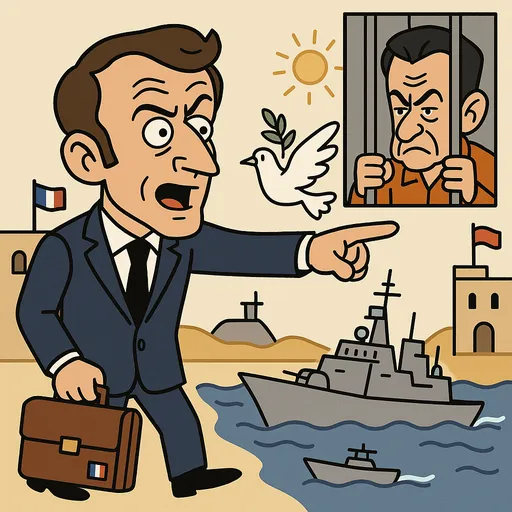
France, under President Emmanuel Macron's leadership, is actively responding to escalating tensions in the Middle East, particularly around the Strait of Hormuz, by preparing and deploying naval forces to secure vital maritime routes and protect French nationals. Macron is also spearheading diplomatic efforts, including calls for ceasefires and organizing international meetings on energy security and nuclear power. Domestically, France faces significant political developments such as the sentencing of former President Nicolas Sarkozy, while continuing to maintain diplomatic relations globally, including appointments and overseas visits.
This cluster highlights France's proactive military and diplomatic responses to the escalating conflict in the Middle East, especially concerning the Strait of Hormuz. President Macron has announced and led efforts to deploy naval forces, including aircraft carriers and frigates, to protect shipping lanes and French nationals. France is coordinating with European allies and NATO, preparing defensive missions to ensure free navigation and energy security. Macron's diplomatic outreach includes urging ceasefires between Israel and Hezbollah and engaging in multilateral talks to de-escalate the Iran conflict. These actions underscore France's strategic commitment to regional stability and global energy supply security.
France is actively addressing the global energy challenges arising from the Middle East conflict by organizing and participating in high-level meetings such as the G7 energy discussions. President Macron emphasizes the urgency of stabilizing oil markets threatened by potential blockades of the Strait of Hormuz. France's leadership in coordinating the release of oil reserves and promoting nuclear energy discussions reflects its broader strategy to mitigate the impact of geopolitical tensions on energy security worldwide.
France is experiencing significant political developments, notably the sentencing of former President Nicolas Sarkozy to six months in prison for illegal campaign financing. This event marks a critical moment in France's ongoing efforts to address political corruption and uphold judicial accountability. The case has drawn considerable public and international attention, reflecting the country's commitment to legal transparency and governance reforms.
France continues to strengthen its diplomatic presence and international relations through strategic appointments and official visits. The appointment of Sylvain Riquier as Ambassador to the Comoros and Minister Naïma Moutchou's official visit to Saint Martin demonstrate France's ongoing commitment to maintaining and enhancing ties with its overseas territories and partner nations. These efforts support France's broader foreign policy objectives and regional influence.
Public demonstrations across European cities, including Paris, reflect widespread concern and opposition to the ongoing war involving Iran. These protests highlight the impact of the Middle East conflict on global public opinion and the demand for peaceful resolutions. The international community, including France, faces pressure to balance military and diplomatic strategies with public calls for peace.