
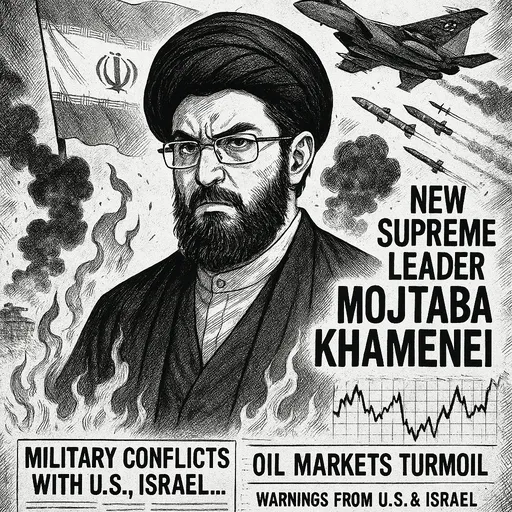
Iran has appointed Mojtaba Khamenei, son of the late Supreme Leader Ali Khamenei, as its new Supreme Leader during a period of intense regional conflict and internal challenges. This leadership change signals continuity of hardline policies and has intensified tensions with the US, Israel, and their allies, prompting military confrontations and retaliatory strikes. The appointment has caused significant fluctuations in global oil markets, reflecting concerns over regional stability and supply disruptions. International reactions vary, with Russia and China expressing support, while the US and Israel issue warnings and criticism. The volatile situation includes security threats to the new leader and ongoing geopolitical rivalries, underscoring the complex dynamics shaping Iran's future direction and regional diplomacy.
Western countries, particularly the US and Israel, view Mojtaba Khamenei's appointment as a continuation of Iran's hardline and confrontational policies. They express concern over increased regional instability, military escalations, and the potential for prolonged conflict. US leaders, including President Trump, criticize the appointment as a strategic mistake and warn of heightened tensions and security risks. Israel issues sharp warnings, emphasizing the threat posed by Iran's new leadership to regional security.
Regional actors highlight the appointment as a pivotal moment amid escalating Middle East conflicts. Countries like Lebanon and Jordan emphasize the frustration this causes Washington and Tel Aviv, viewing it as a setback to their regional objectives. The leadership change is linked to ongoing military confrontations and increased mobilization of Iran's supporters, contributing to heightened tensions and instability in neighboring countries.
Russia and China express support for Mojtaba Khamenei's leadership, framing it as a continuation of a strategic partnership and a stabilizing factor amid regional turmoil. Russian President Putin promises unwavering support, while China rejects Israeli targeting of the new leader, signaling alignment with Iran against Western pressures. These perspectives underscore the geopolitical divisions and alliances influencing the Middle East conflict.
Some analyses focus on the internal political dynamics within Iran, debating whether Mojtaba Khamenei will pursue reconciliation or maintain his father's hardline legacy. Experts warn of assassination risks and political instability following the appointment. Observers note the significant impact on global oil markets and the broader implications for Iran's domestic and foreign policies amid ongoing conflict and uncertainty.