

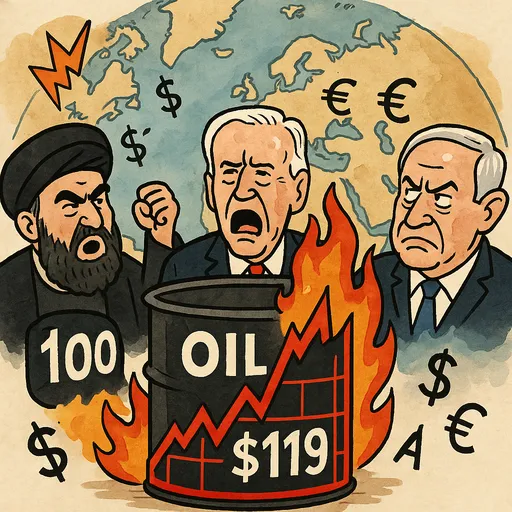
The ongoing conflict involving Iran, the United States, and Israel has caused significant disruptions in the Middle East oil market, leading to sharp surges in global oil prices, with crude surpassing $100 and even $119 per barrel. Key supply routes like the Strait of Hormuz have been blocked or threatened, prompting major producers to cut output and shipping companies to halt exports, exacerbating supply fears. Various countries and regions, including the US, China, Europe, Africa, and Pacific nations, are experiencing economic repercussions such as inflation risks, trade disruptions, and energy security concerns. Governments and international groups like the G7 are considering emergency measures, including releasing strategic reserves, while political leaders offer differing perspectives on the conflict's impact and potential resolutions. The situation remains volatile with no clear end in sight, raising fears of a prolonged global energy crisis and economic instability.
Articles from the US, Europe, and allied countries emphasize the geopolitical tensions driving oil price surges and the economic risks posed by the Iran conflict. They highlight US and Israeli military actions, the blockade of the Strait of Hormuz, and the resulting supply disruptions. These sources discuss government responses such as potential release of strategic reserves and policy measures to stabilize markets, while some US leaders frame price increases as necessary for security. The viewpoint reflects concern over global economic fallout and the need for coordinated international action.
Articles focusing on Iran and neighboring countries underscore the hardline political shifts, such as the appointment of Mojtaba Khamenei, and the intensification of military strikes targeting oil infrastructure. These sources portray the conflict as deepening with no immediate resolution, emphasizing Iran's role in escalating tensions and the resulting disruptions to oil production and exports. The perspective highlights regional instability as a primary driver of global market volatility and energy insecurity.
Chinese and broader Asian perspectives express significant concern over the conflict's impact on investments, trade routes, and energy supplies. China is monitoring risks to its economic interests and considering adjustments to energy policies, including indirect imports of Iranian oil. Asian markets show sensitivity to geopolitical developments, with price fluctuations reacting to political statements. This viewpoint stresses the economic vulnerabilities and strategic recalibrations in response to Middle East instability.
Articles from Africa, the Caribbean, Pacific islands, and other developing regions focus on the broader economic shocks caused by rising oil prices and disrupted supply chains. These sources highlight inflation risks, trade delays, and energy affordability challenges impacting daily life and economic stability. The perspective underscores the far-reaching consequences of Middle East conflicts beyond the immediate region, emphasizing the need for preparedness and adaptive measures in vulnerable economies.