
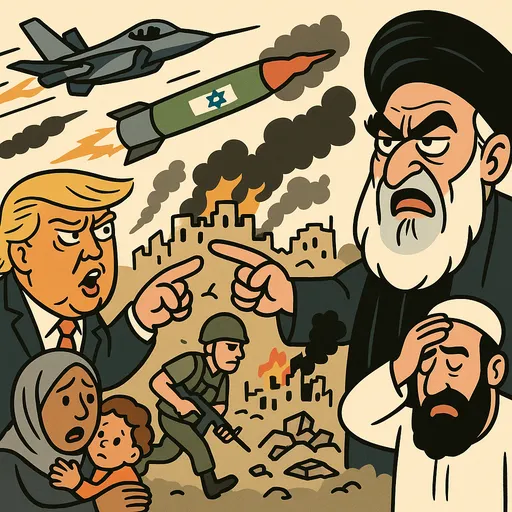
The Israel-Iran military conflict has intensified with frequent missile strikes, air raids, and ground operations, involving the United States and regional actors. Iran's appointment of a new hardline Supreme Leader Mojtaba Khamenei has coincided with increased missile attacks on Israel and Gulf states, prompting strong retaliatory strikes by Israel and the US targeting Iranian military infrastructure. The conflict has caused significant civilian casualties and displacement, particularly in Lebanon and Gulf countries, raising humanitarian concerns. US President Donald Trump and other US officials have expressed both optimism about a near end to the war and warnings of potential escalation, reflecting complex political dynamics. Regional organizations and countries have condemned Iranian aggression, while Iran remains defiant, prepared for a prolonged conflict, and accused of covert operations, contributing to ongoing instability in the Middle East.
This cluster reflects the viewpoint of the United States and Israel emphasizing strong military action against Iran, highlighting significant Iranian casualties and infrastructure damage. President Donald Trump frequently asserts that the war is nearing its end, projecting confidence in US-led operations while simultaneously threatening harsher strikes if Iran disrupts oil supplies. The US and Israeli sources focus on strategic strikes, including targeting Iran's drone capabilities and nuclear-related sites, portraying the conflict as a decisive campaign to weaken Iran's military power. This perspective also includes warnings about Iran's hostile actions and stresses the necessity of continued pressure until Iran surrenders unconditionally.
Countries and organizations in the Gulf and broader Middle East strongly condemn Iran's missile and drone attacks on civilian and residential areas in Saudi Arabia, Bahrain, Qatar, and the UAE. These statements emphasize the destabilizing impact of Iran's military actions on regional security and civilian populations, calling for peace and protection of non-combatants. The perspective highlights the humanitarian toll and the threat Iran poses to neighboring states, reinforcing alliances against Iranian aggression.
This cluster captures Iran's stance of resilience and readiness for a long war against the US and its allies, rejecting negotiations and accusing Israel of aggressive strikes on sovereign targets. Iranian sources report capturing American soldiers and launching retaliatory missile attacks on Israel and Gulf states. The Revolutionary Guards claim authority over the conflict's duration, signaling a hardline approach. This viewpoint underscores Iran's commitment to its military campaign despite heavy losses and international pressure.
International organizations and human rights groups focus on the humanitarian consequences of the conflict, reporting civilian casualties from missile strikes, air raids, and the use of controversial weapons like white phosphorus. Accusations against Israel for targeting civilian areas in Lebanon and Gaza, and concerns over US strikes near schools in Iran, highlight the severe human cost. This perspective calls attention to violations of international law and the urgent need for protection of civilians amid escalating hostilities.
Some international actors, including North Korea and Russia, criticize US and Israeli military operations in Iran, condemning them as reckless and destabilizing. Reports of Russia providing intelligence to Iran and North Korean denunciations reflect broader geopolitical tensions and alliances. These perspectives challenge US and Israeli narratives, emphasizing the risks of wider conflict and the complexity of international involvement in the Middle East.