
France is actively enhancing its military capabilities by increasing its nuclear arsenal, deploying naval and air forces to strategic regions such as the Middle East and Cyprus, and modernizing its defense technology with new submarines. Concurrently, France is engaging diplomatically to manage regional conflicts, urging restraint in the Middle East and organizing international financial discussions. Additionally, France is strengthening bilateral ties with countries like Libya and Andorra, while addressing internal judicial matters and investigations. These actions reflect France's multifaceted approach to security, diplomacy, and domestic affairs amid rising global instability.
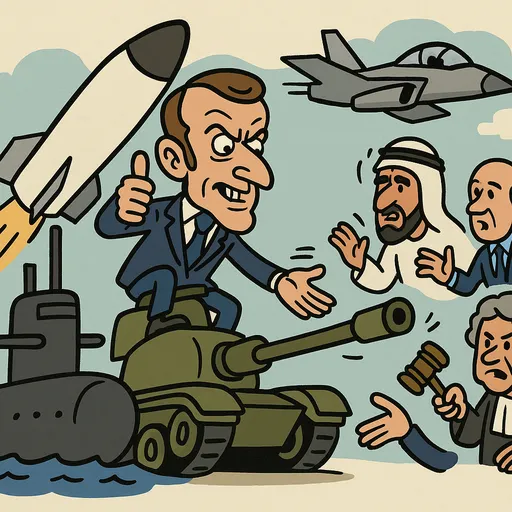
France is significantly bolstering its military posture by increasing its nuclear warheads for the first time in decades, ceasing disclosure of stockpiles, and extending nuclear deterrence to European allies. The deployment of the aircraft carrier Charles de Gaulle to the Mediterranean and fighter jets to Middle Eastern bases underscores France's commitment to regional stability. The unveiling of the advanced nuclear submarine 'The Invincible' and the movement of military assets to Cyprus alongside Greece and the UK highlight France's strategic modernization and response to escalating global tensions. These measures have drawn criticism from Russia, which views the nuclear expansion as destabilizing.
France is actively involved in diplomatic efforts to address Middle Eastern conflicts, condemning attacks on Iran and urging Israeli restraint to prevent escalation in Lebanon. The country is organizing a G7 finance ministers meeting focused on the economic impacts of the Middle East crisis. France is also facilitating bilateral cooperation with Libya through direct flights and official visits, and maintaining diplomatic relations with Andorra. These initiatives demonstrate France's role in promoting stability and dialogue amid regional and international challenges.
The closure of Middle Eastern airspace due to escalating conflicts has led France to evacuate hundreds of thousands of its citizens, reflecting the severity of the regional instability. Additionally, Air France's suspension of flights to Havana signals challenges in international travel and economic recovery for Cuba, indirectly affecting France's aviation sector. These developments highlight the broader impact of geopolitical tensions on civilian mobility and international connectivity.
France continues to address significant legal and investigative matters, including the sentencing of individuals involved in the high-profile assassination of teacher Samuel Paty, underscoring the country's commitment to justice and freedom of expression. Furthermore, French authorities have launched an investigation into the late businessman Mohamed al-Fayed concerning allegations of abuse, reflecting ongoing efforts to tackle complex criminal cases with international dimensions.