
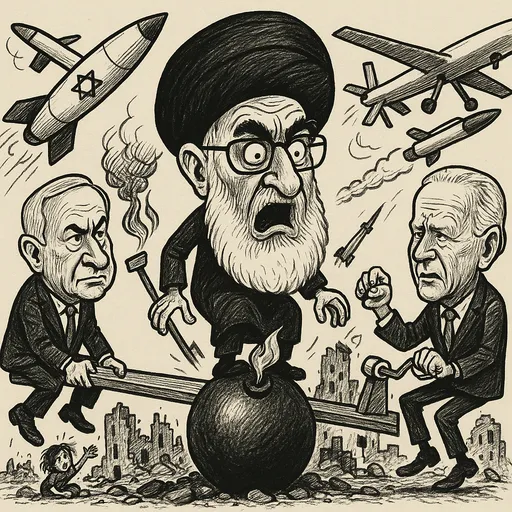
A significant surge in military attacks against Iran by Israel and the United States has led to widespread destruction and high casualties, including the death of Iran's Supreme Leader Ayatollah Ali Khamenei. These coordinated strikes have targeted Tehran and other strategic military complexes, prompting Iranian retaliatory missile and drone launches. The conflict has drawn in regional actors such as Iraqi Kurdish forces and heightened tensions with Saudi Arabia, while international responses reveal fractured alliances and concerns over broader destabilization. Humanitarian impacts are severe, with numerous civilian injuries reported, including children. The ongoing hostilities underscore a volatile geopolitical landscape with uncertain prospects for de-escalation.
This cluster reflects the viewpoint of Israeli and U.S. sources emphasizing the strategic military operations against Iran. They highlight successful strikes on Iranian military and government targets, framing the campaign as a necessary effort to weaken Iran's military capabilities and prevent further threats. Statements from officials and leaders express confidence and determination to continue the offensive until objectives are met, underscoring a posture of sustained military pressure.
Articles in this group focus on the consequences of the attacks on Iran, including civilian casualties, injuries, and Iran's military responses. They report on the heavy bombing of Tehran, the destruction of military complexes, and Iran's use of drones and missiles in retaliation. The humanitarian toll, especially among children and teenagers, is emphasized, highlighting the severe impact on the Iranian population and the escalating cycle of violence.
This cluster captures the perspectives of other countries and analysts regarding the broader geopolitical implications of the conflict. It includes views from Ukraine supporting attacks on Iran due to its alliance with Russia, concerns from Belarus about the signals sent by strikes on Iran's leadership, and commentary on the fragility of international alliances involving China, Russia, and Europe. The articles discuss risks of wider destabilization, economic uncertainties, and the complex regional dynamics involving Saudi Arabia and Kurdish forces.