
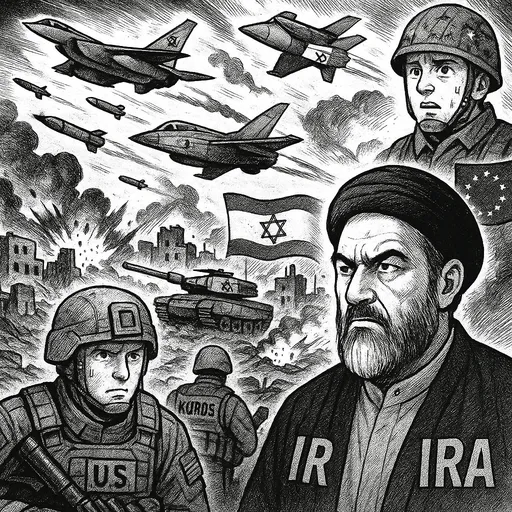
The ongoing conflict in the Middle East has escalated into a complex multinational war involving the United States, Israel, Iran, and several regional actors. Israel and the US have intensified airstrikes and military operations targeting Iranian assets in Iran, Lebanon, and Syria, while Iran has retaliated with missile attacks on Israeli and US bases, expanding the conflict's geographic scope. The involvement of Kurdish forces, NATO interceptions, and military deployments by European countries highlight the widening international dimension of the war. Diplomatic tensions, including US criticism of allies and debates over the legality of the conflict, further complicate the situation. The conflict has resulted in significant casualties, infrastructure damage, and growing fears of a prolonged regional war with global implications.
This cluster reflects the perspective of the United States and Israel emphasizing their coordinated military campaign against Iran to neutralize its regional influence and missile capabilities. The articles highlight ongoing airstrikes, intelligence sharing, and strategic operations aimed at weakening Iran's military infrastructure and its allied groups. The US and Israel portray their actions as necessary for regional security and demonstrate close collaboration despite some diplomatic strains with other allies.
This group presents the viewpoint of Iran and its allied forces, focusing on their retaliatory strikes against US and Israeli targets and their readiness for a prolonged conflict. The articles discuss Iran's missile launches, threats to close strategic waterways, and calls for resistance against US and Israeli actions. They also cover the involvement of pro-Iranian militias and the spread of conflict into neighboring countries, emphasizing Iran's strategic resilience and regional influence.
This cluster includes perspectives from other countries and international organizations concerned about the conflict's expansion and implications. It covers NATO's defensive actions, European military deployments, and potential involvement of countries like Canada and Pakistan. The articles also address diplomatic tensions, legal debates over the war's legitimacy, and the broader geopolitical consequences for regional stability and global security.
This group focuses on the humanitarian consequences of the conflict, including civilian casualties, infrastructure destruction, and the emotional toll on affected populations. The articles provide visual documentation of damage, report on rising death tolls, and highlight the challenges faced by civilians caught in the crossfire. They underscore the urgent need for attention to the human cost amid escalating military operations.