
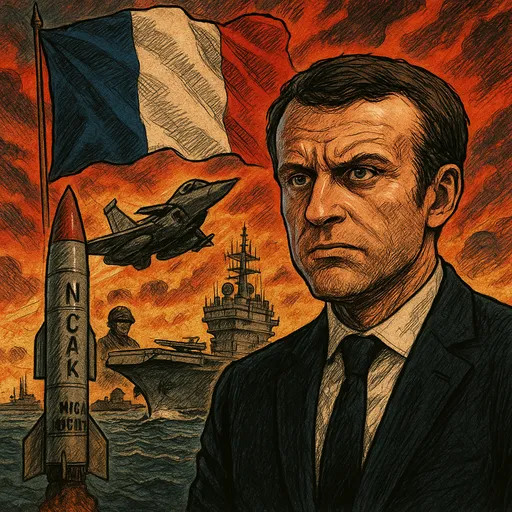
France, under President Emmanuel Macron, is significantly enhancing its military and nuclear capabilities in response to escalating tensions in the Middle East and growing European security concerns. The country has deployed its nuclear-powered aircraft carrier Charles de Gaulle to the Mediterranean and is reinforcing military presence in Cyprus and the Gulf, while simultaneously expanding its nuclear arsenal and deepening cooperation with European allies. Macron's administration emphasizes strategic autonomy, legal norms in conflict, and coalition-building to secure maritime routes and regional stability amid complex geopolitical dynamics involving Iran, Israel, and Western allies.
France is undertaking a major shift in its defense policy by increasing its nuclear warhead arsenal for the first time in decades and enhancing nuclear deterrence cooperation with European allies including Belgium, Germany, Sweden, and Denmark. This move reflects concerns over declining US involvement and the need for greater European strategic autonomy. Macron's plan includes deploying nuclear-armed aircraft to allied nations and forming a nuclear steering group with Germany, signaling a more assertive and collaborative European defense posture.
France has actively deployed significant military assets including the nuclear-powered aircraft carrier Charles de Gaulle, frigates, fighter jets, and anti-drone systems to the Mediterranean, Cyprus, and the Arabian Peninsula to address escalating conflicts involving Iran, Israel, and the US. Macron has called for coalition-building to secure maritime routes and warned against escalation, while reinforcing France's military presence to support allies and maintain regional stability. These deployments are part of a broader multinational effort involving the UK, Greece, and other European countries to deter conflict spillover and protect strategic interests.