

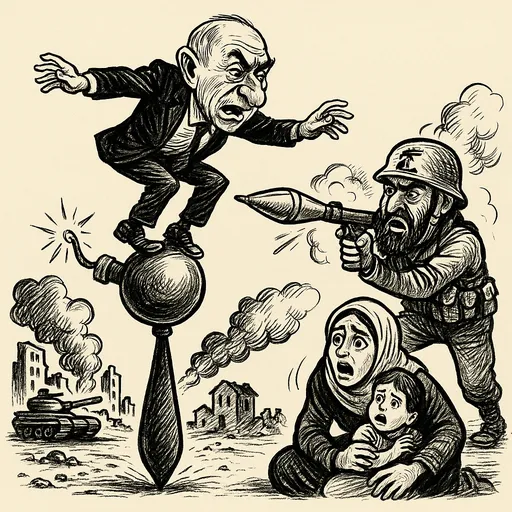
Recent weeks have seen a significant escalation in hostilities between Israel and Hezbollah along the Israel-Lebanon border, marked by Israeli ground incursions and extensive airstrikes targeting Hezbollah positions and infrastructure in Lebanon. These military operations have resulted in substantial casualties, including civilians, and widespread displacement due to evacuation orders in southern Lebanese villages. Hezbollah has responded with missile barrages and rocket attacks, intensifying the conflict and raising fears of a broader regional war involving Iran and its proxies. International actors, including France, the United States, and Egypt, have expressed concern, urging restraint and deploying reinforcements to the region, while Lebanon faces deepening political instability amid the violence. The situation remains volatile with ongoing military advances, territorial seizures by Israel, and heightened humanitarian crises in affected Lebanese areas.
This cluster reflects the viewpoint of Israeli and allied Western sources emphasizing Israel's strategic military operations aimed at weakening Hezbollah and Iranian influence in Lebanon. The narrative highlights targeted strikes against Hezbollah commanders and infrastructure, ground incursions to push back militant forces, and efforts to prevent attacks on critical infrastructure like Beirut airport. The perspective underscores Israel's justification of these actions as necessary for national security and regional stability, while acknowledging the complexity of the conflict and the involvement of Iranian-backed militias.
Articles from Lebanese and regional sources focus on the humanitarian toll of Israeli military actions, reporting numerous civilian casualties, destruction of infrastructure, and mass displacement in southern Lebanon and Beirut suburbs. These accounts emphasize the severity of airstrikes and ground operations, the resulting deaths and injuries, and the growing anxiety among local populations facing ongoing hostilities. The perspective highlights the destabilizing effects on Lebanon's political and social fabric, with calls for restraint and concern over the potential for full-scale war.
This group includes articles presenting international diplomatic reactions and security measures in response to the escalating conflict. France warns Israel against ground operations to prevent wider regional destabilization, while the US closes its embassy in Beirut and guarantees protection of civilian infrastructure like Beirut airport. Egypt reaffirms support for Lebanon, and other countries dispatch military reinforcements to the Middle East, reflecting global concern over the conflict's expansion and the need for diplomatic engagement to manage tensions.