
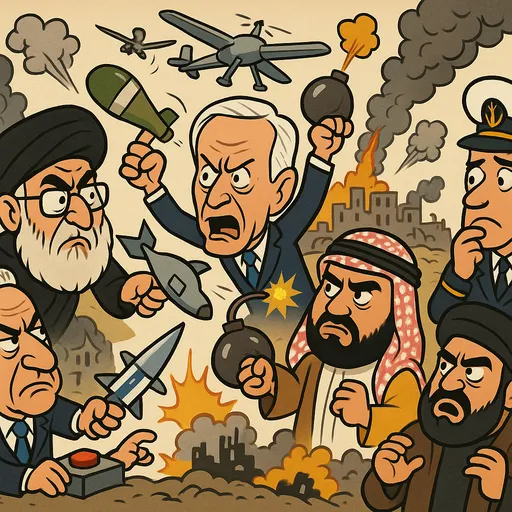
The Middle East conflict has intensified with active military engagements involving Iran, Israel, the United States, and regional actors such as Saudi Arabia, the UAE, and Lebanon. Iran has launched missile and drone attacks targeting US bases, Gulf countries, and Israel, while Israel and the US have conducted extensive airstrikes on Iranian and Lebanese targets. European nations including the UK, France, and Greece have deployed naval and air assets to Cyprus, reflecting concerns over regional spillover and security. The conflict has caused significant civilian casualties, infrastructure damage, and displacement, raising international alarm and calls for restraint. Analysts warn of a prolonged and widening war with complex strategic dynamics and potential global economic impacts.
Articles from Iranian and allied viewpoints emphasize Iran's readiness for a prolonged conflict, framing their military actions as retaliatory and defensive against US and Israeli aggression. Iran highlights its strategic use of missile and drone strikes across multiple countries to 'spread the pain' and increase the cost for adversaries, while rejecting negotiations with the US. The narrative stresses resilience and a long-term approach to counter perceived threats, underscoring Iran's role in escalating regional tensions.
From the Israeli and US perspective, the conflict is portrayed as a necessary campaign to counter Iran's nuclear ambitions and regional influence. Israel asserts confidence in a swift military outcome, conducting extensive airstrikes in Iran, Lebanon, and Syria, while the US supports these operations with significant strikes on Iranian targets. The narrative includes warnings about a potential 'forever war' but emphasizes decisive action to neutralize threats. Civilian casualties and infrastructure damage are acknowledged but framed within the context of combating terrorism and securing regional stability.
European countries including the UK, France, Greece, and others have increased their military presence in Cyprus and the Eastern Mediterranean to address security threats from the Middle East conflict. Deployments of warships, anti-drone systems, and fighter jets reflect concerns over spillover effects and direct attacks such as drone strikes on British bases. European leaders warn of the conflict's potential to spread to Europe, emphasizing the need for coordinated defense and diplomatic efforts to prevent wider escalation.
Arab states such as Saudi Arabia, the UAE, and Kuwait express strong condemnation of Iranian attacks and affirm readiness to defend their security interests. These countries have been targets of missile and drone strikes, leading to heightened military alertness and calls for international support. The narratives focus on protecting national sovereignty, supporting affected states, and warning of further escalation if provocations continue. Evacuations and increased military deployments underscore the seriousness of the threat perceived from Iran's actions.
International organizations and neutral observers highlight the severe humanitarian consequences of the conflict, including civilian casualties, damage to medical facilities, and displacement of populations. The UN and WHO express deep concern over attacks on hospitals and schools, calling for restraint and protection of civilians. Warnings about the conflict worsening existing crises and destabilizing the broader region are prevalent, with appeals for diplomatic solutions amid fears of a protracted and expanding war.