

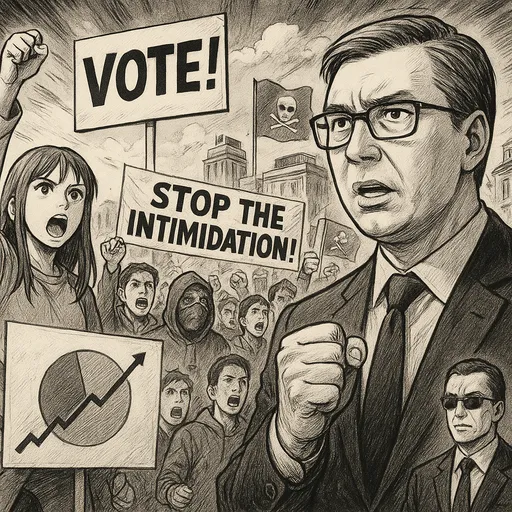
Serbia's approaching vote is shaped by a tense mix of mass student mobilization, accusations of intimidation and cyberattacks, and heavy-handed campaign tactics as President Aleksandar Vučić seeks to consolidate power. Domestic commentators question whether Vučić's move from the presidency into the election arena signals a break from long-standing personal rule or a reinforcement of it, while explainers highlight institutional stakes and international observation. Large pro-government rallies, polls commissioned by the administration, and promises of higher pensions compete with street occupations and hundreds of opposition student candidates. Vučić frames challenges as foreign-directed attacks, an argument that feeds polarization even as analysts abroad assess whether the election could mark the end of his dominance. Observers warn that violence, threats, and deep polarization could undermine public trust in the result and regional stability.
Bosnian outlets present a combination of normative concern and practical guidance: they scrutinize whether Vučić's electoral maneuvering signals an end to personal rule while providing voters with essential information about the electoral process. The coverage links institutional risks to civic awareness and the role of observers.
Several international outlets foreground a rising student-led challenge that has mobilized rallies, occupied parts of Belgrade and even fielded candidates, casting the youth movement as the most visible domestic threat to Vučić. Reporting emphasizes grassroots energy and the potential of street politics to shape the electoral narrative.
Coverage from multiple sources stresses a climate of intimidation—beatings, cyberattacks and threats—and portrays Serbian elections as potentially dangerous for participants and institutions. These reports warn that violence and harassment could skew the campaign environment and voter confidence.
Croatian reports emphasize Vučić's strong campaign machinery: commissioned polls and large rallies where he promises material benefits, portraying a confident incumbent leveraging state-level visibility. This perspective highlights the resources and public spectacle underpinning his bid to retain power.
Montenegrin coverage relays Vučić's narrative that Serbia is under a severe, foreign-orchestrated attack, reflecting the president's tendency to externalize opposition and delegitimize critics. That rhetoric helps explain the defensive tone of the campaign and heightens nationalistic overtones.
Some international analysts frame the election as a potential inflection point that could end Vučić's long-standing dominance, weighing opposition momentum and regional implications. This viewpoint situates Serbia's vote within broader concerns about democratic backsliding and stability in the Balkans.
Two pieces from European outlets report on a controversial attack ad and the ensuing partisan dispute in the United States; they are thematically separate from Serbia's election but reflect global media interest in campaign tactics and controversies. These articles are included as external context on how sharp political advertising can reverberate internationally.