

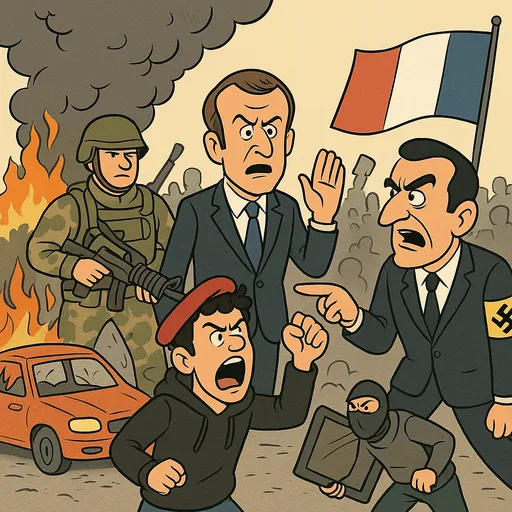
France is experiencing significant social unrest marked by widespread protests, riots, and looting across major cities, prompting the government to impose curfews and deploy troops to restore order. The unrest is driven by complex grievances including economic hardship, youth discontent, and political divisions, with the government blaming radical left groups and facing criticism over security failures. Meanwhile, President Macron is engaging in international diplomacy to secure energy supplies amid the crisis, while the political landscape shifts with the far right gaining influence amid calls for stronger law enforcement and public order.
This cluster covers the extensive civil unrest in France, including violent protests, looting, and clashes with police. It highlights government responses such as imposing curfews in multiple cities, deploying military troops, and increasing police presence to restore public order. The articles discuss the scale of arrests, the challenges faced by law enforcement, and the political implications of these security measures amid ongoing demonstrations.
This group analyzes the underlying causes and broader political consequences of the unrest in France. It explores the complex motivations of protesters, including economic grievances, youth discontent, and social inequality. The cluster also discusses the political fallout for President Macron's centrist government, the rise of far-right figures like Marine Le Pen, and the framing of the unrest by various political actors. It includes commentary on France's democratic stability, governance challenges, and the impact of immigration debates on social cohesion.
This cluster focuses on official reactions to the unrest, including statements by President Macron, Prime Minister Sébastien Lecornu, and other government officials. It covers security policy decisions such as curfews, troop deployments, and arrests, as well as political rhetoric blaming ultra-left groups or radicals for the violence. The articles also highlight internal government tensions, including the interior minister's resignation and calls for tougher justice measures to address protest violence.
This cluster addresses France's efforts to secure energy supplies amid the unrest and economic challenges. It includes President Macron's diplomatic visits to Gulf countries to obtain diesel shipments and stabilize energy markets. The articles also discuss the economic consequences of the protests, such as losses for major retailers like Carrefour and broader concerns about inflation and cost of living. The cluster highlights the intersection of domestic instability with international economic and diplomatic strategies.
This group covers international perspectives and reactions to the unrest in France, including statements by foreign leaders such as Donald Trump and Benjamin Netanyahu. It highlights how the protests are framed in terms of immigration, extremism, and political ideology, with some foreign figures endorsing far-right leaders like Marine Le Pen. The cluster also discusses concerns about contagion effects in Europe and the United States, as well as diplomatic engagements related to security and energy cooperation.
This cluster provides historical and social context to the current unrest, referencing France's colonial past, the legacy of the Paris Commune, and ongoing debates about social governance. It includes reflections on France's identity, democratic traditions, and challenges in maintaining social cohesion amid economic and political crises. The articles also touch on youth violence, urban unrest in overseas territories, and the broader European pattern of social protests.