

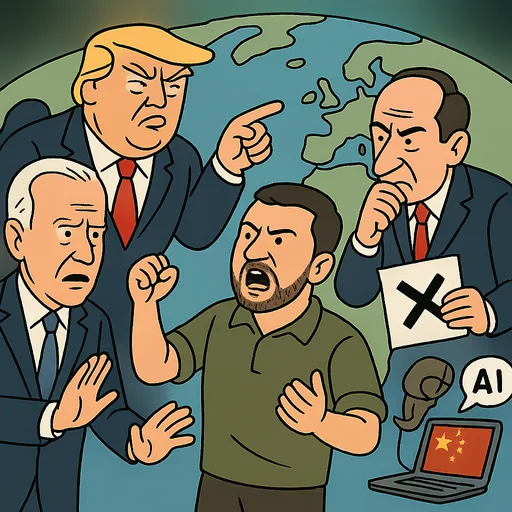
Recent reporting shows US diplomacy focusing intensely on negotiations over the Ukraine war, with Trump-era envoys and US officials pressing for talks while Kyiv protests delays in arms and services. Allies and partners express alarm at Washington’s shifting posture and at the risk that US domestic politics is reshaping foreign-policy commitments. Concurrently, technology and intelligence issues — notably restrictions on Starlink and bans on Chinese AI tools — have complicated operational support and highlighted strategic competition with China. In the Middle East, tensions with Iran and regional maneuvering continue to test US responses, while separate bilateral and multilateral engagements across Central Asia, Europe, and beyond underline Washington’s active, yet contested, global role.
This group reports from sources emphasizing active US-led diplomacy to broker talks over the Ukraine war, often led or influenced by Trump-aligned envoys. Coverage highlights meetings in Oslo and planned travel to Moscow as Washington pushes for negotiated outcomes and seeks to coordinate high-level summits.
These pieces frame US foreign policy through the lens of internal politics and personalities, showing how Trump, his envoys, and other American political actors influence diplomacy. The perspective stresses tensions between administration signals, congressional actors, and institutional voices that affect credibility abroad.
This cluster collects reporting critical or cautious about proposals urging Ukraine to pursue a settlement with Russia, often reflecting fears that US pressure could force concessions. Analysts and political figures debate the strategic consequences of a US push for talks and possible territorial compromises.
These stories focus on how technical controls, arms deliveries, and intelligence sharing shape battlefield realities for Ukraine and complicate allied coordination. They highlight controversies over SpaceX/Starlink restrictions, missile and interceptor delivery timetables, and the resumption or withholding of US intelligence support.
This set emphasizes US engagement across regions — Europe, Central Asia, and bilateral talks with rivals — including consular negotiations for detainees and energy or trade dialogues. The coverage highlights Washington’s pragmatic diplomacy to secure citizens, supplies, and strategic cooperation.
These reports capture criticisms of US policy from external governments and commentators, including concerns about pressure on allies, perceived double standards, and domestic reverberations of US foreign-policy choices. The pieces reflect how US actions provoke political pushback and debate on sovereignty and accountability.
This cluster collects reporting centered on Iran and broader Middle East dynamics, showing Tehran’s distrust of the US, efforts to condition talks, and regional actors’ maneuvering to influence US politics. It also includes US warnings to citizens and commentary on potential confrontation scenarios.
These articles highlight US–China strategic competition manifested in maritime encounters, AI and tech restrictions, and allied military exercises in the Indo-Pacific. The perspective stresses risks of escalation at sea and the security rationale behind bans on Chinese technologies in US government use.
The final group gathers analytical pieces and reporting on how US foreign policy reverberates globally — from European election effects to Latin American posture and institutional messaging. The coverage underscores how policy choices feed back into international perceptions and alliances.