

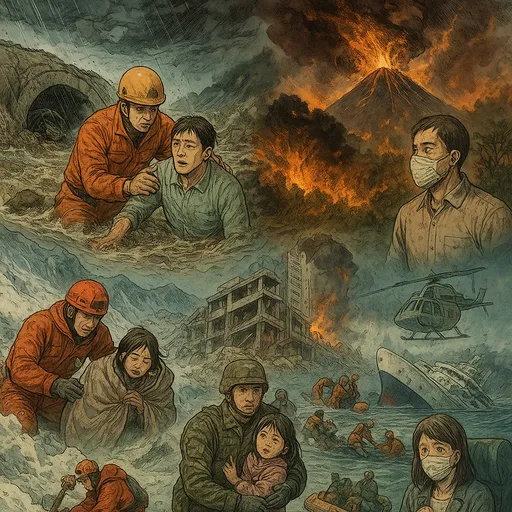
Reporting is dominated by a catastrophic flash flood in Nepal that has produced a mounting death toll, large numbers missing, dramatic tunnel rescues and international offers of aid, alongside appeals for climate compensation and costly reconstruction. In Indonesia, widespread fires and a volcanic eruption have scorched large areas, endangered wildlife, grounded flights and forced massive passenger disruptions, prompting emergency evacuations and relief flights. Elsewhere the coverage highlights a range of acute incidents — avalanches in the Caucasus, deadly market and wedding fires, building collapses, and a capsized passenger vessel — that underline rescue teams’ struggles with difficult terrain, weather and infrastructure failures. Governments and agencies are responding with search-and-rescue mobilization, international medical evacuations, reconstruction plans and proposals to strengthen early-warning systems, while security threats and health emergencies complicate humanitarian operations worldwide.
Reports foreground the human toll and sustained rescue operations within Nepal, emphasizing dramatic survivor recoveries, mass casualty counts and a national day of mourning. Coverage spotlights both local leadership and calls for international assistance, climate compensation and the enormous reconstruction costs ahead.
Coverage emphasizes environmental and public-safety impacts from fires and volcanic eruptions in Indonesia, highlighting endangered wildlife rescues and major transport disruptions. Reports focus on cross-border haze, stranded passengers, grounded airports and airline responses to move travelers or provide relief flights.
Multiple outlets report on an avalanche in the North Caucasus that caused numerous fatalities and missing climbers, stressing difficult rescue conditions and rising casualty lists. The perspective centers on emergency response challenges in remote, treacherous mountain terrain.
Reports detail the human cost and immediate rescue operations after dormitory and building collapses in New Delhi, focusing on rubble clearance, survivors rescued and investigations into safety and standards. The coverage frames the tragedies as urban infrastructure and housing-safety concerns.
Reporting pairs accounts of deadly local flood incidents with government plans to expand emergency alert systems nationwide to better warn citizens of hurricanes, fires and other threats. The viewpoint stresses both recent losses and policy moves to improve early warning and response capabilities.
Coverage from the region highlights destructive fires and transport accidents that disrupted services and caused material losses or fatalities, with authorities and firefighters responding and investigations underway. The pieces reflect local operational strain on emergency services and wider economic impacts.
Reporting focuses on deadly blasts at a Bolivian military facility, immediate casualty reports and ongoing investigations as authorities work to determine causes and account for missing personnel. The emphasis is on official responses and the need for transparency amid national security concerns.
Articles cover large-scale earthquake damage in Colombia, government-led reconstruction proposals and Marshall Plan–style initiatives to rebuild hardest-hit communities. The viewpoint highlights coordinated recovery planning and political commitments to mobilize resources for long-term reconstruction.
Reports describe military-led humanitarian assistance drills and targeted medical evacuations, underlining governments’ efforts to strengthen disaster-response interoperability and conduct urgent patient transfers abroad. The perspective stresses readiness and international cooperation in urgent medical logistics.
Coverage issues official hurricane warnings for parts of Hawaii, emphasizing forecasts of damaging winds and heavy rain and urging residents and authorities to prepare and monitor official advisories. The focus is on early alerts and emergency management preparations.
Reports frame extreme weather — failing monsoons and El Niño patterns — as drivers of humanitarian crises, threatening food security and exacerbating displacement across affected regions. The angle links climate variability to urgent needs for regional cooperation and relief planning.
Coverage documents violent attacks on vaccination teams and other frontline health workers, highlighting the security threats that impede essential public-health and humanitarian campaigns. The perspective underscores the need for protection of aid personnel to maintain vital services.
A report on damage to a major university’s facilities and the displacement of faculty frames education systems as vulnerable to conflict and instability, with long-term implications for teaching and research continuity. The angle highlights institutional strain and recovery needs in conflict-affected settings.
Reporting concentrates on an overturned passenger vessel with fatalities and dozens missing, with urgent search-and-rescue mobilization and questions over maritime safety. The piece centers on immediate rescue operations and broader concerns about sea transport safety.
Coverage describes Uruguay’s state of emergency over an avian influenza resurgence and government measures to protect poultry, trade and public health. The perspective stresses containment steps and economic impacts on farming communities.
An opinion piece laments waning attention on Gaza, urging renewed international engagement and accountability for the ongoing humanitarian and political crisis there. The viewpoint is advocacy-oriented, calling for sustained media and policy focus.