
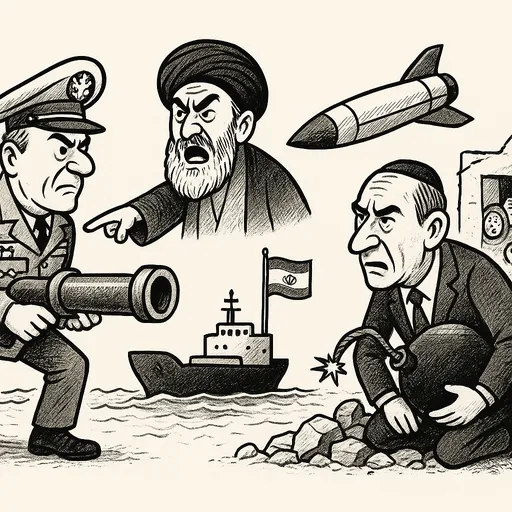
A rapid cycle of maritime exchanges between US and Iranian forces and successive strikes on oil tankers has sharply raised the risk of broader confrontation in the Gulf. Tehran and the IRGC have announced restricted zones and threatened faster, stronger retaliation, while Washington and allied militaries frame recent strikes as defensive retaliation. Concurrently, Israel’s cross-border strikes in southern Lebanon and sustained operations in Gaza and the West Bank have caused civilian casualties, evacuations and rising political tensions domestically. International actors and analysts are warning of dangerous escalation and urging de-escalation as violence in Yemen and Houthi attacks further threaten regional spillover.
Western and US-aligned outlets emphasize US military accounts that strikes on Iranian-linked tankers and retaliatory actions were defensive responses to missile and naval attacks. Reporting highlights CENTCOM statements, video evidence released by the US, and hardline public rhetoric calling for decisive action to protect shipping and naval assets. These sources present the US response as intended to deter further Iranian aggression.
Iranian officials and outlets portray recent actions as justified retaliation and announce plans for restricted or no-go zones near the Strait of Hormuz to protect national interests. The IRGC claims strikes on oilers and US-linked vessels and warns of quicker, more intense responses to any further US attacks. Tehran’s messaging frames escalation as reciprocal and stresses readiness to expand reprisals if pressured.
Israeli political and military sources justify evacuations and operations in the West Bank, southern Lebanon and Gaza as necessary for security, while critics say leaders are using escalation for domestic political advantage. The IDF and senior officials warn of a tense, volatile period and have ordered evacuations and raids against Hezbollah-linked targets. Some former Israeli officials urge aggressive stances toward regional actors, reflecting hawkish domestic debate.
Lebanese and regional reporting focuses on the human cost of Israeli strikes in southern Lebanon, documenting fatalities, damage and mass evacuations. Lebanon’s leaders and regional observers decry what they call dangerous escalation and appeal to international partners for restraint and assistance. Coverage stresses the immediate humanitarian impact and the risk of wider cross-border conflict.
Palestinian outlets and Gaza-focused reports highlight civilian deaths, funerals, injuries from airstrikes, and ground incursions, emphasizing severe humanitarian consequences. They also document settler raids, arrests in the West Bank and skepticism that evacuation of some outposts will alter broader occupation policy. Coverage stresses civilian suffering and calls for accountability and de-escalation.
Reporting from and about Yemen documents intense clashes between Houthi forces and government forces with high casualty counts and separate Houthi missile strikes that have killed civilians. Observers warn that a violently deteriorating security situation in Yemen increases the risk that the wider Middle East confrontation will spread and further destabilize the region. Coverage highlights both the humanitarian toll and the potential for strategic contagion.
The EU, former officials and international commentators express alarm at the rapid escalation and urge restraint, cautioning that the confrontation could be prolonged and destabilizing. Analysts warn of adverse consequences for energy markets, shipping lanes and diplomatic efforts, and call for urgent diplomacy to prevent broader war. These perspectives emphasize de-escalation and coordinated international responses.
Gulf-state reporting, notably from the UAE, provides practical guidance for residents and travellers amid rising US–Iran tensions, outlining travel advisories and safety measures. Coverage underscores the immediate civilian concern over maritime routes and regional stability while relaying official recommendations.