
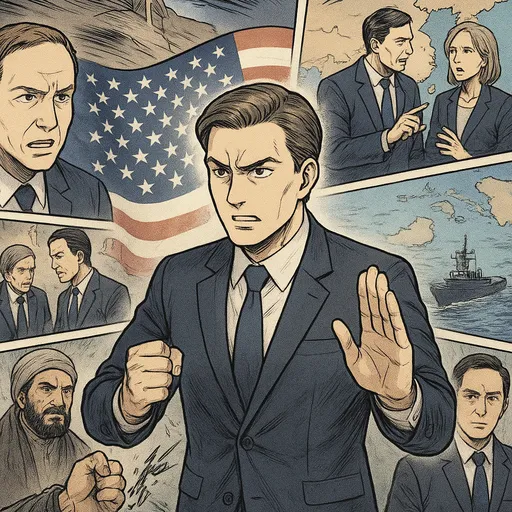
Recent reporting shows the United States at the center of multiple, sometimes contradictory, diplomatic moves: high-profile envoys dispatched to Moscow and Kyiv with an ambitious peace proposal, concurrent hardline rhetoric toward Iran and proposals to reshape regional security, and stepped-up maritime interdictions against drug trafficking. These actions are producing friction with allies — Europe and regional partners express unease over alliance commitments and Washington’s diplomatic signals — while domestic security and Pentagon turbulence complicate coherent messaging. In the Indo-Pacific and Pacific Islands, Beijing–Washington rivalry and questions over militarisation are shaping local responses to U.S. engagements. Meanwhile, U.S. policy tools from visa suspensions to pressure on companies and conditional aid reveal a broader strategy that mixes coercion, outreach, and image management across regions.
Multiple international outlets report on U.S. envoys (notably Witkoff and Kushner) traveling to Moscow and Kyiv to present a proposed settlement, reflecting a perspective that the United States is again taking an active, if contested, mediation role. Coverage ranges from cautious optimism that diplomacy could de-escalate hostilities to scepticism from partners who doubt a breakthrough given political and security constraints.
Sources highlight a hawkish U.S. posture toward Iran, including provocative rhetoric about the Strait of Hormuz and threats against Iranian facilities, framing these statements as signalling deterrence but risking escalation. Analytical pieces and regional reports warn that such language and contingency planning could deepen regional tensions and complicate multilateral efforts to stabilise the Middle East.
News from the Americas and Asia details U.S. naval operations sinking vessels tied to drug trafficking alongside reports on lengthy carrier deployments and the relief of sailors during port calls. These accounts portray a dual narrative: effective interdiction efforts at sea coupled with visible human and morale costs for deployed personnel.
European and allied outlets report growing discomfort with U.S. signals — from welcoming Russia at multilateral forums to doubts about commitments to partners — and debate demands for burden-sharing over Ukraine aid. The perspective emphasises friction in traditional alliances, with partners warning against unilateral moves that could undermine collective security.
Coverage from varied regions underscores U.S. use of administrative and economic levers — global visa appointment suspensions, calls to isolate Nicaragua’s regime, and donor conditions on NGO activities — as instruments to shape international behaviour. Commentators frame these measures as an intentional mix of coercion and diplomatic pressure that may yield short-term leverage but risks reputational costs.
Pacific and regional analysis focuses on growing rivalry between Washington and Beijing, with disputes over trafficking claims, militarisation, and perceived double standards in Western policy. Sources urge careful, locally grounded engagement to avoid exacerbating sovereignty concerns and to preserve regional stability.
Reports on Pentagon leaks, polygraph investigations, tightened tactics, and moves to disable ad trackers reflect a view that U.S. defence and security institutions are adapting under pressure from internal breaches and external threats. The perspective stresses operational security measures and the domestic impact of information leaks on military readiness and policy coherence.
Regional outlets cover a mix of U.S. engagement in Latin America — from senatorial visits and AGOA’s extension to controversial rhetoric and intermediaries involved with Venezuela — portraying a combination of trade incentives, political outreach, and fraught political influence efforts. The viewpoint highlights both cooperative initiatives and contentious interventions by U.S. actors in regional politics.
Reflections on the legacy of 9/11, a White House push to boost foreign tourism, diplomatic disclaimers (e.g., Qatar on campus accusations), and critiques of U.S. policy toward Cuba frame a debate on America’s soft power and international reputation. Sources suggest that symbolic measures, outreach campaigns, and foreign perceptions will shape Washington’s broader diplomatic effectiveness.