

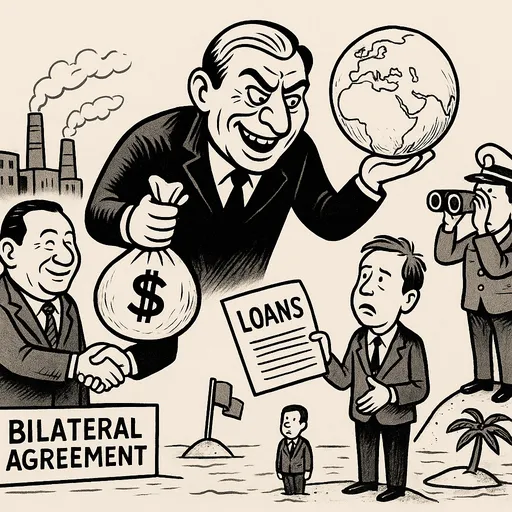
A wide range of bilateral agreements and engagements highlights an active period of diplomacy focused on security capacity-building, infrastructure and energy partnerships, and symbolic state visits. Donor and partner states are deepening defense, policing, and maritime cooperation while major powers expand economic footprints through industrial zones, credit lines and large-scale investments. Contentious moves — including embassy relocations, territorial claims and calls for transparency over big loans and contracts — underscore geopolitical friction and domestic scrutiny. Smaller states and island partners continue to secure targeted support in culture, sports, and development, reflecting diversified diplomatic outreach and competition among external partners.
Donor countries present themselves as committed partners helping Somalia stabilize and reform security institutions. The perspective emphasizes capacity-building through police and broader security assistance without detailing specific modalities.
Kinshasa's consideration and announcement of moving its embassy to Jerusalem reflects a shift in diplomatic alignment that has resonated across Africa. Coverage highlights both the decision process in the DRC and the continent's mixed responses to such recognition moves.
Opposition voices demand openness about Senegal’s $2.2 billion IMF agreement, framing the deal as a matter of public accountability. The perspective centers on governance concerns and the need for scrutiny of loan terms.
Exchanges and handovers of detainees are presented as diplomatic outcomes handled through formal mechanisms like the Red Cross. Reports focus on the humanitarian and negotiation aspects of cross-border detentions.
Spain frames recent Ceuta-related incidents as requiring measured, evidence-based diplomatic handling while signalling protest through ambassadorial summons. The coverage reflects bilateral strain and insistence on formal channels.
Analysts warn that linking Moldova’s EU accession to Romania would be provocative and risk misrepresenting the accession process. The piece reflects concerns about potential political sensitivities in the region.
Nicaragua frames constitutional reforms as an internal sovereign choice and rejects external critique, while Guatemala raises alarms about regional impacts. The narrative pits sovereign prerogative against regional normative expectations.
Italy is portrayed as an active bilateral partner investing in state visits, agricultural projects in Mauritania, and reconstruction efforts in Libya. The perspective emphasizes economic cooperation, development and historical diplomatic ties.
Sint Maarten underscores ties with the Netherlands via security ceremonies and Dutch cultural funding, demonstrating a mix of defense relationships and people-to-people cultural support. The framing highlights practical cooperation within the Kingdom framework.
Malawi’s national oil company refuses a second payment in a cross-border commercial dispute, signaling tight fiscal governance of state-linked energy dealings. The report focuses on accountability and bilateral commercial friction.
Beijing and Cairo present a comprehensive partnership spanning industrial zones, currency swaps and high-level visits, framing China as a major strategic economic partner. The perspective underscores accelerated investment, technology and defense cooperation.
Mauritius and Australia emphasize search-and-rescue and maritime research collaboration to boost regional safety at sea. The coverage frames the partnership as practical cooperation to strengthen maritime resilience.
Investigations and critics question the cost and transparency of Botswana’s deal for Cuban medical personnel. The perspective centers on value-for-money and oversight concerns in bilateral service contracts.
Authorities stress coordinated cross-border measures to manage pastoral movements and reduce conflict, emphasizing joint security and local stability. The narrative presents bilateral cooperation as practical conflict-prevention.
Bangui presents enlarging energy cooperation with Moscow as a route to bolster domestic production and economic benefits. The framing highlights Russia as an external partner for CAR’s energy sector development.
Astana and Vientiane emphasize ceremonial visits and sister-city accords to signal a strengthening bilateral agenda. The perspective underscores symbolic and institutional steps to deepen ties.
Armenian leadership reaffirms commitment to the EU accession path and related reforms, signaling continuity in foreign policy direction. The stance is presented as an assurance to domestic and external audiences of long-term strategic goals.
Japan, the Marshall Islands and Australia are positioned as security and capacity-building partners in maritime areas, reflecting a focus on regional stability and law enforcement. The narrative portrays practical assistance and cooperative programs.
South Korea weighs participation in Strait of Hormuz security efforts cautiously, balancing alliance pressure with readiness concerns. The perspective reflects alliance management and risk assessment.
Public demonstrations portray widespread opposition to right-wing networks and related deals, framing the issue as a domestic clash over regional ideological alignments. The coverage highlights repression and mobilization dynamics.
Recent oil agreements with the United States are described as historic by supporters but criticized as insufficient by opponents who argue political and structural needs remain unmet. The cluster covers both the economic reach of the deals and domestic political contention.
High-profile cultural gestures and state meetings are used to reaffirm Anglo‑French ties, underlining personal diplomacy and shared history as tools to steady bilateral relations. The perspective emphasizes symbolism alongside practical cooperation.
Several governments engage in firm stances over contested territories, from Mayotte to the Falklands and Pacific islands, reflecting enduring sovereignty disputes that shape regional diplomacy. The articles show claims provoking diplomatic reactions and regional debate.
Poland and regional partners pursue a coordinated bid to host a major AI gigafactory, presenting economic development and technological leadership as shared goals. The perspective highlights regional coalition-building for strategic investment.
Peru’s diplomatic break with Iran is portrayed as a decisive reaction to Iranian policies, signaling a notable bilateral rupture that may prompt reciprocal steps. The move is framed as a foreign policy repositioning.
Leaders present intentions to turn agreements into concrete projects, emphasizing diversified partnerships outside traditional regional circles. The perspective underlines practical follow-through on diplomatic visits.
Ashgabat-hosted consultations focus on improving consular services and travel document coordination to ease cross-border movement. The viewpoint stresses administrative cooperation to facilitate people-to-people mobility.
Thai investor activity targeting Italian luxury real estate signals outbound cross-border commercial ambitions and asset diversification. The article frames the move as private-sector driven bilateral economic engagement.
Both capitals express a mutual will to accelerate political, economic and development ties, presenting Turkey as an important partner for Ouagadougou. The pieces stress rejuvenated high-level dialogue and planned joint actions.
Kathmandu’s decision not to seek compensation frames the bilateral relationship in a conciliatory diplomatic tone and avoids legal escalation. The report suggests a preference for stable state-to-state relations.
Oman publicly distances itself from Iranian plans to impose passage fees through the Strait of Hormuz, signaling divergences among Gulf states on maritime governance. The piece highlights pragmatic opposition to new toll arrangements.
Leaders from Tripoli and Tunis stress expanding cooperation across sectors to reinforce regional collaboration and stability. The perspective emphasizes neighborly rapprochement and practical engagement.
High-level diplomatic messaging underscores routine statecraft and bilateral outreach between Equatorial Guinea and Angola. The exchange reflects normal channels of regional diplomacy and relationship maintenance.
Hanoi positions itself as a connector for Russian firms seeking ASEAN engagement, highlighting its role as a regional economic hub. The perspective emphasizes economic facilitation and diversification of partnerships.
Belgian officials showcase renewed engagement in Niger through development and humanitarian discussions, portraying the visit as a sign of continued partnership despite broader Sahel tensions. The narrative focuses on targeted cooperation and aid.
Algeria’s deployment of Su-30s and support aircraft to Niamey is framed as a concrete step in deepening security ties, signalling a military dimension to bilateral relations in the Sahel. The perspective underlines tangible defense assistance.
Dushanbe and Tehran discuss potential joint development and financing for a major hydropower project, presenting the talks as part of energy cooperation and regional infrastructure planning. The viewpoint emphasizes technical and financial collaboration.
Lisbon offers a €100 million credit line and undertakes a presidential visit to strengthen investment and cooperation, framing the measures as a concrete economic support package. The perspective highlights development facilitation through finance.
The Baowu consortium’s mobilization to assist a Simandou beneficiary is portrayed as part of China’s investment footprint in Guinea’s mining sector. The narrative underscores corporate-backed development linked to big infrastructure projects.
Presidential meetings focus on energy, subregional stability and cooperation, presenting bilateral ties as instrumental for West African integration and security. The perspective emphasizes collaborative problem-solving.
The Solomons engage multiple partners — Australia, Saudi Fund, and China — across policing, infrastructure, and community grants, reflecting diverse external support for development. The pieces show competing sources of finance and capacity-building.
Officials stress temporary operation despite lingering technical issues, framing the continuity of cross-border services as essential for trade and mobility. The perspective underscores the practical impact of infrastructure on bilateral ties.
Military audiences and appointments are presented as reinforcing defence ties and formalizing cooperation between armed forces. The report frames the interaction as standard high-level defence diplomacy.
Exporters highlight growing placement of Malagasy goods in European supermarkets, indicating strengthened trade links and market integration. The piece frames bilateral commerce as a development success for local value chains.
Joint inspections and temporary traffic measures underscore practical cross-border cooperation on infrastructure safety between Liechtenstein and Switzerland. The coverage focuses on shared technical management.
Leaders negotiate compromises in the multiannual financial framework, presenting member-state bargaining as central to EU-level bilateral and multilateral diplomacy. The article frames negotiations as sensitive national-interest discussions.
Delegations aim to broaden financial services ties with India, using visits to build relationships and promote mutual opportunities. The perspective emphasizes outreach and market development.
Beijing presents Fiji as a key Pacific partner and highlights expanding cooperation across trade, infrastructure and development. The perspective underscores China’s strategic outreach in the Pacific island region.
Kyrgyz leaders conduct broad bilateral talks with Pakistan and Turkey while authorities work to locate relatives of soldiers buried abroad, reflecting both strategic outreach and humanitarian concerns. The coverage combines state-level cooperation with people-focused diplomacy.
Prague highlights defence cooperation and prospects in South Caucasus connectivity projects, presenting bilateral ties as avenues for security and commercial engagement. The perspective blends strategic outreach with economic interest.
Azerbaijan engages foreign firms on advanced technologies and energy collaboration, from drone development partnerships to talks with ABB and fuel shipments to Armenia. The reporting emphasizes a pragmatic, multifaceted economic diplomacy approach.
Multinational defense education exchanges frame India as a partner in regional capacity-building and strategic dialogue with Ethiopia. The piece highlights institutional collaboration and knowledge-sharing.
Damascus engages with the Abu Dhabi Fund for Development and receives new diplomatic credentials, signaling a cautious re-entry into regional financing and formal bilateral ties. The perspective emphasizes steps toward normalization and reconstruction support.
Togo pursues diversified partnerships with Cambodia, Vietnam, Belarus and India, highlighting an active agenda to attract investment and historic partnerships. The narrative stresses diplomatic breadth and economic opportunity seeking.
Gulf investors expanding into Morocco’s premium hospitality sector are presented as a vote of confidence in tourism potential and luxury development. The coverage frames inward investment as a boost for high-end tourism infrastructure.
European partners explore regulatory and diplomatic measures to facilitate travel and representation in Caribbean territories, emphasizing administrative and consular cooperation. The pieces show efforts to streamline connectivity and ties.
Large-scale trade arrangements, including a UK–Australia free trade deal and US–EU trade easing discussions, are framed as steps to deepen economic ties and reduce barriers. Coverage balances promises of growth with domestic concerns over standards and sectors.
A tit‑for‑tat diplomatic spat with ambassadorial withdrawals highlights a downturn in bilateral relations and calls for dialogue to restore norms. The perspective emphasizes the fragility of neighbourly diplomacy when tensions escalate.
Sports diplomacy and bilateral roadmaps for trade and energy show small states seeking partnerships that combine cultural exchange and practical economic cooperation. The cluster illustrates how athletics and sectoral agendas support wider diplomatic ties.
Cooperation between the Faroe Islands and the Danish Navy alongside a new Oslo–Shanghai freight route highlights northern Europe's focus on maritime safety and trade connectivity. The perspective emphasizes logistics and security as mutual priorities.