

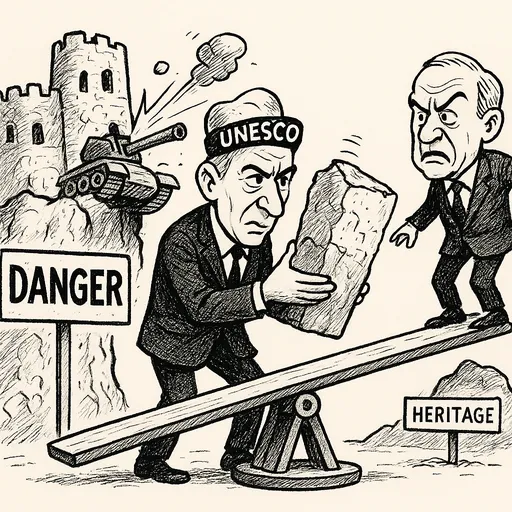
UNESCO has added Beaufort Castle in Lebanon and a site in the West Bank to its List of World Heritage in Danger, citing threats from ongoing regional instability and recent military activity. The designation aims to draw international attention and mobilize conservation resources to protect these culturally significant sites, with potential implications for preservation strategies and tourism. Reporting from multiple countries emphasizes the urgency of safeguarding heritage amid security concerns and highlights the need for coordinated international responses. The UNESCO committee meeting also considered unrelated nominations, such as Danish fossil cliffs, underscoring that the organization is simultaneously managing both emergency protections and new heritage listings.
Sources in this group frame the UNESCO listing as a response to direct threats from regional conflict, stressing damage risks and the symbolic importance of protecting heritage during hostilities. They highlight recent events—such as the capture of Beaufort Castle—and call for heightened international attention and conservation support.
This perspective situates the endangered-site decisions within the wider business of the UNESCO committee, noting concurrent consideration of new World Heritage nominations. It provides context that UNESCO meetings address both emergency listings and prospective sites, exemplified by the Danish fossil cliffs nomination.