

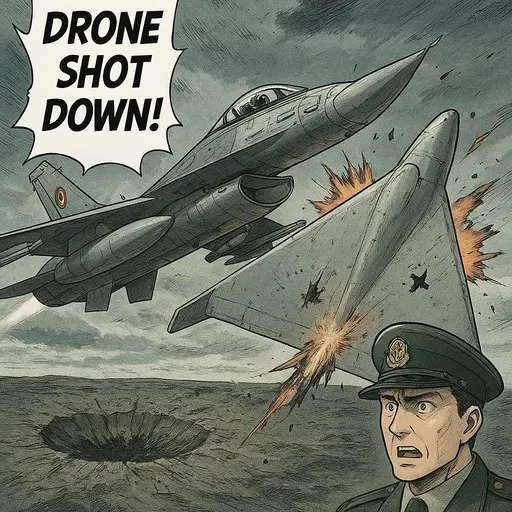
Romania reported shooting down a drone after it breached national airspace, marking the country’s first recorded interception of this kind. Romanian authorities and NATO said the unmanned aircraft is believed to be a Shahed-type of Russian origin and was intercepted by a Romanian F-16/pilot; NATO praised the rapid response and is coordinating follow-up inquiries. No casualties were reported, but the episode has heightened regional tensions and renewed focus on Black Sea airspace security. Separately, Romanian reports also note a crater in Brăila caused by a rocket from an Italian aircraft and a NATO investigation into that event, underscoring concerns about both hostile drones and accidental munitions in allied airspace.
Sources from Romania and allied countries frame the incident as a defensive success: the drone, believed to be a Shahed-type of Russian origin, was intercepted and shot down by Romanian air defenses, reportedly involving an F-16 and pilot action. NATO and allied-leaning outlets emphasize alliance vigilance, praise Romania’s rapid response, and place the event in the wider context of Black Sea and regional security.
International outlets present the event as Romania’s first-ever drone shootdown, highlighting rising regional security concerns and debates over unmanned aerial threats in Europe. These reports note limited operational details and confirm no casualties while focusing on airspace protection implications.
A domestic Romanian report highlights a distinct but related safety concern: a rocket fired from an Italian aircraft created a crater in Brăila and prompted a NATO investigation. This perspective draws attention to the risks of allied operations and adds complexity to assessments of airspace safety alongside the drone shootdown.