
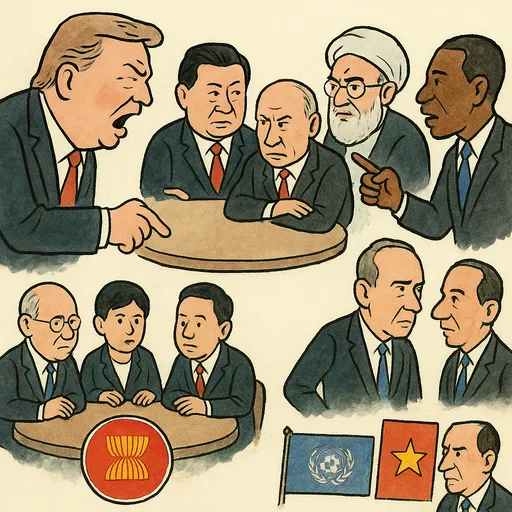
World leaders engaged in intensive bilateral and multilateral dialogue, with the United States again hosting high-profile meetings that tied Israel and Ukraine diplomacy to U.S. influence. China and Russia pushed for closer coordination in regional forums while Iran and its partners signalled renewed willingness to engage in negotiations under varied mediation efforts. ASEAN and regional bodies convened to tackle stalled peace processes, migration and security concerns from the Pacific to the Gulf, and African–European cooperation received renewed emphasis. At the same time, contests over UN leadership, cultural heritage decisions, and embassy recognitions added diplomatic friction and underscored competing visions for international order.
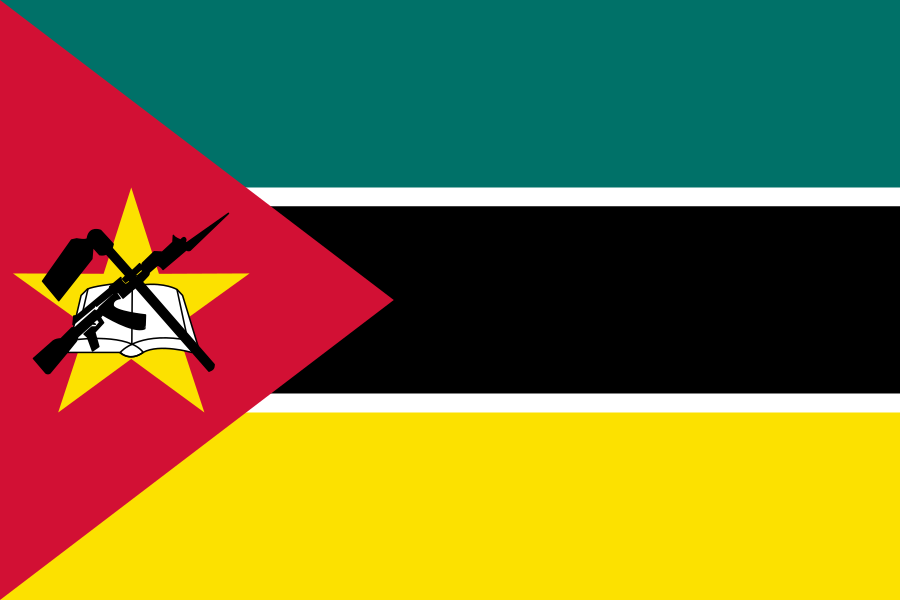
Mozambique's outlet reports on U.S.-linked speculation that FIFA chief Gianni Infantino could be proposed for UN Secretary‑General, framing it as a potential pivot in global leadership dynamics. The coverage highlights concerns about candidate unity and the implications of high-profile endorsements.
African and European leaders emphasize joint commitments to peace, stability and development, calling for stronger security and governance collaboration. The coverage frames the summit as a renewal of transcontinental partnership on shared crises.
Kazakhstan highlights routine high‑level contact with neighboring Uzbekistan and signals ongoing interest in strengthening regional cooperation. The brief account focuses on continuity in diplomatic engagement.
Coverage stresses that Solomon Islands leaders are navigating visits to both Beijing and Washington without a clear tilt toward either side. Analysts view their posture as strategic balancing amid regional security and development pressures.
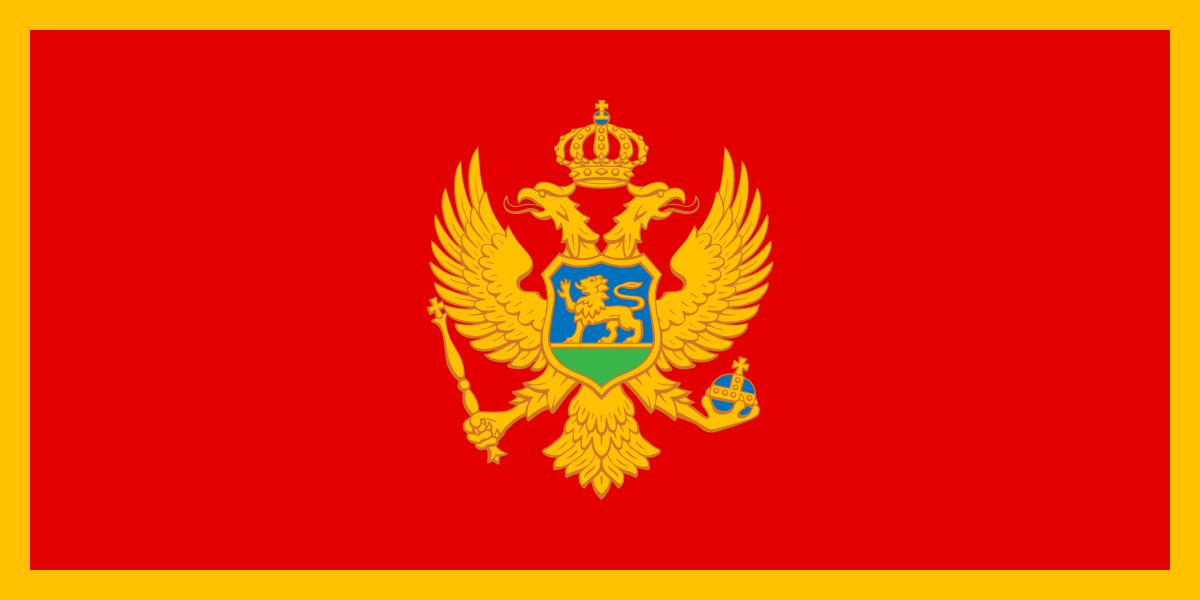
Montenegrin reporting spotlights controversy over Japan’s prime minister’s personal remarks, using them to reflect broader concerns about governance and public leadership standards. The item conveys sensitivity to leadership image internationally.
The Organization of Islamic Cooperation’s condemnation of Nauru’s embassy in Jerusalem is presented as a reaffirmation of the Palestinian position and ongoing dispute over Jerusalem’s status. The piece frames the decision as provocative and diplomatically consequential.
Cuban coverage features President Díaz‑Canel defending Cuba’s foreign policy, stressing dialogue, opposition to sanctions, and adherence to international law. The emphasis is on multilateral diplomacy and resistance to external pressure.
Italian reporting analyses the post‑Guterres UN leadership contest, focusing on leading contenders and the role of major‑power vetoes. The piece frames the race in geopolitical terms and implications for UN reform.
Reporting from Denmark highlights a high‑profile mayoral attack on Netanyahu, reflecting how domestic U.S. political drama can reverberate internationally. The account underscores potential diplomatic ripples from outspoken subnational actors.
Guam’s coverage stresses cooperative regional efforts to secure a Philippine visa‑waiver arrangement, focusing on practical migration and travel facilitation among Micronesian jurisdictions. The tone is pragmatic and regionally oriented.
North Macedonian items report scheduled high‑level meetings and Russia’s stance of awaiting U.S. proposals, indicating active engagement with both neighboring and great‑power diplomacy. The coverage is procedural and highlights diplomatic sequencing.
Belgian reporting addresses sensational claims about Netanyahu at the UN General Assembly and highlights political pressure and international reactions. The piece emphasizes potential diplomatic consequences for Israel.
Beninese coverage highlights Germany’s opposition to excluding South Africa from the G20, framing the stance as support for inclusive global governance. The reporting situates the dispute within debates about the club’s legitimacy.
Indian reporting relays high‑level visits (Netanyahu) and China‑initiated regional diplomatic nudges involving Pakistan and Iran, reflecting New Delhi’s attentive stance toward shifting regional alignments. The pieces stress coordination amid regional tensions.
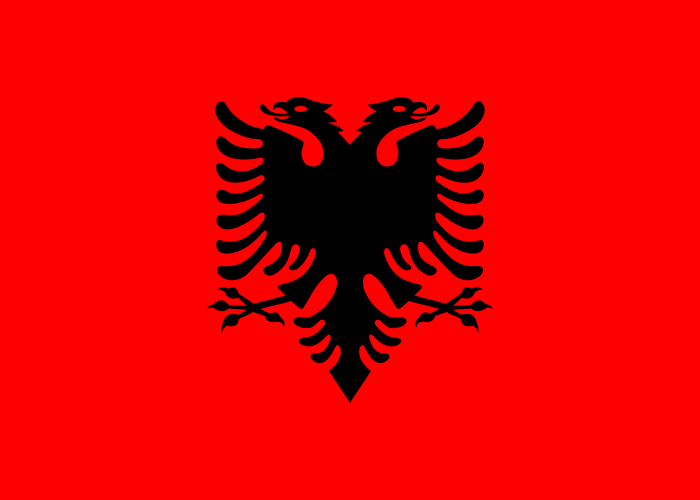
Albanian coverage reports Netanyahu’s travel to the U.S. and expected high‑level meetings, underscoring allied coordination on regional security. The item treats the visit as a key diplomatic moment.
Reporting from the Faroe Islands covers both Russian openness to a Ukraine agreement and local efforts to deepen cooperation with Korea, illustrating interest in wider Euro‑Asian diplomatic shifts. The pieces underline multilateral engagement and regional outreach.
Swiss commentary about a New Yorker mayor imagining arresting Netanyahu frames political theater against the backdrop of rising antisemitic incidents and diplomatic tension. The reporting questions the boundary between rhetoric and real diplomatic impact.
Ghanaian reporting covers Senegal’s Macky Sall pitching UN reform and restoring trust, aligning with African calls for stronger multilateral representation. The tone emphasizes Africa’s stake in UN leadership outcomes.
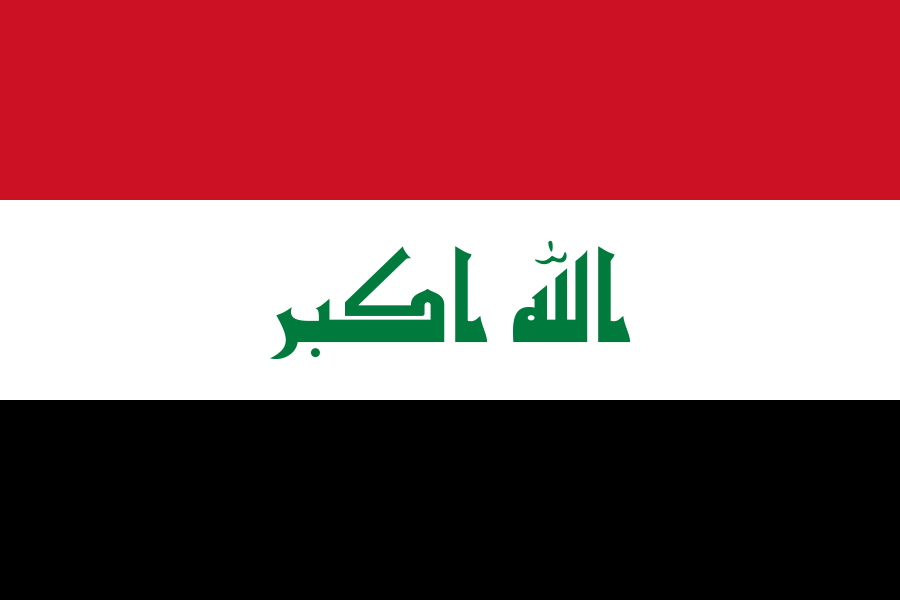
Iraqi coverage highlights China and Pakistan’s efforts to open talks with Tehran and Washington, presenting the initiative as a multilateral push to ease regional tensions. The angle underscores transnational mediation efforts.
Polish pieces range from Venezuela democratization coverage to announcements of a Trump‑Zelensky meeting, reflecting Poland’s attention to both regional democratization and broader security diplomacy. The reporting balances governance narratives with security developments.
Reporting emphasizes Iranian officials’ view that Afghanistan’s stability is central to wider regional security, framing Tehran as a stakeholder in Afghan outcomes. The piece underlines interconnected security interests.
Laotian coverage focuses on ASEAN foreign ministers’ meetings and strengthened ties with dialogue partners across trade, energy, and connectivity. The perspective highlights multilateral ASEAN diplomacy and practical cooperation.
Turkmen reporting stresses commitment to peace, trust, and sustainable development at the UN, framing resource governance and diplomacy as foundations for stability. The tone is multilateral and normative.
Zambian coverage quotes Iran lauding the SCO as vital for multilateralism and global order, reflecting broader regional affections for alternative governance platforms. The piece emphasizes institutional relevance amid global challenges.
Australian reporting notes Netanyahu and Zelensky meeting Trump at the White House, framing the encounters as emblematic of U.S. centrality in both Middle East and Ukraine diplomacy. The coverage highlights transatlantic strategic ties.
Bosnian reporting relays Zelensky bringing a new package of peace proposals to Trump, emphasizing Kyiv’s diplomatic push for U.S. backing. The angle is supportive of renewed negotiation efforts.
Czech pieces cover Slovakia’s denial of joining a coalition of the willing and Zelensky’s readiness to sign a peace deal at U.S. venues, reflecting regional uncertainty and overtures toward negotiated settlements. The reporting captures both caution and diplomatic outreach.
Coverage notes Iranian leaders appear to be engaging more seriously in negotiations, signaling a shift toward pragmatic dialogue. The report conveys cautious optimism about diplomatic traction.
Vietnamese reporting highlights ASEAN’s consideration of benchmarks and a long‑term envoy for Myanmar peace, and also notes North Korean strategic dialogue with Russia, underscoring regional security linkages. The pieces stress ASEAN’s mediating role and evolving great‑power ties.
Angolan reporting records receipt of a message of thanks from the Pope, noting continued Vatican diplomatic and religious outreach. The item frames the exchange as part of ongoing bilateral engagements.
Hungarian coverage frames the Manila ASEAN summit as a pivotal stage for great‑power diplomacy, highlighting tests of strategy among the US, China and others. The perspective treats ASEAN as a barometer of global realignment.
Kuwaiti reporting relays Trump’s view that Venezuela is not ready for elections despite progress, framing U.S. skepticism alongside acknowledgment of reforms. The item reflects regional attention to Latin American governance.
Nicaraguan coverage notes the U.S. State Department’s designation of Nicaragua alongside Cuba as adversaries, presenting potential diplomatic consequences and regional reactions. The piece highlights tense bilateral relations.
Argentinian reporting frames Netanyahu’s Washington visit as focused on confronting Iran, underscoring allied strategic coordination and regional security stakes. The piece emphasizes the diplomatic and military dimensions of the talks.
Serbian reporting captures both sensational media interactions with Zelensky and his publicly stated openness to ending the war, presenting Kyiv as actively pursuing diplomatic solutions. The pieces mix human‑interest coverage with political stakes.
Lithuanian coverage examines turning points in Ukraine–U.S. relations under Trump and public exchanges between US and Russian officials, highlighting shifts in bilateral dynamics and rhetorical confrontations. The reporting frames these developments as consequential for alliances.
Rwandan reporting notes Andy Burnham’s accession as UK prime minister and flags attention to how the change may affect international relations. The emphasis is on diplomatic watchfulness during leadership transitions.
Thai reporting relays a social media backlash against Italian tourists and an agency apology, highlighting how local incidents can provoke diplomatic embarrassment. The piece underscores the soft‑power and reputational dimensions of tourism incidents.
Icelandic coverage quotes Iran saying peace negotiations are being taken seriously, noting possible diplomatic openings and cautious observer optimism. The narrative frames Iran as engaged but contingently cooperative.
Palauan reporting highlights Australian worries about China’s missile activity in the Pacific, reflecting collective Pacific anxiety about militarization and prompting high‑level diplomatic discussions. The piece shows small states’ security sensitivity.
Lebanese reporting covers Trump praising Laura Loomer’s interview with Zelensky, framing it as an example of media figures shaping international diplomatic narratives. The piece explores the interplay of media influence and politics.
Costa Rican coverage relays Gustavo Petro’s claim that Colombia’s elected president obeys the United States, framing concerns about external influence in domestic politics. The report emphasizes regional political sovereignty debates.
Japanese reporting announces Netanyahu’s and Zelensky’s planned White House meetings with Trump to discuss Iran and a peace plan with Russia, underscoring Japan’s attention to major‑power diplomacy shaping regional security. The tone is informative and strategic.
Bulgarian coverage highlights Trump warning Russia and China not to interfere regarding Iran, framing a firm U.S. posture in great‑power contestation. The piece underscores deterrence rhetoric in international relations.
Bruneian reporting records His Majesty’s departure from Kazan during international travel, signaling ongoing diplomatic engagements by the monarchy. The item is ceremonial and diplomatic in tone.
Georgian reporting compiles developments across Sokhumi, Tbilisi and Moscow, summarizing political and security events and their diplomatic repercussions. The digest approach highlights cross‑border tensions.
Kosovan reporting notes planned Washington–London discussions in London on Hormuz security, emphasizing international coordination to protect maritime transit and regional stability. The piece highlights coalition diplomacy on strategic waterways.
Omani reporting covers conversations between Omani and Jordanian monarchs on regional developments and also notes a televised debate among UN leadership candidates, reflecting both bilateral and multilateral diplomatic engagement. The coverage links regional stewardship with global institutional processes.
Russian outlets highlight Beijing’s call for stronger Sino‑Russian coordination inside the SCO and Chinese warnings against Japan’s militarization, signaling convergent diplomatic messaging on regional security and balance. The pieces emphasize strategic partnership and regional restraint demands.
Estonian reporting covers formal protest to Russia over Ukraine and notes a meeting between Zelensky and controversial Laura Loomer, reflecting a focus on accountability and the optics of foreign engagements. The pieces combine diplomatic response with public scrutiny of visitors.
Guatemalan reporting quotes Mexico’s Sheinbaum saying negotiating with Trump is complex, capturing regional leaders’ candid assessments of dealing with the U.S. president. The piece highlights diplomatic realism and negotiation challenges.
UK coverage discusses domestic policy legacies toward Israel and international peacebuilding funding with allies, framing Britain as both critic and partner in Israeli‑Palestinian initiatives. The reporting emphasizes coordinated support for civil society and diplomatic pressures.
Monaco’s reporting covers a high‑profile security appeal by an individual affected by an attack, calling on Ukraine, Monaco and France to ensure safety, and demonstrating the cross‑border security implications of targeted incidents. The piece underscores protective diplomacy.
Maltese coverage emphasizes congratulations to the new UK prime minister and notes implications for bilateral relations, treating the transition as diplomatically consequential. The piece highlights external interest in London’s policy direction.
Paraguayan reporting cites Brazil’s president invoking historical invasions to justify current military spending, framing defense buildup in regional security terms. The piece stresses historical memory shaping current policy.
Canadian reporting highlights UNESCO’s addition of a West Bank site and Lebanese castles to the World Heritage List despite Israeli objections, framing cultural recognition as contested diplomacy. The coverage underscores cultural policy as a site of geopolitical dispute.
Sudanese coverage details two new Kampala documents outlining peace and civilian governance and notes exhaustive consultations by mediators, framing these as tangible steps toward an inclusive transition. The articles present active international mediation backing.
Kyrgyz reporting relays Iranian officials discussing shared interests and vision within the SCO, emphasizing regional economic and security cooperation. The piece underscores Iran’s engagement in multilateral Central Asian frameworks.
Croatian reporting covers Zelensky’s outreach to Trump as a shifting diplomatic direction and lighter viral political moments, juxtaposing serious diplomatic initiatives with public‑facing incidents. The tone ranges from analytic to human‑interest.
French reporting outlines Tunisia summoning the French ambassador over a hostile interview and relays Gustavo Petro’s critique of Colombian alignment with Washington, both reflecting fraught post‑colonial and hemispheric tensions. The pieces highlight diplomatic fallout from media and political statements.
Korean reporting notes China’s FM urging Iran to open negotiations and references Zelensky’s discussions with US envoys about weapons and diplomacy, portraying Seoul as attentive to both Gulf and European security threads. The coverage stresses diplomatic pressure and alliance coordination.
Armenian reporting highlights NATO‑Qatar discussions on Gulf security and coverage of Iranian ministers meeting Egyptian and Chinese counterparts, presenting a picture of broad diplomatic engagement in Middle Eastern affairs. The pieces emphasize coalition‑building and multilateral dialogue.
Azerbaijani reporting relays Russia’s position to await U.S. proposals on ending the Ukraine war and covers Turkmenistan‑EU talks on migration, reflecting attention to great‑power diplomacy and EU‑Central Asian engagement. The perspective highlights diplomatic patience and outreach.
Ecuadorian commentary critiques imperial framing and the manufacture of security narratives to justify intervention, urging skepticism about authoritarian rhetoric and cognitive warfare. The piece situates diplomacy within broader narratives of power and propaganda.
Ethiopian reporting highlights Tony Blair’s support for AI‑driven public service reform during a visit to the national AI institute, framing international cooperation on governance innovation as part of broader diplomatic and development ties. The piece promotes technical diplomacy and capacity building.
Slovak reporting notes Zelensky’s surprise at meeting a controversial Trump ally and examines Trump’s dispute with the EU, portraying mixed diplomatic currents that touch Kyiv and Brussels alike. The pieces emphasize unpredictable interpersonal diplomacy and transatlantic strains.
Togolese reporting highlights a bilateral France–Togo initiative to promote peace in the Great Lakes, underscoring cooperative regional diplomacy and France’s continued engagement in African security issues. The perspective stresses partnership and practical peacebuilding.
Ukrainian reporting presents President Zelensky as ready to sign a peace agreement at the White House or Mar‑a‑Lago and emphasizes Kyiv’s active diplomatic push for international backing. The tone stresses pragmatic diplomacy aimed at securing guarantees and momentum toward settlement.