
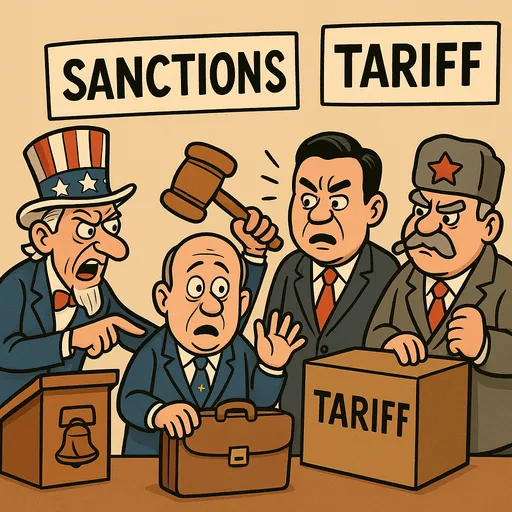
Across these reports, the United States has pursued an assertive trade and sanctions agenda—announcing tariffs on roughly 60 partners, probing EU trade practices, and tying duties to forced‑labour and regulatory disputes—while signalling punitive measures in response to EU fines on US tech firms. Trading partners and allies have reacted with broad condemnation, warnings of retaliation, and intensified diplomacy to protect exporters, while some small or exempted economies report limited immediate impact or negotiate carve‑outs. The European Union and other Western actors continue to expand targeted sanctions on Russia and Iran, managing internal divisions as member states seek exemptions or conditioned measures. Markets, businesses and legal actors are responding: investors are cautious, firms are suing over tariff legality, and analysts warn of supply‑chain disruption and possible shifts in geopolitical alignment, particularly toward China for some exporters.
This viewpoint presents the White House approach as an assertive use of tariffs, trade probes and targeted measures to punish perceived unfair practices, force labour abuses and respond to regulatory fines against US firms. The stance treats duties and asset measures as levers of economic statecraft to reshape trade outcomes and compel partner compliance.
Governments and capitals around the world portray the new US tariffs as provocative and potentially illegal, warning of retaliatory measures and diplomatic cost. Many articles capture political pushback, public condemnations and efforts to coordinate responses to defend exporters and preserve supply chains.
Smaller trading partners emphasize vulnerability, sought exemptions, and pragmatic adjustments—some noting limited immediate impact where export lines are excluded, others warning of acute economic pain. These accounts stress negotiation, market diversification and the disproportionate effect of duties on resource‑constrained exporters.
Several Latin American sources frame tariffs as prompting market diversification and political defiance rather than capitulation, with leaders downplaying impacts and seeking new buyers or alliances. The reporting highlights both pragmatic responses and criticism of US policy as driving geopolitical realignment.
European sources emphasize coordinated packages to pressure Russia and Iran while managing internal disagreements and conditional exemptions for members with specific energy or economic ties. The EU narrative showcases sanctions as a central diplomatic tool, balanced by pragmatic negotiations over implementation and collateral effects on neighboring states.
Business and market coverage stresses caution: investors are jittery, economists warn of recession risks from broad protectionism, and affected firms are turning to courts to contest tariffs. This perspective treats legal pushback and market signals as immediate checks on policy implementation and economic fallout.
Reports from multiple countries document enforcement measures—from naval interdictions and asset blocks to blacklisting institutions and individuals—framing sanctions as active instruments with humanitarian and strategic implications. Coverage underscores operational enforcement and the collateral effects on commerce and relief efforts.
Cuban sources characterize the US blockade as coercive economic asphyxiation and cognitive warfare, condemning extraterritorial sanctions and calling for multilateral respect and relief for ordinary citizens. The narrative centers on sovereignty, humanitarian harm, and the demand to lift punitive measures.
Some reporting highlights non‑US reciprocity, with China imposing counter‑sanctions on EU firms in response to Western measures, illustrating how sanctions diplomacy has broadened beyond transatlantic rows. This angle shows sanctions triggering secondary diplomatic and commercial frictions involving third parties.
Occasional items emphasize regionally driven trade restrictions or solidarity actions—such as bans on settlement products—showing how local and regional policies intersect with global sanctions diplomacy. These pieces reflect diversified uses of trade measures to pursue political goals.