
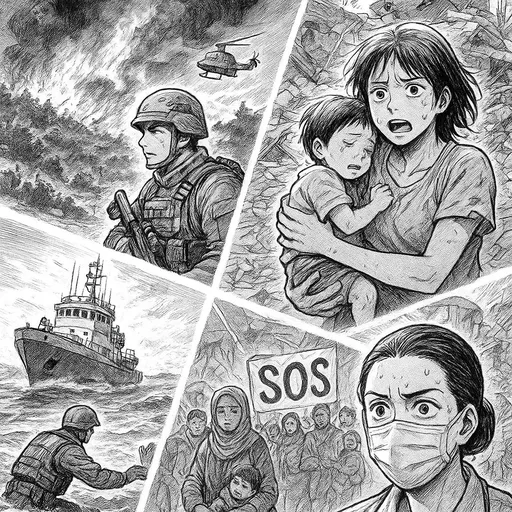
This set of reports is dominated by an unprecedented wildfire emergency across southern Europe, where France and Spain have declared states of emergency, mobilized military forces, requested EU help and evacuated hundreds of thousands as fires driven by extreme heat and wind rage across regions. Alongside the blazes, Venezuela grapples with catastrophic earthquakes that have killed thousands, left tens of thousands displaced and prompted long-term reconstruction and international aid appeals. Public-health crises continue in the Democratic Republic of the Congo with a fast-moving Ebola outbreak causing hundreds to more than a thousand deaths, while conflict-affected Sudan, the Gaza Strip and refugee camps face acute protection, nutrition and access problems that humanitarian agencies warn could worsen. The coverage also highlights dispersed rescue operations — maritime rescues, industrial and transport accidents, landslides and regional flood and storm threats — and points to growing emphasis on cross-border cooperation and preparedness exercises to improve future responses.
Reported from multiple European sources, this viewpoint stresses the scale and urgency of wildfires in France, Spain and neighboring countries: mass evacuations, state of emergency declarations, military mobilization and appeals for EU aerial and international assistance. Coverage links extreme heat, drought and winds to the fires’ intensity and highlights cross-border coordination and protection of tourist and infrastructure sites.
Reporting from and about Venezuela emphasizes the human toll and the economic cost of twin earthquakes, with high death tolls, large displaced populations and international agencies warning that reconstruction will take years and require substantial external aid. Pieces document memorials, salvage and ongoing search-and-rescue and frame the event as a protracted humanitarian crisis.
Health-focused sources and regional bodies report a rapidly worsening Ebola outbreak in eastern DRC, with mounting confirmed cases and deaths and warnings that response capacity, vaccine supplies and access are strained by conflict and community resistance. The coverage underscores an urgent need for sustained surveillance, medical resources and local engagement to contain transmission.
Coverage centered on Sudan highlights displaced Central African refugees, the dangers civilians face in places like Darfur and El Obeid, and the role of volunteers and humanitarian workers striving to deliver food, shelter and services amid conflict and restricted access. Reporting stresses protection issues, community-led assistance and the limits of humanitarian access and safety.
International agencies and on-the-ground reporting underline severe food insecurity, rising child malnutrition and hazardous sanitary conditions in Gaza, with some short-term improvements noted but repeated warnings that restrictions on aid and ongoing hostilities could rapidly reverse any gains. The perspective calls for urgent, sustained humanitarian access and funding to prevent further deterioration.
Reports from maritime and coastal authorities describe coordinated rescue responses to shipwrecks, stranded sailors and record migrant crossings, illustrating the operational challenges of search-and-rescue and the humanitarian risks facing migrants at sea. Coverage highlights cooperation among local fishermen, coast guards and international agencies in life-saving operations.
National and local reporting on industrial fires, transport accidents and explosions focuses on immediate search-and-rescue efforts, casualty management and investigations into causes—emphasizing how emergency services mobilize to respond and then assess safety failures. These stories underline the local operational demands after sudden disasters.
Regional coverage from Asia documents deadly floods, landslides and typhoon warnings that have killed and left many missing, prompting search-and-rescue operations and emergency measures across Afghanistan, India, Pakistan, China and nearby jurisdictions. The pieces emphasize rapid-onset weather hazards and the need for improved early warning and rescue capacity.
A smaller set of items spotlights preventative cooperation—such as a planned tripartite disaster-relief exercise in Southeast Asia—and broader humanitarian alerts from NGOs urging international attention to worsening crises (e.g., Niger), reflecting a focus on readiness and advocacy alongside active response. These perspectives call for better coordination, resources and policy attention to recurring and unfolding emergencies.