

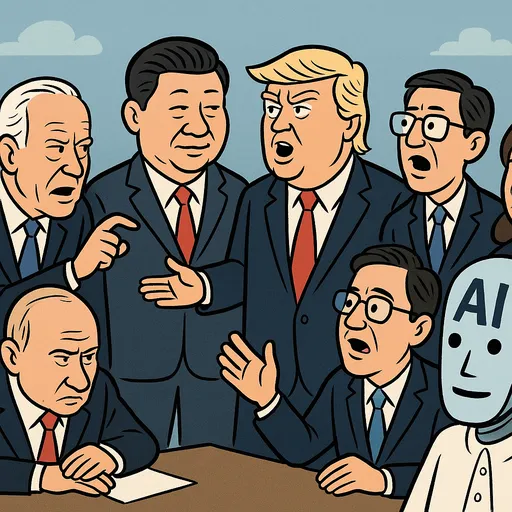
World leaders and senior officials are intensifying bilateral and multilateral talks to manage crises and expand cooperation, with major focus areas including Ukraine, US‑China relations and Middle East stability. U.S.–Russia contacts in Manila and beyond signal cautious attempts to reopen diplomacy on Ukraine even as Moscow warns against unwarranted optimism. The announced Xi–Trump meeting in September and repeated references to artificial intelligence underline a pragmatic US‑China engagement amid strategic rivalry. Regional forums—from ASEAN to the World Government Summit—and UN and Vatican initiatives show sustained multilateral efforts to address conflicts, humanitarian access and governance challenges. Across many capitals, domestic politics and leadership tests continue to shape foreign‑policy choices and public reactions to diplomatic outreach.
Several outlets report a cautious resumption of talks between U.S. figures and Russia, framed by both opportunity and scepticism. Sources emphasise Moscow’s public statements offering readiness for agreement while warning against premature optimism, reflecting Russia’s wary posture toward Western initiatives.
Reports from diverse outlets highlight Donald Trump’s announcement that Xi Jinping will visit the United States, with leaders expected to discuss trade, security and artificial intelligence. Coverage frames the visit as pragmatic diplomacy aimed at managing rivalry and shaping technological and economic rules.
Coverage focuses on President Zelensky’s active diplomacy—talks with US envoys, planned US visits, outreach to varying US figures, and appeals for renewed negotiations and guarantees. Multiple sources present Kyiv’s efforts as pressing for concrete plans and sustained Western backing to secure a durable settlement.
Regional and international actors emphasise ceasefires, humanitarian access and negotiated outcomes, while states press for security guarantees and territorial withdrawals. Coverage captures diverse perspectives—from UN and Vatican mediation to GCC calls, Lebanese diplomacy with the US, and pressure over Yemen and Gaza—underscoring fragile prospects and active mediation.
ASEAN meetings and related bilateral talks focus on connectivity, trade, security and mechanisms to revive stalled processes such as Myanmar’s. Member states and dialogue partners stress regional frameworks and practical benchmarks to rebuild cooperation and mediation capacity.
UN officials and other multilateral actors continue to visit conflict zones, host diplomatic debates and press for institutional responses to crises and resource governance. Reporting highlights the UN Secretary‑General’s activism, Security Council debates and member states’ support for multilateral peacemaking and humanitarian access.
Smaller states deploy summit attendance, bilateral visits and cultural or institutional outreach to broaden partnerships and balance relations among larger powers. Coverage shows leaders using global forums and goodwill gestures to attract investment, security ties and international visibility.
Reports from several sources discuss the possibility—reported but unconfirmed—of Gianni Infantino being proposed for UN secretary‑general, while official spokespeople deny confirmations. The coverage frames the story as speculative and dependent on wide international support for any candidacy.
Several pieces report allied readiness measures, debates over arms and basing, and concerns about possible military options, reflecting an elevated security tempo. Public opinion and partner commitments shape how states signal deterrence and support in crisis contexts.
National political dynamics, leadership changes and populist rhetoric are portrayed as influencing international posture and alliances. Observers link domestic debates—over personnel, ideology and leadership capacity—to the way states pursue bilateral and multilateral diplomacy.
Analysts examine whether a relationship grounded in mutual respect could overcome longstanding obstacles such as sanctions and unilateral measures. The perspective highlights potential humanitarian and regional security benefits if bilateral ties normalize.