
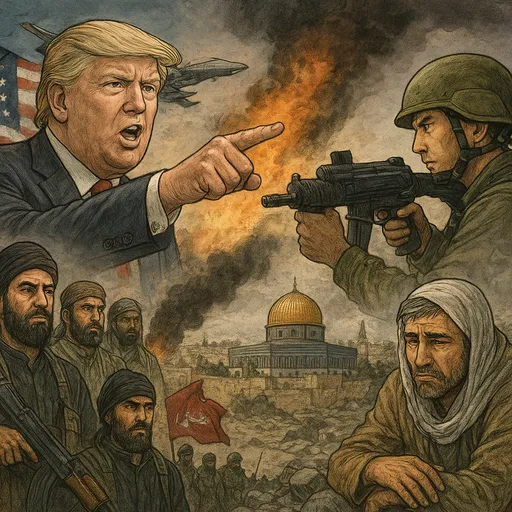
A prolonged campaign of US airstrikes against Iranian targets and repeated threats from President Trump dominate reporting, with officials warning that a decision on a major strike could be imminent. Iran and the IRGC claim attacks, issue warnings to Western states, and pledge continued retaliation while reportedly supplying proxies such as the Houthis. Houthi operations and Yemen resistance actions, including attacks on shipping and border sites, are increasing concern about broader spillovers. Simultaneously, tensions around Jerusalem and Gaza — high-profile visits to Al-Aqsa, settler incursions and lethal incidents — risk opening additional fronts. International bodies and analysts warn that disruptions to Gulf chokepoints, strikes on infrastructure and mounting rhetoric could propel the crisis into a wider regional confrontation with economic and humanitarian consequences.
Reports center on sustained US air campaigns and high-level US rhetoric aimed at deterring Iran and the Houthis; officials stress protecting shipping lanes and holding Tehran accountable. Coverage emphasizes consecutive nights of strikes, travel advisories, and repeated statements by Trump about possible large-scale retaliatory attacks and targeting of infrastructure.
Iranian authorities and the IRGC frame events as defensive and retaliatory, claiming strikes on US assets, denying or downplaying casualties, and warning foreign states against facilitating US attacks. Tehran asserts control in strategic waterways, vows ongoing strikes, and presents its actions and support for proxies as responses to aggression.
Coverage of Yemeni actors highlights intensified operations attributed to the Houthis and other resistance groups, including attacks on shipping and border sites, fueling calls for international deterrence. Debate appears over external support, the humanitarian toll in Yemen, and whether countries should deploy forces to counter Houthi pressure.
Reporting from the Levant emphasizes flare-ups around Jerusalem and Gaza — provocative visits to the Al‑Aqsa compound, settler incursions, lethal exchanges and warnings of severe Israeli responses to Iranian attacks. Lebanese and Palestinian actors warn of escalation, while casualties and cross‑border strikes underline the risk of additional fronts in a widening conflict.
Regional coverage focuses on threats to critical maritime chokepoints and infrastructure: strikes or threats against ports, desalination plants and the Strait of Hormuz raise alarm about shipping, water security and oil markets. Gulf states report drone and missile incidents at border crossings and critical facilities, stressing vulnerability and the need for regional defence responses.
UN officials, analysts and live news services repeatedly warn of a rapid slide into wider war, offering real‑time updates and assessments of global consequences, including oil market shocks and humanitarian risk. The tone is one of urgent caution, documenting explosions, rising casualty reports, and calls for diplomacy amid heavy military activity.