
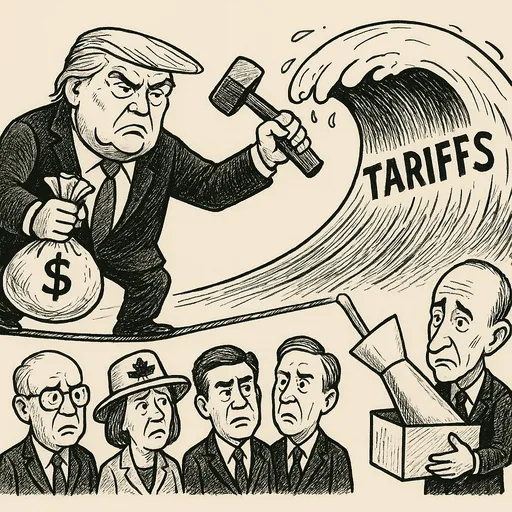
A wave of new U.S. tariffs — largely framed as measures to combat forced labour and to punish perceived security threats — has been announced applying levies of roughly 10–12.5% (and in some cases much higher) to dozens of trading partners, alongside plans to use frozen Iranian assets to pay ship damages. Affected allies and trading partners from Canada, Australia, New Zealand, Japan and the EU have publicly condemned the moves and are preparing a range of responses, from negotiations to possible retaliation. Several targeted countries are downplaying impacts or seeking market diversification, while exporters and markets reassess supply chains and face immediate price and demand effects. Parallel to U.S. tariff escalations, the EU continued to roll out successive packages of sanctions on Russia over the Ukraine war, and the U.S. and partners expanded targeted sanctions and law-enforcement financial measures against criminal and cyber actors. The reporting highlights a broader fracture in trade diplomacy as human-rights, national security and geopolitical objectives increasingly drive tariff and sanctions strategies.
Washington presents new tariffs and reallocations of frozen assets as tools to address forced labour, national security and maritime damage, framing levies as necessary enforcement actions. The U.S. narrative emphasizes protective and punitive rationales while signalling readiness to broaden measures and replace expired duties.
Many close partners — notably Canada, Australia, New Zealand and others — denounce the U.S. tariff moves as unjustified and warn of diplomatic and trade consequences, while signaling they will defend national economic interests. Officials emphasize pursuing talks where possible but keep retaliation and contingency measures on the table.
Governments and industry in affected emerging and regional exporters seek to minimize disruption by diversifying buyers, contesting the rationale, or adjusting supply chains and pricing. Leaders in Brazil, Thailand, Colombia, Guatemala, Taiwan, Singapore, South Korea and others frame the measures as manageable, call for exemptions, or warn of economic consequences for exporters.
The European Union continues to expand coordinated sanctions on Russia — including visa bans, asset freezes, sectoral limits and an oil price cap — aiming to reduce Moscow's war financing while maintaining unity among member states. EU sources stress targeted pressure on energy, banking and strategic sectors as the central objective of these packages.
Cuban officials and commentators portray the U.S. embargo as an extraterritorial, coercive instrument that suffocates development and causes humanitarian harm, calling for multilateral condemnation and legal challenges. Havana frames sanctions as politically motivated and urges international solidarity and respect for sovereignty.
U.S. and allied measures also focus on law-enforcement and national-security targets, using visa bans, asset designations and financial sanctions to disrupt criminal networks, cyber perpetrators and illicit finance. These actions are framed as disrupting specific threats and deterring wrongdoing beyond broad trade policy.
Commentary and market reports highlight legal contests, stock-market reactions and secondary trade steps (such as bans on settlement goods) that complicate the landscape and signal contagion beyond tariff headlines. Observers note legal challenges, index volatility, and smaller states' alignment choices as part of the broader diplomatic and economic ripple effects.