

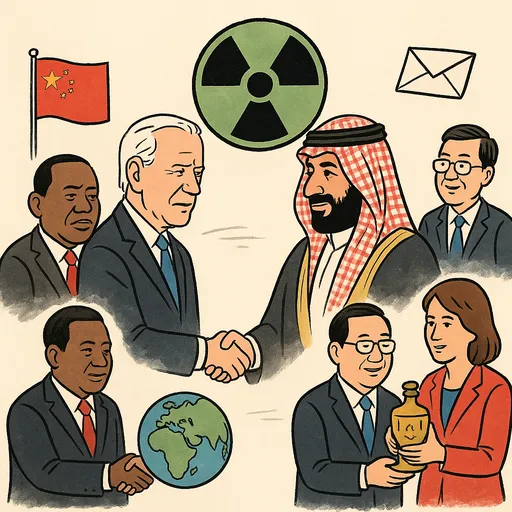
Recent reporting shows a wave of bilateral agreements and high-level engagements spanning nuclear cooperation, defence procurement, trade, development finance and cultural diplomacy. A landmark U.S.–Saudi civil nuclear pact and related political conditions dominate coverage and prompt sharp debate over non‑proliferation and regional balance. Elsewhere, states are deepening defence ties, upgrading transport and trade links, and expanding China‑linked economic outreach in Africa and Asia, while Pacific partners receive focused development and security support. Simultaneously, routine diplomatic visits, visa and consular shifts, and heritage repatriations underscore the ordinary diplomacy that sustains these strategic deals.
U.S. and Saudi sources frame the agreement as a milestone for civilian nuclear cooperation and closer strategic ties, stressing energy and diplomatic benefits. Other regional and international commentators — notably Israeli and some European outlets — emphasize proliferation risks and linkages to broader political conditions such as normalization with Israel.
Sources from buyer and partner states present defence deals and cooperation as necessary to bolster deterrence and industrial capacity, highlighting procurement, joint exercises and co‑production. Observers also note implementation challenges and the industrial metrics by which allies will judge such partnerships.
Pacific and partner-state reporting emphasizes investment, capacity-building and cultural engagement — from police and infrastructure programmes to training and concessional finance — as efforts to strengthen resilience and sovereignty. Donor countries frame these moves as mutually beneficial partnerships that support development and regional stability.
Articles from involved capitals present China’s moves — market access, investment and industrial cooperation — as concrete economic opportunities that deepen long‑term ties. Partner countries stress mutual benefits and priority sectors while commentators track Beijing’s growing economic and diplomatic influence in Asia and Africa.
Reporting around Niamey highlights a deliberate push to broaden security cooperation with multiple partners, portraying the initiatives as responses to pressing domestic security needs. These accounts frame bilateral meetings as pragmatic steps to diversify external security support.
Governments and business outlets depict new credit lines, loans, port and connectivity agreements as drivers of growth and green transition, stressing concrete economic benefits. These pieces present bilateral memoranda and financing as practical tools to expand market access and modernize sectors.
State media and diplomatic dispatches present high‑level visits, credential presentations and ceremonial gestures as routine but important signals of friendship and deepening ties. These reports emphasize protocol, outreach to diasporas and the soft‑power dimension of bilateral engagement.
Local and regional outlets focus on withdrawals, pilot zones and mediated talks as sensitive steps toward de‑escalation, stressing humanitarian and sovereignty concerns. Some commentators also link bilateral arrangements to wider geopolitical manoeuvring in the neighbourhood.
Authorities and local press frame visa talks, embassy operations and new air links as practical measures affecting mobility, tourism and business ties, with officials underlining the economic and administrative implications. These items show how consular policies and connectivity are integral components of bilateral relations.
Reports on artifact returns, restitution requests and academic/media MoUs highlight bilateral cultural diplomacy and commitments to redress historical wrongs or expand exchanges. Governments and institutions portray such moves as confidence‑building measures that support broader cooperation.
Coverage of specific transport infrastructure — notably cross‑border rail expansion — stresses tangible gains in trade and logistics while outlining technical details and expected economic impacts. These pieces treat bilateral infrastructure projects as catalysts for regional integration.
Reports from Laos and partner states emphasize stepped‑up cooperation in agriculture, environment, EV logistics and strategic partnerships with multiple countries, framing the moves as part of a diversified diplomacy. The coverage highlights concrete sectoral aims and multilateral corridor planning.
Georgia’s official accounts underline credential ceremonies and outreach to new partners as diplomatic normalisation, while analysts highlight Moscow’s interventions in breakaway regions as a source of friction. The cluster contrasts routine state engagement with contested regional manoeuvres.