

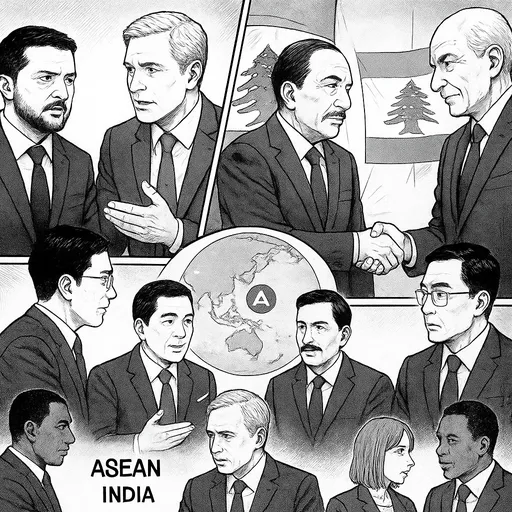
This set of articles shows intense, multi-track diplomacy as leaders and envoys pursue conflict resolution, regional stability and strategic alignment. Ukraine and Western partners are actively engaging in shuttle diplomacy to revive stalled peace prospects, while Lebanon–Israel talks and wider Middle East mediation highlight fragile negotiations over territorial control and disarmament. In Asia, ASEAN, India and Quad partners emphasize multilateral frameworks and Indo‑Pacific security while US–China contacts and Chinese messages seek to manage rivalries and plan high‑level visits. A broad wave of bilateral visits, capacity‑building talks and regional disputes—from Latin America to Africa and Europe—underlines how states use both institutional forums and one‑on‑one meetings to advance security, economic and political aims.
Western and Ukrainian sources emphasize renewed diplomatic efforts to end the war through high‑level contacts with US envoys, informal talks and coordination ahead of possible meetings with Russian counterparts. The perspective frames diplomacy as the primary route to a dignified settlement while coordinating security assistance and political terms.
Regional and international actors stress the need for negotiated arrangements, full Israeli withdrawal from disputed areas, and stronger Lebanese institutional control, while commentators warn that framework agreements and symbolic gestures may not produce durable peace. The cluster reflects a mixture of state statements, hosting of negotiations (notably Italy) and opinion pieces skeptical about short‑term truces without enforceable rules.
ASEAN members and partners (including India and Quad participants) are portrayed as doubling down on regional cooperation—trade, connectivity, and a rules‑based Indo‑Pacific—while seeking to maintain ASEAN centrality amid great‑power tensions. The narrative underscores multilateral mechanisms and practical cooperation as stabilizing tools.
Chinese official statements and commentary stress continuity in foreign policy, support for the UN, calls for political resolution of regional disputes, and pushback against Western criticism—framed as appeals for sovereignty and de‑escalation. Beijing’s messaging also includes rebuttals to U.S. reports and efforts to shape narratives through state media and commentators.
Several reports highlight focused, often congressional and ministerial, engagements between U.S. figures and Chinese officials aimed at managing bilateral frictions and preparing high‑profile visits. The perspective treats persistent dialogue as necessary to manage tensions and to set the agenda for potential summitry.
State reports emphasize direct, high‑level strategic dialogue between North Korea and Russia, signaling closer coordination and sustained communication at the top level. This viewpoint highlights the bilateral strategic dimension outside of Western diplomatic frameworks.
Regional outlets and commentators foreground sovereignty, anti‑interference rhetoric and criticism of external powers, with Cuban pieces framing U.S. policy as imperialist and Central American disputes exposing diplomatic frictions. The perspective prioritizes regional solidarity and resistance to perceived outside meddling.
Multiple reports document state visits, defense and diplomatic‑training cooperation, and bilateral negotiations—ranging from African leaders in Paris to diplomatic institutes and constitutional talks—illustrating routine yet consequential statecraft. The perspective emphasizes practical cooperation, technical capacity building and negotiation over formal outcomes.
Stories about political figures and commentators (including Trump’s preferences for international leadership candidates and forecasts about Western order) show how domestic politics and personalities shape foreign policy agendas and diplomatic expectations. The cluster treats political leadership and partisan dynamics as influential drivers of international alignments.
Reports of frictions within alliances—public complaints about ambassadors and diplomatic protests over missile tests—signal that partnerships face strain from both policy disagreements and provocative actions. The viewpoint highlights the fragility of security cooperation when public rows and military signaling occur.
Items on Belarus’s geopolitical vulnerability, dismay in breakaway Georgian regions and provocative acts against leaders reflect domestic and regional fault lines that have diplomatic consequences. The perspective centers on how internal politics, recognition disputes and public incidents affect interstate relations.
Analyses questioning the feasibility of strikes on sensitive sites and reporting on alleged shortfalls in allied nuclear stocks frame deterrence and credibility as central diplomatic and strategic issues. The viewpoint underscores how military capability and perceptions of force readiness shape alliance diplomacy.