US–Iran Exchange Intensifies with Regional Spillovers
Middle East Conflict Escalation2026-07-23 • 113 articles in total
In brief
US strikes and threats against Iran have escalated conflict across the Gulf and regional neighbors.
Iran and allied groups respond with retaliatory attacks threatening regional security and shipping routes.
The confrontation causes civilian harm, economic strain, market volatility, and risks involving external powers.
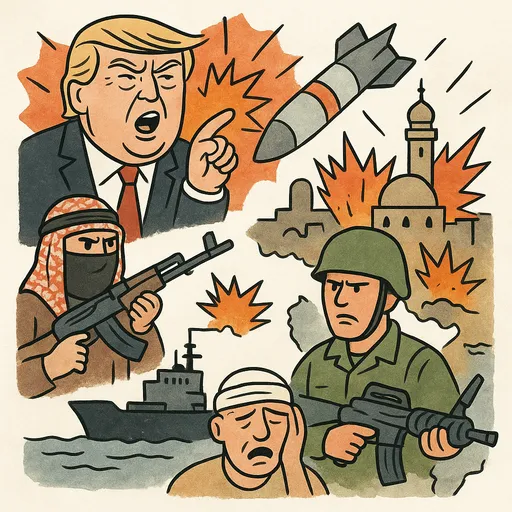
A sustained campaign of US strikes on Iran, accompanied by repeated threats from President Trump to target Iranian infrastructure, has driven a sharp escalation across the Gulf and beyond. Tehran has answered with vows of retaliation, public warnings of an 'eye for an eye' doctrine and forceful actions that have hit or threatened neighbouring Gulf states. Yemen’s Houthi forces and other non-state actors have intensified attacks on shipping and tankers, compounding risks to global trade and prompting further US operations. Gulf states and regional militaries report active air-defence engagements and damage to facilities, while clashes along Israel’s borders and raids in the occupied West Bank continue to produce civilian suffering. The confrontation is producing mounting human and fiscal costs, market volatility, and questions about possible outside involvement that could widen the conflict further.
Countries covering this topic
US strikes and Trump warnings
Sources aligned with or reporting US policy emphasize a campaign of nightly strikes meant to deter threats to shipping and to punish attacks on American forces; leaders frame some operations as honouring fallen soldiers. Many outlets highlight repeated threats by President Trump to target Iranian bridges, power plants and alleged military or nuclear sites as part of a hardline deterrent approach.
Sources reflecting Tehran’s viewpoint stress defensive doctrine and warning rhetoric — 'an eye for an eye' — while portraying retaliatory strikes and preparations as necessary responses to US aggression. Iranian-linked reports also assert readiness to strike regional or external facilitators and highlight missile and drone capabilities as deterrence.
Gulf states: defence and infrastructure under attack
Gulf and neighbouring states’ reporting focuses on defensive measures, interceptions and the direct effects of strikes on critical infrastructure — power, water and military bases — and underscores the immediate security threat to their populations. These sources emphasise air-defence activity, damage assessments, and the need for international support to secure shipping lanes and national assets.
Reporting focused on Yemen and maritime routes highlights Houthi attacks on tankers and declared blockades of key oil corridors as a deliberate escalation that imperils Red Sea and Hormuz shipping. These pieces frame Houthi actions as part of the broader Iran-linked campaign that provokes US strikes and international concern over trade disruptions.
Israel, Gaza, Lebanon and frontline humanitarian impact
Regional and local outlets concentrate on ground-level hostilities: Israeli raids, air strikes, troop movements and barriers, and the humanitarian toll on civilians in Gaza, Lebanon, and the occupied West Bank. These reports emphasise civilian casualties, border deployments and political responses as part of a broader, multi-front instability intertwined with the US–Iran confrontation.
Analytical and finance-oriented sources document the human and fiscal toll of the confrontation — troop casualties and injuries, Pentagon estimates of war costs, and market reactions such as shifts in currency and oil prices. These perspectives highlight the strategic, economic and political strain on the US and regional actors and question the sustainability of prolonged military engagement.
A subset of reports raises questions about third-party roles, notably scrutiny of possible Russian involvement in strikes on CIA facilities and related incidents, suggesting the conflict may draw indirect foreign support or complicity. This investigative angle underscores the risk of great-power entanglement and intelligence implications.
Some outlets provide neutral, rolling coverage summarising the latest developments, sequencing strikes and official statements without overt editorialising. These live updates serve to track the fast-moving situation and compile claims from multiple actors.
Coverage on related theatres, such as Afghanistan, highlights how wider instability and rivalries are affecting neighbouring conflicts and fragile states. These pieces point to spillover risks and the broader geopolitical reverberations of the Middle East escalation.