
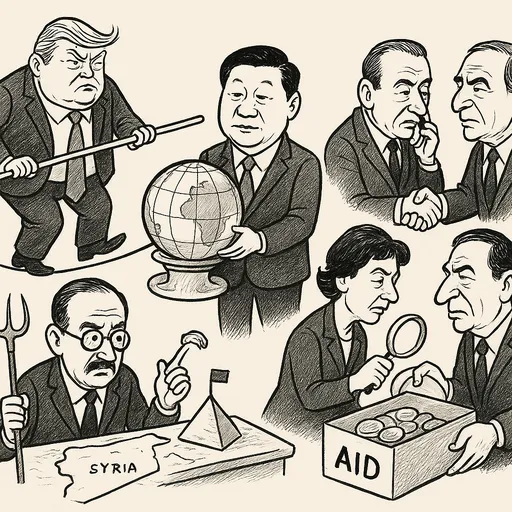
World leaders pursued a mix of public diplomacy, confidential backchannels and regional mediation to manage security, economic and political challenges. China and other states reaffirmed support for multilateral institutions even as bilateral tensions surfaced — from France summoning Iranian diplomats to Azerbaijan disclosing secret German–Russian talks. ASEAN and Gulf states served as active hubs for dialogue, while the United States remained deeply engaged across the Middle East and Latin America, including competing initiatives on UN leadership. Parallel tracks included reconstruction and humanitarian engagement in Syria, efforts to revive Myanmar peace talks, and a flurry of state visits and high-level phone calls that reflected both cooperation and contention. Cultural and soft-power exchanges, small-state diplomatic disputes, and Central Asian resource cooperation rounded out a crowded diplomatic agenda.
Beijing emphasizes support for the UN and multilateral engagement while defending allied states and pressing regional security concerns. China's messaging combines backing for global institutions with assertive responses to perceived threats or criticisms.
Lebanese leaders pressed the United States for security guarantees and plans to disarm Hezbollah, while Washington signalled continued involvement without firm timelines. The exchanges emphasize US role in mediating southern Lebanon security and the push for Lebanese state control of border areas.
Azerbaijani authorities revealed alleged secret talks between German and Russian officials in Baku, framing the disclosure as a noteworthy diplomatic development. The announcements raised questions about informal peacemaking or back-channel efforts related to the Ukraine conflict and drew varied reactions from involved parties.
ASEAN meetings served as a venue for US–China side talks and for regional attempts to restart Myanmar’s stalled peace process. Regional diplomats used the platform to coordinate security priorities, arrange high-level contacts, and consider a longer-term envoy and benchmarks for Myanmar.
Pyongyang framed meetings with Russian counterparts as deepening strategic ties, including high‑level contacts reportedly involving senior officials. The visits underscore renewed DPRK–Russia diplomatic and security engagement.
Reports of possible visits and planned trips between US and Russian officials signalled a cautious reopening of security and law-enforcement channels despite broader tensions. Speculation about high-profile visits reflected both interest in dialogue and sensitivity to geopolitical constraints.
Suriname pursued economic and diplomatic outreach by engaging international financial institutions in the UK and deepening ties with China through language and cultural programs. The actions reflect a strategy of diversifying partnerships for trade, investment and diplomatic cooperation.
International actors combined reconstruction planning in Syria with mediation efforts and crisis diplomacy across the region, while episodic escalations — such as diplomatic summonses — complicated ties. States and international organizations sought framework agreements, reconstruction pilots and mediation channels to stabilize conflict-affected areas.
The UN system remained a stage for personnel moves and leadership contests, with appointments to key field posts and endorsements for the next Secretary‑General drawing state and institutional attention. External actors, including the United States, also weighed in on potential candidates, reflecting geopolitics within UN selection processes.
Latin American leaders and parties expressed alarm over perceived foreign interference and navigated transition talks, with high-profile accusations and legal-diplomatic maneuvers shaping bilateral relations with the US and other states. The reporting highlighted tensions over sovereignty, electoral integrity and transitional negotiations.
A wave of state visits, congratulatory messages and high‑level engagements illustrated routine but consequential diplomacy between European and African leaders. These visits combined political meetings with diaspora outreach, development talks and participation in international summits.
Turkey pursued consultations on its S‑400 air-defence systems while Turkish officials engaged Gulf partners in Doha to coordinate regional security and projects. Gulf states also condemned destabilizing accusations in the Yemen context, underscoring ongoing security diplomacy across the region.
States reaffirmed counterterrorism partnerships while commentators warned about emerging security domains like space, and diplomats held security talks in North Africa and the Horn. The cluster highlights both operational cooperation and normative debates over new arenas of competition.
Diplomatic disputes and institutional talks affected smaller polities, from Taiwan reassessing ties after Port Moresby’s office closure to constitutional discussions in the Virgin Islands and UN voting concerns tied to Saint Martin. These items show how diplomatic decisions and international votes impact small states and territories.
Shared water scarcity is driving cooperation across Central Asian states, while Iranian diplomatic narratives and outreach figure in regional conversations. The coverage frames resource management and political messaging as complementary drivers of regional diplomacy.
Diplomatic rows and public accusations involving Israel — from criticisms of foreign officials to election‑meddling claims — underscored contentious exchanges shaping Israel’s external relations. Coverage emphasized the reputational and bilateral consequences of such disputes.
Soft‑power engagement, including UNESCO appearances and interfaith leadership forums, was used to bolster national images and advance inclusive dialogues. Cultural diplomacy provided a less confrontational channel for international engagement and public diplomacy.
Havana dismissed a US report accusing it of subversion as hypocritical and a pretext for aggression, framing the document as part of longstanding pressure from Washington. The response reflects Cuba's insistence on sovereignty and rejection of external interference.