
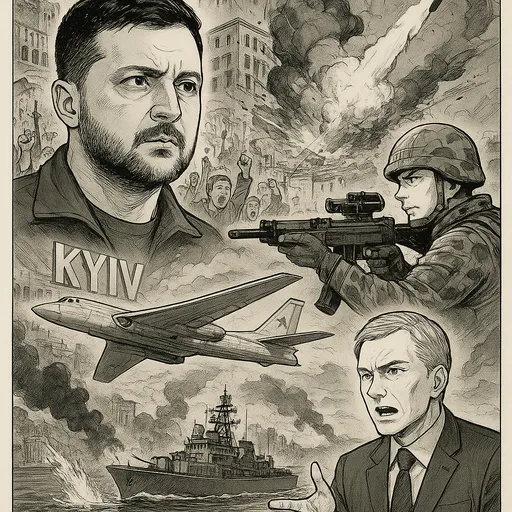
Reports cluster around two immediate dynamics: a major political shock in Kyiv as President Zelensky dismissed and reshuffled senior military leaders amid street protests, and continuing high-intensity combat marked by large Russian missile and drone strikes on Ukrainian cities with significant civilian harm. Ukrainian forces have stepped up strikes inside Russian territory and against logistics hubs, while Moscow has signalled power abroad with long-range bomber patrols and naval live-fire exercises near Western waters. The Black Sea and regional shipping routes have become flashpoints after attacks on tankers and intensified naval operations, prompting allied support measures such as U.S. production of naval drones. Behind the fighting, diplomatic manoeuvres and allied rhetoric — from secret meetings to Kremlin ultimatums and outside backers’ declarations — underline the conflict’s wider geopolitical and economic costs.
Coverage emphasises a domestic political crisis in Ukraine: mass protests and institutional tensions led President Zelensky to dismiss his top army commander and other senior defence figures and to appoint a new commander-in-chief. Reporting from multiple countries frames the changes as a major recalibration of Kyiv’s wartime command with uncertain effects on morale, strategy and international support.
This group focuses on heavy Russian bombardments of Ukrainian cities and infrastructure, documenting casualties, widespread damage and strain on civilian services. Reports include UN monitoring and humanitarian perspectives that stress rising civilian death tolls and calls for protection of non‑combatants and aid operations.
These items report Ukrainian offensive actions reaching into Russian territory and striking logistical and commercial targets, as well as large-scale drone operations allegedly targeting Moscow. The coverage frames such attacks as part of Kyiv’s effort to degrade Russia’s military and economic support infrastructure, with attendant risks of escalation.
Reports highlight Russian naval live-fire exercises near the UK and long-range bomber flights over the Sea of Japan and Baltic Sea as deliberate demonstrations of power. Western and NATO-aligned sources treat these manoeuvres as provocative signalling that raises regional security concerns and tests allied readiness.
Coverage centres on growing dangers to shipping and naval engagements in the Azov and Black Sea theatre, including a reported strike on an LPG tanker near Romania and contested sea battles. Articles note the implications for maritime supply lines to Ukraine, allied countermeasures, and efforts (including U.S. naval-drone support) to bolster Ukraine’s maritime defence.
This group covers diplomatic moves, public strategic postures and allied alignments: secret talks reported between Russian and German officials, Kremlin declarations excluding NATO forces from Ukraine, allies’ warnings (notably from the Baltics), and outside backers such as North Korea affirming support for Moscow. Analyses and editorials in this cluster probe broader strategic trends, including Russia’s missile use and debates on technological advantages.
These pieces provide broader context on the war’s economic and reporting dimensions, from estimates of the financial burden borne by partners (notably U.S. costs) to routine international summaries of the conflict. They reflect concern about long-term fiscal pressures, continued allied support and the persistent international attention the war commands.