

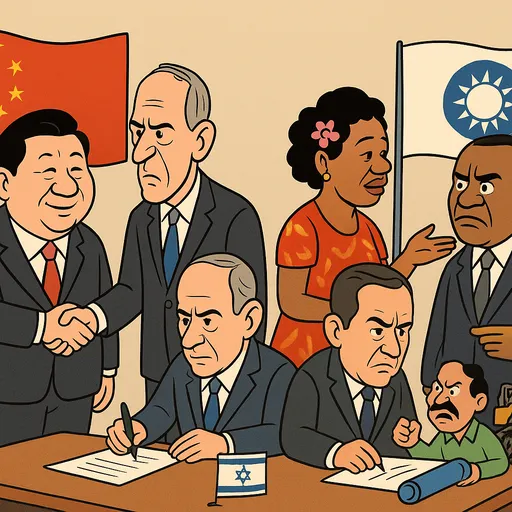
This set of articles shows a wide range of bilateral agreements and cooperative initiatives across regions, from trade and infrastructure pacts to security arrangements and development financing. Major themes include expanding economic ties (notably China’s growing trade and investment footprint, Germany’s energy partnerships, and multiple financial and aviation MoUs), security cooperation and US-mediated border arrangements in the Middle East, and targeted development assistance and capacity building in the Pacific and Africa. Several pieces highlight strategic diversification by smaller states—air links, visa talks, scholarships and industrial partnerships—while others record high-level visits that cement defense, mine-clearance and environmental cooperation. The coverage also records diplomatic frictions and domestic criticisms tied to foreign projects, underscoring that bilateral deals often carry political and social tradeoffs.
The piece promotes China as an attractive destination for buyers and investors, emphasizing streamlined administrative procedures and improved trade services. It casts bilateral economic engagement as an opportunity for commercial visitors and suppliers.
Coverage stresses growing bilateral support from multiple partners: a landmark Saudi Fund agreement and Chinese-funded local transport assistance, alongside Australian-backed capacity-building programs. The narrative highlights diversified external financing and development cooperation shaping Solomon Islands’ infrastructure and skills agenda.
The report highlights ceremonial bilateral appreciation as France’s departing ambassador received a major honor from Suriname. It frames this as evidence of cordial diplomatic relations and continuing cooperation.
The item reports international sporting cooperation through a tripartite tour collaboration, reflecting South Africa’s role in facilitating broader international sporting alignments. The focus is on coordinated schedules to expand competition and cooperation in golf.
A concise account of a defense-related audience signals ongoing bilateral security engagement between Brunei and Thailand. It frames the interaction as part of routine defence diplomacy.
These reports present varied security and procurement-related diplomatic developments: hard-line anti-cartel alignment in Colombia (with US ties), Turkish discussions around S-400 procurement, and Lebanese troop deployments after a US-brokered withdrawal. The cluster underscores how defense and security topics drive cross-border diplomatic conversations.
France’s interior minister publicly credits Morocco for cooperation against organized crime, portraying Morocco as a valued security partner. The piece emphasizes operational bilateral law-enforcement collaboration.
China’s statement signals readiness to protect its rights after Britain nationalised British Steel, suggesting Beijing may take measures in response. The perspective underscores how domestic policy moves in third countries can prompt bilateral diplomatic posture shifts.
Analysis points to Israel deprioritizing historical issues due to political and economic interests tied to Azerbaijan, showing how strategic economic relationships can reshape diplomatic stances. The view highlights the influence of economic ties on foreign policy decisions.
The atlas-style report portrays accelerated concessions to Chinese companies as driving mining expansion on indigenous lands, raising social and environmental concerns. The perspective frames foreign investment as controversial at home.
The Dallas plant opening is framed positively as strengthening Taiwanese firms’ US footprint and local supply chains, boosting investor sentiment. It highlights bilateral economic connectivity between Taiwan and the United States.
The analysis of tariff tensions within North American trade highlights the strategic stakes behind potential US-driven changes to trade agreements. The piece interprets tariff moves as part of broader bilateral and trilateral negotiation pressures.
Multiple items underline China’s primacy in Tajikistan’s trade while also reporting new bilateral documents with Mongolia across economic and humanitarian sectors. The narrative stresses both deep trade dependence on China and ongoing diplomatic diversification.
Analysis of Australia’s Pacific engagement examines what regional states actually signed with Canberra, situating bilateral agreements within wider geopolitical contestation in the Pacific. The piece emphasizes transparency and strategic competition in regional diplomacy.
Moldova’s election of an investor-prime-minister is framed as a pro-EU pivot potentially affecting bilateral relations with Western partners. The view connects domestic political change to expected foreign policy orientations.
The memorandum to establish a gas berth at Suakin with a Turkish group faces sharp domestic criticism, reflecting concerns about terms and sovereignty implications. The perspective foregrounds local pushback to foreign-led infrastructure deals.
Reports include Kazakhstan’s environmental water transfers, Iranian cultural diplomacy to Kyrgyzstan, and a Belarusian ministerial visit—together showing Kyrgyzstan as a node for regional cooperation across environment, culture and diplomacy. The cluster highlights soft-power and practical resource cooperation among neighbors.
Germany and Mauritania pledged cooperation for Sahel stability while a Mauritanian initiative seeks a logistics bridge to France, and Morocco–Mauritania security commitments were reinforced. These accounts portray Nouakchott deepening ties with European partners on security, transport and regional stability.
A long-term service agreement for Swedish military fleet support underlines Canada‑based defence industry cooperation, while a separate report notes a US presidential approval of a Saudi nuclear deal referenced in Canadian coverage. The cluster captures defence-industrial and geopolitical treaty reporting from a Canadian perspective.
Coverage records Lebanese troop deployments and US-brokered pilot-zone arrangements after Israeli withdrawals, reflecting externally mediated security arrangements in southern Lebanon. The articles view bilateral and multilateral coordination as central to stabilizing the border area.
Benin’s reception of Morocco’s foreign minister during a joint commission session emphasizes a mutual commitment to expand bilateral cooperation. The piece presents diplomatic engagement aimed at strengthening economic and regional ties.
Libya’s justice ministry discussions with a Chinese firm on modernizing correctional facilities show Beijing’s continued role in reconstruction and infrastructure projects. The perspective is transactional and focused on service and capability upgrades.
The new British prime minister’s green light for US basing against Iran signals tightened UK–US military cooperation and a firmer posture toward Tehran. The article frames bilateral basing permissions as a component of allied strategy.
Talks with EU and SIGMA experts on public procurement reforms highlight international efforts to modernize Syrian governance procedures. The perspective emphasizes technical cooperation to improve transparency and accountability.
Statements emphasize widening Armenia–Germany and Azerbaijan–Germany cooperation across energy, transport and investment, signaling European interest in Caucasus energy diversification. The cluster presents bilateral engagement as strategically aimed at securing energy alternatives and economic links.
A series of articles portray a sustained push to deepen political dialogue, economic ties, green energy cooperation and mine‑clearance efforts with Germany, anchored by presidential visits and joint declarations. The perspective highlights multi-dimensional partnership driven by energy diversification and post-conflict recovery needs.
Israeli and Austrian ambassadors pledge deeper cooperation and investment in Ethiopia’s reform-driven trajectory, focusing on energy, digitalization, trade and cultural links. The narrative foregrounds foreign confidence and a multi-pillar approach to engagement.
Gabon’s appointment of the president’s brother as ambassador to India signals renewed diplomatic outreach and personnel choices intended to tighten ties with New Delhi. The piece stresses the ceremonial and strategic aspects of the posting.
The resumption of direct US flights to Lebanon (reported by an Indonesian outlet) underscores resumed bilateral air connectivity after decades, suggesting commercial and diplomatic reconnection. The angle highlights practical steps to restore links and their broader implications.
Panama summoned its ambassador over comments by Nicaragua’s leader, reflecting bilateral tensions and the use of diplomatic consultations as a response. The view highlights strained relations and protocol measures.
Ecuador and Colombia’s planned joint operations against drug trafficking indicate strengthened bilateral security coordination at the border. The piece frames the move as practical cooperation to combat organized crime.
Chile’s congressional approval of economic reforms under José Antonio Kast is presented as a domestic policy move with potential effects on investment and regional economic relations. The perspective ties national reform to its bilateral investment climate.
Microsoft’s deal with French AI startup Mistral is framed as a Europe‑focused industrial partnership to boost AI capacity while addressing data sovereignty, reflecting Franco‑German and EU-level tech ambitions. The articles portray bilateral tech deals as layered with strategic industrial policy.
The Australia–UK free trade agreement is presented as a major post‑Brexit step to cut tariffs and expand bilateral commerce, emphasizing market access and regulatory cooperation. The perspective highlights mutual economic gains and the political significance of the pact.
Reporting on US moves to ease trade friction with the EU frames bilateral negotiations as timely diplomatic steps ahead of wider summits and geopolitical meetings. The focus is on transatlantic coordination to reduce barriers and stabilize trade ties.
A Guam/National Guard readiness drill in Palau demonstrates practical US-Australia military cooperation and contingency planning for Pacific operations. The report underscores regional force interoperability and logistics testing.
Announcements cover the resumption of flights between Comoros and Madagascar and diplomatic visits that reaffirm maritime cooperation, signaling renewed connectivity and maritime coordination with France and Australia. The tone emphasizes rebuilding links and reinforcing regional presence.
A presidential appointment of an ambassador to Mexico is framed as part of consolidating a foreign cabinet and preparing bilateral relations for a government transition. The article underlines diplomacy as personnel-driven continuity.
Reports that Lebanon received promises of aid from the US (noted in Norwegian coverage) indicate external support pledges amid regional tensions. The perspective highlights international security assurances shaping bilateral expectations.
A UAE official reiterates strong, enduring relations with Saudi Arabia, framing the Gulf partnership as steady across security and energy domains. The piece emphasizes continuity and alignment in regional diplomacy.
Multiple reports note US presidential approvals of nuclear cooperation with Saudi Arabia, portraying these pacts as pivotal bilateral energy and strategic decisions with global non‑proliferation implications. The articles convey both policy momentum and attendant scrutiny.
Several items show Lebanon taking concrete security steps—army deployments, assumed responsibilities and political pressure—to implement a US-mediated pilot-zone deal with Israel. The narrative emphasizes the fragile but operational nature of externally brokered security pacts.
Planned high-level German visits and bilateral talks with Nigeria are framed as efforts to deepen cooperation on trade, development and security. The perspective underscores Germany’s engagement agenda in Africa.
Botswana signals readiness to discuss potential visa-free arrangements with China, presenting mobility talks as a step toward closer bilateral ties. The article emphasizes cautious openness rather than immediate policy change.
Bangui’s efforts to strengthen economic cooperation with Moscow are presented as bilateral outreach to expand trade and investment ties. The piece highlights Russia’s growing engagement in African economies.
Reports cover Chinese-built aircraft entering Air Cambodia service and Colombia hosting an anti‑cartel alliance office, reflecting multifaceted regional ties that include aviation procurement and international security cooperation. The cluster shows Malaysia-sourced reporting of external partnerships in the region.
Reporting notes the Lebanese army assuming security responsibility for southern regions, reflecting internationalized attention to Lebanon’s security arrangements. The tone highlights institutional handovers under multinational mediation.
US authorization of direct flights to Lebanon is framed as a diplomatic and connectivity step reported in Peruvian coverage, emphasizing how bilateral transport links serve wider diplomatic goals. The piece situates aviation restoration within regional engagement.
Joint RDIF–BioCubaFarma pharmaceutical projects and Russian support for Cuban renewable energy portray a deepening science and energy partnership. The narrative underscores mutually beneficial cooperation across health and sustainable energy sectors.
Lebanon’s president urging US support for the Lebanese army (reported by an Omani outlet) frames appeals for foreign assistance as essential to domestic security resilience. The coverage highlights diplomatic lobbying for military aid.
A major Microsoft–Mistral computing-power agreement is presented as significant for Europe’s cloud and AI capacity, reflecting broader European tech-industrial ambitions. The article emphasizes strategic investment in regional digital infrastructure.
French approval of a border agreement with the Dutch side and calls to include Saint Martin in a Kingdom-wide climate adaptation plan reveal bilateral and intra-Kingdom coordination on governance and resilience. The items stress legal normalization and adaptation planning.
US–Vanuatu partnerships on weather systems, Vietnam scholarships for Ni‑Vanuatu students, and provincial consultations on a proposed Vanuatu–China trade deal show multiple bilateral tracks shaping Vanuatu’s diplomacy. The coverage highlights an active balancing of partners to advance capacity and trade.
Qatar’s demand that Iran compensate for attacks and Russia’s expansion of visa-free travel with African nations reflect regional security claims and Moscow’s soft‑power moves in Africa. The cluster captures contrasting Gulf accountability demands and Russian outreach.
Multiple MoUs and institutional visits show Laos deepening precious‑metals and financial cooperation with Hong Kong partners while planning post‑LDC agricultural strategy with the FAO. The perspective emphasizes economic modernization and institutional capacity building through bilateral ties.
Reporting notes the elimination of the Spain‑Gibraltar land border under an EU‑UK agreement, framing it as a bilateral normalization with practical cross‑border benefits and security considerations. The item highlights the diplomatic closure of a longstanding issue.
France and Germany’s moves to address the EU trade deficit are presented as collective European strategies relevant to member states like Ghana through broader economic policy shifts. The perspective connects European industrial policy to global trade recalibration.
Ukraine’s foreign minister thanked the Czech foreign minister for support, signaling continued bilateral backing amid wartime needs. The piece emphasizes diplomatic solidarity and coordination between Kyiv and Prague.