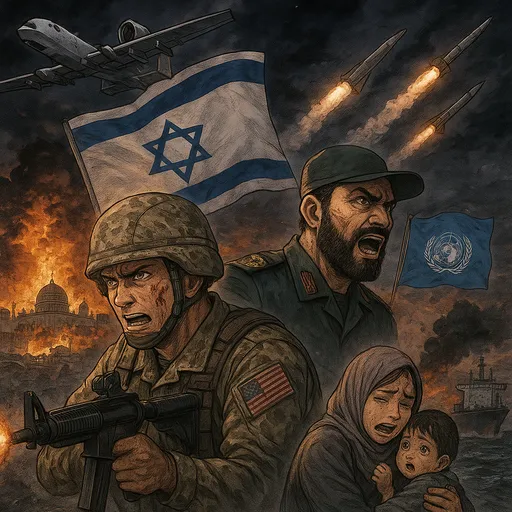
US–Iran Escalation Widens, Proxies Threaten Maritime and Regional Spillovers
Middle East Conflict Escalation2026-07-22 • 138 articles in total
In brief
U.S. airstrikes against Iran and Iran's missile, drone strikes, and proxy actions have escalated regional conflict.
Regional actors condemn Iranian-linked attacks threatening shipping and civilians, raising humanitarian and global energy supply concerns.
Multiple fronts including maritime blockades, Israel-Palestine violence, and proxy clashes risk wider regional escalation and military resource strain.
A sustained campaign of nightly U.S. airstrikes against Iran and repeated public threats by U.S. leaders have driven the confrontation into a new, high-intensity phase. Iran and the IRGC have responded with missile and drone strikes, public warnings of 'total war', and coordination with proxy groups that are opening new fronts across the Red Sea and Levant. Houthi maritime threats and attacks on shipping have forced tankers to turn back and prompted Gulf states to condemn Iranian-linked actions while diplomatic protests multiply. The United Nations, aid agencies and energy monitors warn of mounting humanitarian consequences and risks to global oil supplies as travel and shipping advisories spread. The fighting has already produced U.S. and allied casualties, rising civilian tolls in Gaza and Lebanon, and heavy demands on military resources that complicate prospects for rapid de-escalation.
Countries covering this topic
US and Western perspective: sustained strikes and deterrence
Reports from U.S. and many Western outlets emphasize a campaign of consecutive nights of strikes intended to degrade Iran's military capabilities and deter further attacks. Coverage highlights official U.S. rhetoric, resource and budget pressures, troop casualties, and repeated presidential threats as rationale for continued operations.
Iranian/Tehran perspective: defiance and retaliation
Articles reflecting Iranian or Tehran-aligned perspectives stress retaliation, deterrence and readiness, framing U.S. strikes as aggression and warning of broad reprisals against U.S. and allied targets. Coverage includes statements of 'total war', threats to close or control maritime chokepoints, and claims of direct strikes on U.S. assets and infrastructure.
Gulf states and regional governments: condemnation and diplomacy
Gulf and regional government sources emphasize diplomatic protest and condemnations of Iranian-linked attacks that threaten their territory, shipping and citizens. These reports focus on summoning envoys, expressing solidarity among Gulf partners, and urging restraint while protecting maritime routes.
Coverage from and about Yemen highlights the Houthis opening a new maritime front — announcing blockades, threatening to target ships and forcing tankers to turn back — which international actors view as a dangerous escalation of the wider US–Iran confrontation. These pieces stress immediate risks to shipping lanes, energy flows and the potential to draw in regional navies and external powers.
Reports centered on the Israel–Palestine front document Israeli strikes, accusations about Iranian nuclear activity, and the humanitarian toll on Gaza and Lebanon. The perspective combines Israeli security narratives (nuclear concerns, operational planning) with reporting on civilian casualties and international criticism.
UN and international institutions: warnings and humanitarian concerns
United Nations and international agencies focus on the humanitarian consequences, condemnations of intensified strikes, and broader global implications such as risks to energy supply. Their perspective calls for de‑escalation, protection of civilians, and coordination to prevent regional collapse.
This viewpoint highlights practical disruptions: airlines cancelling routes, governments issuing travel advisories, tankers reversing course and rising estimates of the financial and logistical cost of sustained operations. Coverage stresses immediate effects on travelers, commerce and the cost burden on military budgets.
Local fronts: Syria, Lebanon, Iraq and proxy incidents
Reports in this group focus on proximate incidents and proxy dynamics — incursions and clashes in Syria and Lebanon, explosive drones near diplomatic posts in Iraq, and cross‑border tensions that risk widening the conflict. The perspective highlights how local flashpoints can trigger broader escalation between larger powers.
Some items could not be reliably summarized from the provided content or lacked accessible English text; they are listed separately pending full translation or sourcing. These entries cannot be assigned a clear viewpoint without complete material.