
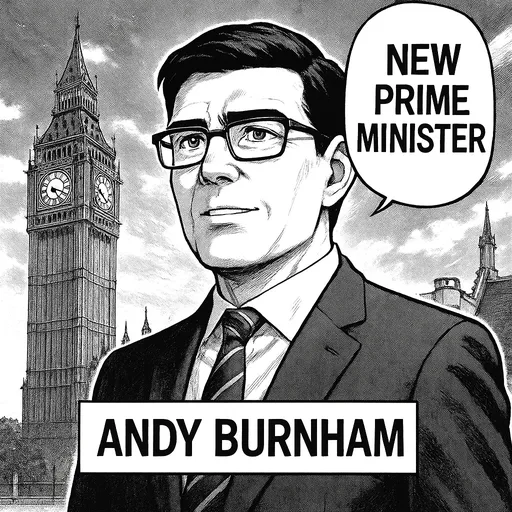
Andy Burnham has been appointed Prime Minister of the United Kingdom, succeeding Keir Starmer and becoming the country's seventh prime minister in a decade. Early moves have included a fast cabinet reshuffle and high-profile ministerial appointments as Burnham unveils an ambitious domestic agenda that includes a ten-year plan, cost-of-living relief and homelessness measures. His government has already begun outreach to international partners, with calls to U.S. and Ukrainian leaders and public hints about security cooperation. Reaction among commentators is mixed: some welcome a focus on economic recovery and stability, while analysts caution that long-standing political fragmentation and fiscal constraints could limit what the new government can achieve.
Several outlets frame Burnham's accession as the latest episode in a prolonged period of political volatility, highlighting that he is the seventh British prime minister in about ten years. Coverage emphasizes risks to political stability and public confidence stemming from rapid leadership turnover.
Many reports focus on Burnham's policy program, notably a ten-year rebuilding plan, cost-of-living measures, reindustrialisation and ambitious economic reforms aimed at restoring trust. Coverage highlights pledges on housing, homelessness and stronger state intervention to deliver social and economic relief.
Several outlets concentrate on the personnel side of Burnham’s takeover: rapid ministerial appointments, high-profile reshuffles and the sidelining of some former ministers underline a bid to assert control. Reporting points to these moves as signals of early priorities and the administration’s approach to implementing its agenda.
Coverage from other countries highlights Burnham’s immediate diplomatic moves — phone calls with leaders including the U.S. president and Ukraine’s president, hints about security pacts like AUKUS and statements of continued support for allies. These pieces frame his early diplomacy as an effort to reassure partners and define the UK’s international role under new leadership.
Analytical pieces and profiles assess Burnham’s background, character and political prospects, offering both cautious optimism about his authenticity and skepticism about whether he can overcome systemic challenges. Opinion and feature coverage probe whether his style and proposals can translate into durable policy wins.
A set of concise dispatches provide factual reporting on the leadership transition, the king’s appointment, Starmer’s resignation, and the immediate formalities of government formation without extensive analysis. These pieces serve as straightforward confirmations of the change in office and initial administrative steps.