
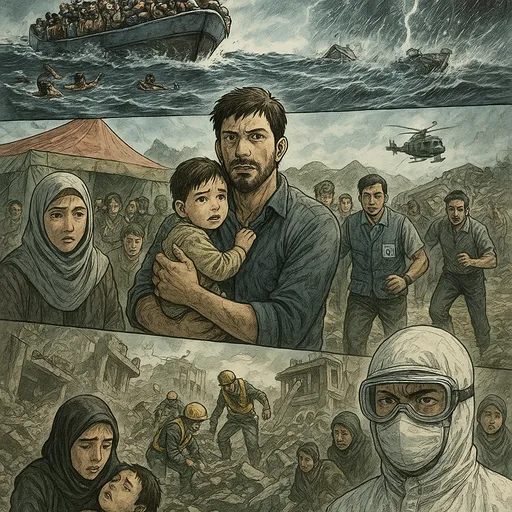
News coverage this period highlights a surge in large-scale emergencies demanding search-and-rescue and humanitarian responses: deadly maritime disasters and migrant boat disappearances, powerful storms and floods in Chile, Afghanistan and India, and destructive earthquakes in Peru and Venezuela. Health emergencies, notably Ebola in central Africa and outbreaks in conflict zones, complicate relief delivery and strain local health systems. International aid deliveries, donor partnerships and calls for coordinated multilateral action are recurring, while investigations and safety reviews follow many accidents. Across regions, governments and responders are mobilising emergency resources, but access, security and severe weather continue to hamper timely assistance.
Regional and international outlets focus on the immediate search-and-rescue operation, casualty counts and inquiries into safety practices for river and coastal transport. Reporting stresses the human toll, cross-border condolences and continuing uncertainty about the number still missing.
Coverage from neighbouring and international sources emphasises heavy casualties, hundreds missing and the urgent need for search-and-rescue amid worsening weather. Reports underline how repeated flooding compounds Afghanistan's ongoing humanitarian vulnerabilities.
Domestic and regional reporting prioritises life-saving operations, damage assessments and evacuation plans as aftershocks continue. Authorities and visiting officials stress rescue priorities and request international support for severely affected communities.
National and international outlets report government declarations of emergency and states of catastrophe as heavy rains isolate tens of thousands. Coverage highlights large-scale evacuations, infrastructure damage and coordinated relief mobilisations across the north.
Health-focused reporting underscores rising death tolls and the operational challenges posed by attacks on health workers and hard-to-reach communities. Stories call for intensified vaccination campaigns, protection for responders and sustained international support to contain spread.
Coverage from affected and neighbouring countries stresses cross-border cooperation, firefighting resource sharing and the public-health impacts of smoke. Stories link extreme heat and drought conditions to intensified wildfire seasons and call for regional preparedness measures.
Reports frame these incidents as part of a broader migration crisis, noting large numbers rescued alongside many missing or feared dead and the limits of coastal search capacities. International agencies and coastal states are portrayed urging safer routes and greater assistance to intercept and rescue operations.
Domestic and foreign coverage combines accounts of high death tolls and international rescue support with policy debates on reconstruction and proposals for resilience-driven rebuilding. Reports underscore urgent needs for shelter, food and international funding amid long-term economic strains.
Reporting from multiple outlets concentrates on the mounting death toll and early findings pointing to locked exits and safety violations. Stories emphasise emergency response, ongoing investigations and calls for stricter venue safety enforcement.
Coverage focuses on aftershocks, tsunami warnings and continued monitoring by authorities to protect coastal populations. Officials are portrayed urging vigilance and assessing coastal infrastructure for damage.
Domestic reporting details a public-health crisis after contaminated water sickened thousands and prompted arrests, highlighting governance and infrastructure vulnerabilities. The piece stresses the urgent need for remediation and accountability.
Coverage presents the Kuwait-backed donation of a lifeline boat as a tangible improvement to remote communities' emergency response capacity. The angle emphasises sustainable local resilience through appropriate equipment and partnerships.
Reports highlight military-technology support for public-health operations, showing how drones extend surveillance and vector control in hard-to-reach areas. The perspective underscores innovation to accelerate outbreak response.
Authorities in reported incidents stress that releases were minor and that safety protocols are being reviewed, aiming to reassure the public while investigations continue. Reporting highlights transparency and environmental monitoring as priorities.
Domestic outlets document a series of unrelated local emergencies—fires, crashes, drownings and evacuations—focusing on immediate casualties, investigations and community impacts. Stories underline both the human cost and lessons for prevention and emergency response.
Coverage highlights the compounded effects of conflict, displacement and overcrowding on disease spread and child health, while critiquing perceived shortfalls in international aid. Reports call for increased protection and humanitarian access for civilians.
Articles from meteorological and public-safety perspectives warn of dangerous temperatures and associated health risks, prompting advisories and preparedness measures. Reporting connects heatwaves to broader climate-driven risk patterns.
Coverage emphasises deteriorating civilian security, displacement and rising child malnutrition linked to conflict and sanctions, urging increased humanitarian access and international support. Stories frame these crises as protracted and needing coordinated relief.
Reports on simulated typhoons and leadership appointments stress investment in drills, coordination and institutional capacity to improve response times and community resilience. The perspective favours proactive measures alongside operational readiness.
Coverage of using explosives to clear boulders in China underscores the extreme measures sometimes required to access trapped victims and the risks rescuers face. Stories focus on technical response and the urgency of reaching survivors.
Reports document governments and international organisations arranging repatriations to protect nationals and manage migration flows, framing these as necessary but complex humanitarian operations. Coverage notes logistical and protection considerations for returnees.
Domestic reporting on Assam and other monsoon-hit areas highlights widespread displacement, deaths from landslides and the strain on local rescue services. Authorities are shown mobilising relief while warning of ongoing rain risks.
Technical alerts stress increased lahar threat due to heavy rains interacting with volcanic deposits, prompting warnings and monitoring to protect downstream communities. Reporting frames this as a fast-moving hazard requiring swift evacuation planning.
Local coverage of a cluster of tremors focuses on monitoring and early assessments, with authorities reporting no major immediate damage while urging vigilance. The perspective emphasises preparedness for further seismic activity.
Reporting concentrates on the sudden fatality, lifeguard response and subsequent advisories for beachgoers, framing the event as a public-safety concern rather than a large-scale disaster. Authorities are portrayed investigating circumstances and safety measures.
Meteorological bulletins and regional reporting describe storm development and coastal alerts, emphasising monitoring and preparedness to mitigate potential impacts. Authorities are advising populations to stay informed as systems evolve.
Diplomatic reporting highlights talks on accelerating recovery, clearing mines and protecting civilians as part of broader reconstruction efforts. The perspective stresses international cooperation and technical assistance to restore safety.
Coverage frames the arrival of a European relief sailboat as a symbol of international solidarity, addressing shortages and demonstrating maritime-based humanitarian logistics. Cuban authorities welcomed the aid and outlined the supplies' intended use.