

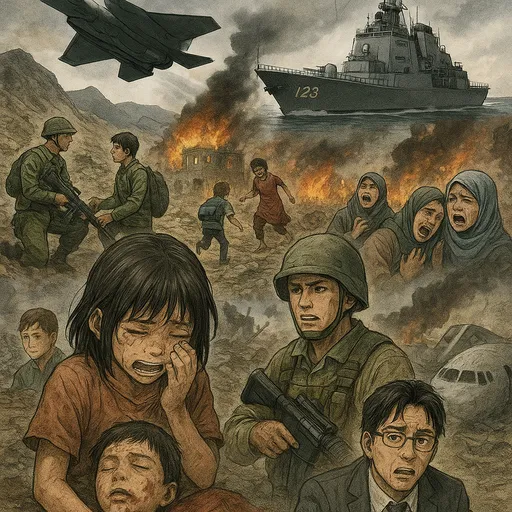
Reports from multiple regions show rising armed violence and widespread humanitarian harm, and a new study finds the number of armed conflicts in 2025 was the highest since World War II. Cross‑border strikes between Pakistan and Afghanistan have reportedly killed civilians, including children, heightening bilateral tensions while Taliban security actions at home have included force against protesters. Localized conflicts—from Boko Haram abductions and releases, to intercommunal clashes in Chad, Polisario Front fatalities in Western Sahara, a deadly blast in Myanmar, and the recovery of a fighter's remains in the Caucasus—underscore persistent fragility and civilian suffering. At the same time, China’s naval operation near Taiwan signals growing great‑power military posturing, and a separate aviation ground collision at San Francisco highlights ongoing public‑safety concerns outside active conflict zones.
Reports reflect Afghan/Taliban and local authorities’ emphasis on cross‑border violations and civilian casualties, condemning Pakistani strikes and calling for investigation. The cluster also highlights internal repression and security responses—such as firing on protesters—that illustrate ongoing governance and human‑rights tensions within Afghanistan.
Local and regional sources focus on the immediate humanitarian and security impacts of insurgency, intercommunal fighting, and rebel activity, stressing casualties, displacements, and the need for state or peacekeeping responses. These pieces highlight diverse theaters—West Africa, the Sahel, Myanmar, and the Caucasus—where civilians bear the brunt of violence.
An international research perspective warns that armed conflicts have surged to post‑World War II highs, framing the situation as a worsening global security trend. Alongside that, state reporting of China’s naval operation near Taiwan signals strategic power projection and regional military escalation.
Aviation coverage stresses operational safety and coordination failures after two United Airlines planes collided during a pushback at San Francisco, prompting an immediate investigation and concern about ground‑handling procedures. The report is framed as a public‑safety and regulatory issue rather than a conflict event.